

Join Our Newsletter To Be Informed When New Videos Are Posted
Hebrew Text
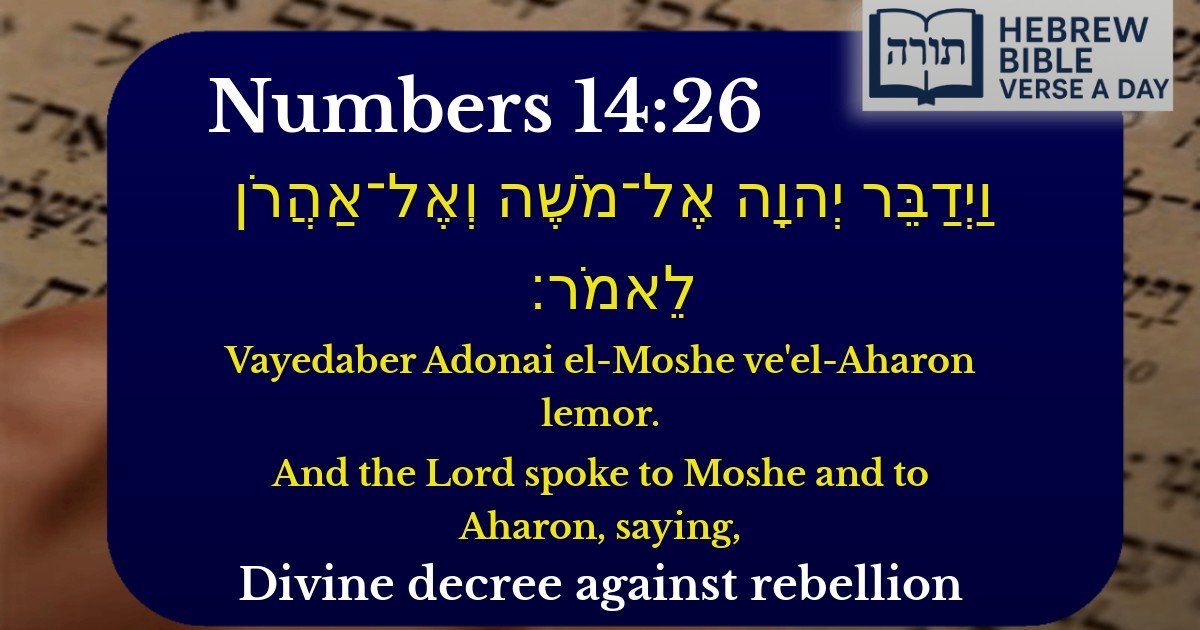
וַיְדַבֵּר יְהוָה אֶל־מֹשֶׁה וְאֶל־אַהֲרֹן לֵאמֹר׃
English Translation
And the Lord spoke to Moshe and to Aharon, saying,
Transliteration
Vayedaber Adonai el-Moshe ve'el-Aharon lemor.
Hebrew Leining Text
וַיְדַבֵּ֣ר יְהֹוָ֔ה אֶל־מֹשֶׁ֥ה וְאֶֽל־אַהֲרֹ֖ן לֵאמֹֽר׃
🎵 Listen to leining
Parasha Commentary
📚 Talmud Citations
This verse is quoted in the Talmud.
The verse is cited in a discussion about the roles of Moses and Aaron in receiving divine commandments.
📖 Menachot 45a
Referenced in a debate about the authority of Moses and Aaron in transmitting laws.
The Dual Address to Moshe and Aharon
The verse states, "And the Lord spoke to Moshe and to Aharon, saying" (Vayikra 11:1). Rashi notes that this phrasing indicates that both Moshe and Aharon were addressed simultaneously by Hashem, rather than Moshe receiving the message first and then relaying it to Aharon. This is significant because it underscores Aharon's elevated role in the transmission of Torah, particularly in matters pertaining to the Kohanim and the Mishkan.
Aharon's Inclusion in Divine Communication
Rambam (Hilchos Yesodei HaTorah 7:6) explains that Aharon was granted prophecy alongside Moshe in certain instances to emphasize his unique status as Kohen Gadol. The Midrash (Vayikra Rabbah 11:8) adds that this joint address was a demonstration of unity between leadership roles—Moshe as the lawgiver and Aharon as the spiritual guide in avodah (Temple service).
Structural Significance in Sefer Vayikra
The Ohr HaChaim highlights that this verse introduces the section of tumah and taharah (ritual purity), which primarily concerns the Kohanim. Since Aharon and his descendants were entrusted with teaching these laws (Malachi 2:7), his inclusion here reinforces the Kohen's duty to instruct Bnei Yisrael in matters of kedushah.