

Join Our Newsletter To Be Informed When New Videos Are Posted
Hebrew Text
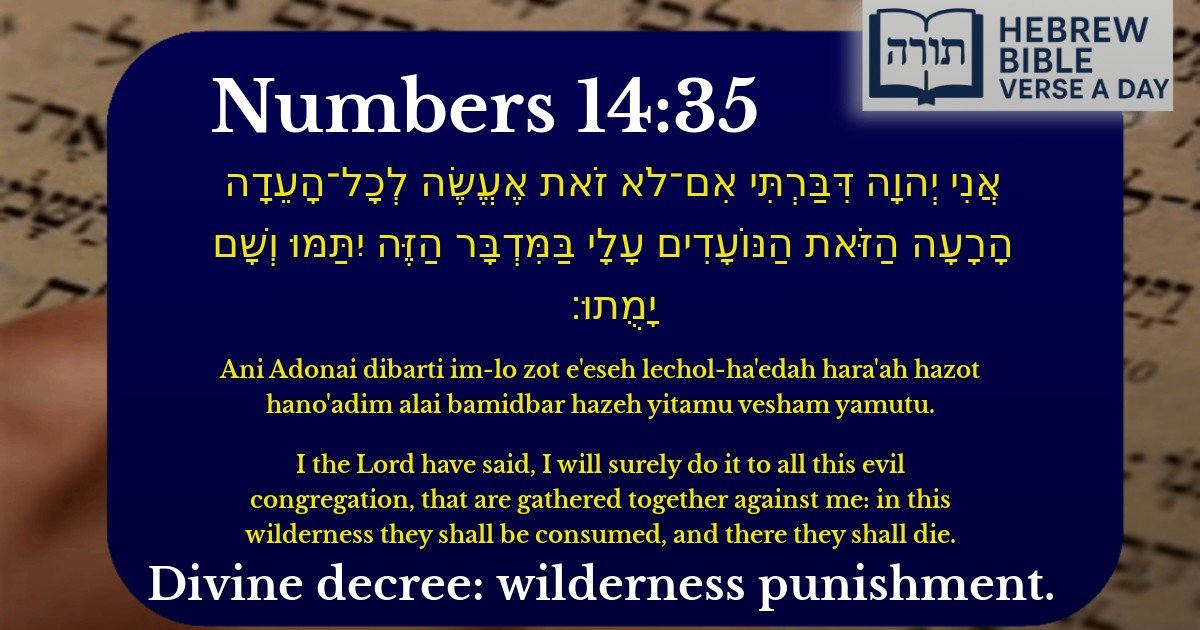
אֲנִי יְהוָה דִּבַּרְתִּי אִם־לֹא זֹאת אֶעֱשֶׂה לְכָל־הָעֵדָה הָרָעָה הַזֹּאת הַנּוֹעָדִים עָלָי בַּמִּדְבָּר הַזֶּה יִתַּמּוּ וְשָׁם יָמֻתוּ׃
English Translation
I the Lord have said, I will surely do it to all this evil congregation, that are gathered together against me: in this wilderness they shall be consumed, and there they shall die.
Transliteration
Ani Adonai dibarti im-lo zot e'eseh lechol-ha'edah hara'ah hazot hano'adim alai bamidbar hazeh yitamu vesham yamutu.
Hebrew Leining Text
אֲנִ֣י יְהֹוָה֮ דִּבַּ֒רְתִּי֒ אִם־לֹ֣א ׀ זֹ֣את אֶֽעֱשֶׂ֗ה לְכׇל־הָעֵדָ֤ה הָֽרָעָה֙ הַזֹּ֔את הַנּוֹעָדִ֖ים עָלָ֑י בַּמִּדְבָּ֥ר הַזֶּ֛ה יִתַּ֖מּוּ וְשָׁ֥ם יָמֻֽתוּ׃
🎵 Listen to leining
Parasha Commentary
📚 Talmud Citations
This verse is not quoted in the Talmud.
Context of the Verse
This verse (Numbers 14:35) appears in the aftermath of the episode of the Meraglim (the spies), where ten of the twelve spies sent by Moshe returned with a negative report about Eretz Yisrael, causing the nation to despair and rebel against Hashem. As a consequence, Hashem decrees that the generation of the Exodus would perish in the wilderness and not enter the Land.
Explanation of the Phrase "I the Lord Have Said"
Rashi explains that the double language of "דִּבַּרְתִּי אִם־לֹא" ("I have said, if not") emphasizes the certainty of the decree. This is a common biblical idiom indicating an oath or an unchangeable pronouncement from Hashem. The Ramban adds that this phrasing underscores that the decree is a direct response to the people's lack of faith and their collective rebellion.
The Nature of the Punishment
The verse specifies that the punishment would be carried out "in this wilderness"—meaning the generation would not merit to enter Eretz Yisrael but would die during the forty years of wandering. The Midrash (Tanchuma, Shelach 12) elaborates that this was a measure-for-measure response: since they rejected the Land out of fear, they would not merit to see it.
The Term "Evil Congregation"
The phrase "הָעֵדָה הָרָעָה הַזֹּאת" ("this evil congregation") refers to the adult men who participated in the rebellion, as they were the ones who would bear the punishment (see Rashi on Numbers 14:29). The Talmud (Sanhedrin 104b) notes that the term "evil" here reflects their deliberate rejection of Hashem's promise, despite witnessing His miracles.
Spiritual Implications
The Rambam (Hilchot Teshuvah 4:1) derives from this episode that collective sin, especially when it stems from a rejection of divine authority, carries severe consequences. However, the Midrash (Bamidbar Rabbah 16:23) also highlights that while the decree was harsh, it did not negate the eventual fulfillment of Hashem’s promise to their children, demonstrating divine mercy alongside justice.
Lessons for Future Generations