

Join Our Newsletter To Be Informed When New Videos Are Posted
Hebrew Text
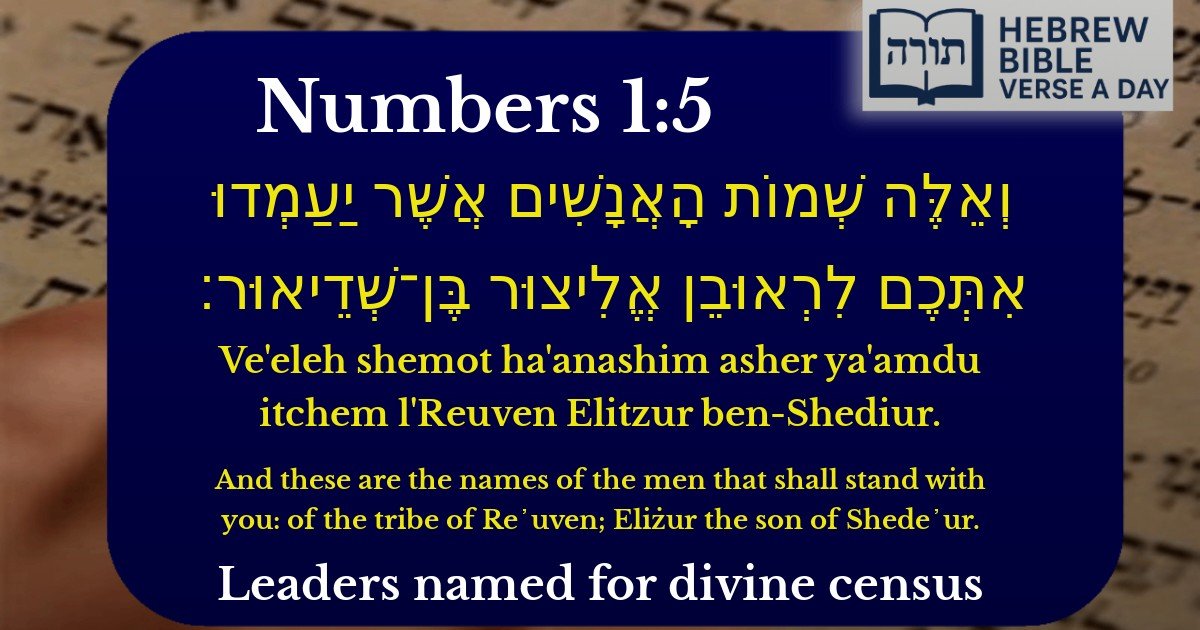
וְאֵלֶּה שְׁמוֹת הָאֲנָשִׁים אֲשֶׁר יַעַמְדוּ אִתְּכֶם לִרְאוּבֵן אֱלִיצוּר בֶּן־שְׁדֵיאוּר׃
English Translation
And these are the names of the men that shall stand with you: of the tribe of Re᾽uven; Eliżur the son of Shede᾽ur.
Transliteration
Ve'eleh shemot ha'anashim asher ya'amdu itchem l'Reuven Elitzur ben-Shediur.
Hebrew Leining Text
וְאֵ֙לֶּה֙ שְׁמ֣וֹת הָֽאֲנָשִׁ֔ים אֲשֶׁ֥ר יַֽעַמְד֖וּ אִתְּכֶ֑ם לִרְאוּבֵ֕ן אֱלִיצ֖וּר בֶּן־שְׁדֵיאֽוּר׃
🎵 Listen to leining
Parasha Commentary
📚 Talmud Citations
This verse is not quoted in the Talmud.
Context in the Torah
The verse (Bamidbar 1:5) introduces the leaders of each tribe who were appointed to assist Moshe and Aharon in the census of Bnei Yisrael. Eliẓur ben Shede'ur is named as the representative of the tribe of Re'uven.
Rashi's Commentary
Rashi explains that the phrase "אֲשֶׁר יַעַמְדוּ אִתְּכֶם" ("that shall stand with you") emphasizes that these leaders were chosen to stand alongside Moshe and Aharon in their sacred task. Their role was not merely administrative but also spiritual, assisting in matters of leadership and judgment.
Significance of the Name "Eliẓur"
The name Eliẓur (אֱלִיצוּר) means "My G-d is a rock," symbolizing strength and steadfastness in faith. The Midrash (Bamidbar Rabbah 1:5) notes that the names of the tribal leaders often reflected their virtues or the divine providence guiding their roles.
Father's Name: "Shede'ur"
Rashi and the Midrash highlight that Shede'ur (שְׁדֵיאוּר) can be interpreted as "the Almighty is my light" (from "Shaddai" and "or"). This suggests a lineage rooted in divine illumination, fitting for a leader chosen to represent his tribe before Hashem.
Role of Tribal Leaders
Re'uven's Representation
Despite Re'uven's past missteps (e.g., the incident with Bilhah), the selection of Eliẓur demonstrates that each tribe—regardless of history—had a dignified role in Klal Yisrael. The Sforno notes that this reflects the principle of teshuvah and the enduring value of every tribe.