

Join Our Newsletter To Be Informed When New Videos Are Posted
Hebrew Text
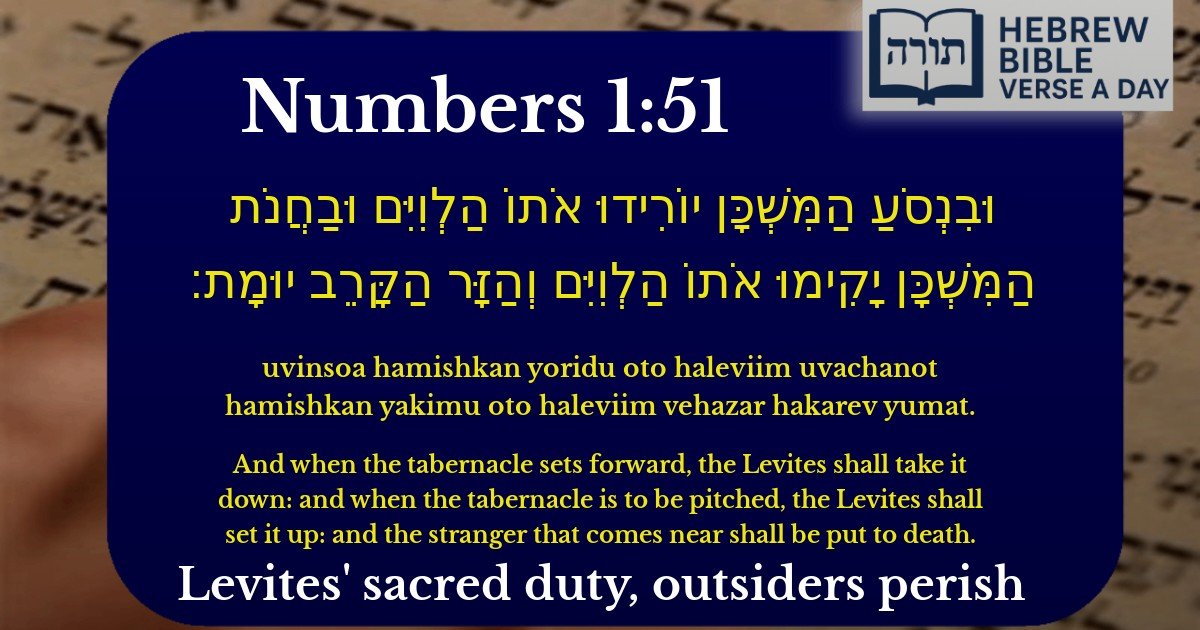
וּבִנְסֹעַ הַמִּשְׁכָּן יוֹרִידוּ אֹתוֹ הַלְוִיִּם וּבַחֲנֹת הַמִּשְׁכָּן יָקִימוּ אֹתוֹ הַלְוִיִּם וְהַזָּר הַקָּרֵב יוּמָת׃
English Translation
And when the tabernacle sets forward, the Levites shall take it down: and when the tabernacle is to be pitched, the Levites shall set it up: and the stranger that comes near shall be put to death.
Transliteration
Uvinsoa hamishkan yoridu oto haleviim uvachanot hamishkan yakimu oto haleviim vehazar hakarev yumat.
Hebrew Leining Text
וּבִנְסֹ֣עַ הַמִּשְׁכָּ֗ן יוֹרִ֤ידוּ אֹתוֹ֙ הַלְוִיִּ֔ם וּבַחֲנֹת֙ הַמִּשְׁכָּ֔ן יָקִ֥ימוּ אֹת֖וֹ הַלְוִיִּ֑ם וְהַזָּ֥ר הַקָּרֵ֖ב יוּמָֽת׃
🎵 Listen to leining
Parasha Commentary
📚 Talmud Citations
This verse is quoted in the Talmud.
📖 Shabbat 31a
The verse is referenced in a discussion about the roles and responsibilities of the Levites in the context of the Tabernacle's transportation and setup.
📖 Yoma 54a
The verse is cited in a discussion about the sanctity of the Tabernacle and the consequences for unauthorized individuals who approach it.
Role of the Levites in Mishkan Transport
The verse (Bamidbar 1:51) emphasizes the exclusive role of the Levites in dismantling and erecting the Mishkan (Tabernacle). Rashi explains that this was a sacred duty assigned specifically to the Levites, as they were chosen to serve in the Mishkan after the incident of the Golden Calf, where they demonstrated their loyalty to Hashem (Shemot 32:26-29). The Rambam (Hilchot Klei HaMikdash 3:8) further elaborates that this was one of their primary responsibilities, ensuring the proper handling of the holy vessels and structure.
Prohibition Against Outsiders
The phrase "וְהַזָּר הַקָּרֵב יוּמָת" ("the stranger that comes near shall be put to death") underscores the severity of unauthorized individuals interfering with the Mishkan's sanctity. The Talmud (Sanhedrin 81b) discusses that this applies to non-Levites who attempt to perform tasks reserved for the Levites. The Ramban adds that this prohibition extends even to Israelites from other tribes, as the term "זָר" refers to anyone not from the tribe of Levi in this context.
Symbolism of Mishkan's Movement
The Midrash (Bamidbar Rabbah 1:12) interprets the dismantling and pitching of the Mishkan as symbolic of the Jewish people's journey through the wilderness—constantly moving yet maintaining divine presence. The Levites' role reflects the idea that spiritual leadership must guide the community through transitions, ensuring continuity of holiness. The Sforno notes that their meticulous handling of the Mishkan teaches the importance of treating sacred matters with reverence and precision.
Halachic Implications