

Join Our Newsletter To Be Informed When New Videos Are Posted
Hebrew Text
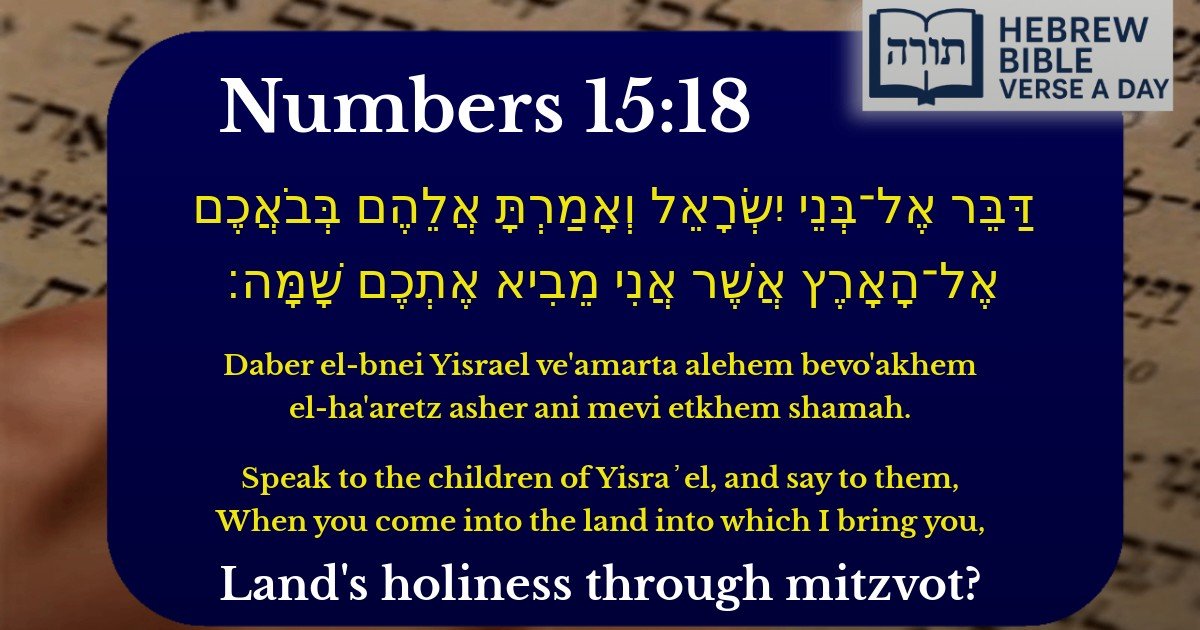
דַּבֵּר אֶל־בְּנֵי יִשְׂרָאֵל וְאָמַרְתָּ אֲלֵהֶם בְּבֹאֲכֶם אֶל־הָאָרֶץ אֲשֶׁר אֲנִי מֵבִיא אֶתְכֶם שָׁמָּה׃
English Translation
Speak to the children of Yisra᾽el, and say to them, When you come into the land into which I bring you,
Transliteration
Daber el-bnei Yisrael ve'amarta alehem bevo'akhem el-ha'aretz asher ani mevi etkhem shamah.
Hebrew Leining Text
דַּבֵּר֙ אֶל־בְּנֵ֣י יִשְׂרָאֵ֔ל וְאָמַרְתָּ֖ אֲלֵהֶ֑ם בְּבֹֽאֲכֶם֙ אֶל־הָאָ֔רֶץ אֲשֶׁ֥ר אֲנִ֛י מֵבִ֥יא אֶתְכֶ֖ם שָֽׁמָּה׃
🎵 Listen to leining
Parasha Commentary
📚 Talmud Citations
This verse is quoted in the Talmud.
📖 Sotah 32a
The verse is referenced in a discussion about the obligation to recite certain prayers in Hebrew when entering the Land of Israel.
📖 Ketubot 110b
Cited in a discussion about the mitzvah of living in the Land of Israel and the blessings associated with it.
Context in the Torah
This verse (Vayikra 23:10) introduces the mitzvah of bringing the Omer offering upon entering Eretz Yisrael. The phrase "בְּבֹאֲכֶם אֶל־הָאָרֶץ" ("When you come into the land") appears multiple times in the Torah, emphasizing the centrality of the Land of Israel in fulfilling mitzvot.
Rashi's Commentary
Rashi explains that the phrase "אֲשֶׁר אֲנִי מֵבִיא אֶתְכֶם שָׁמָּה" ("into which I bring you") teaches that the mitzvah of Omer applies only when Bnei Yisrael enter the land with divine assistance, not through their own strength. This underscores that the conquest of Eretz Yisrael was a miraculous event facilitated by Hashem.
Rambam's Perspective
In Hilchot Temidin u'Musafin (7:2), the Rambam rules that this mitzvah applies specifically in Eretz Yisrael, highlighting the unique sanctity of the land. The mitzvah is contingent on the people's presence in the land, demonstrating that certain commandments are intrinsically linked to the physical space of Eretz Yisrael.
Midrashic Insights
Halachic Implications
The Talmud (Menachot 83b) derives from this verse that the mitzvah of Omer applies only when the majority of Klal Yisrael dwells in Eretz Yisrael. This principle reflects the collective responsibility of the nation in fulfilling agricultural mitzvot tied to the land.