

Join Our Newsletter To Be Informed When New Videos Are Posted
Hebrew Text
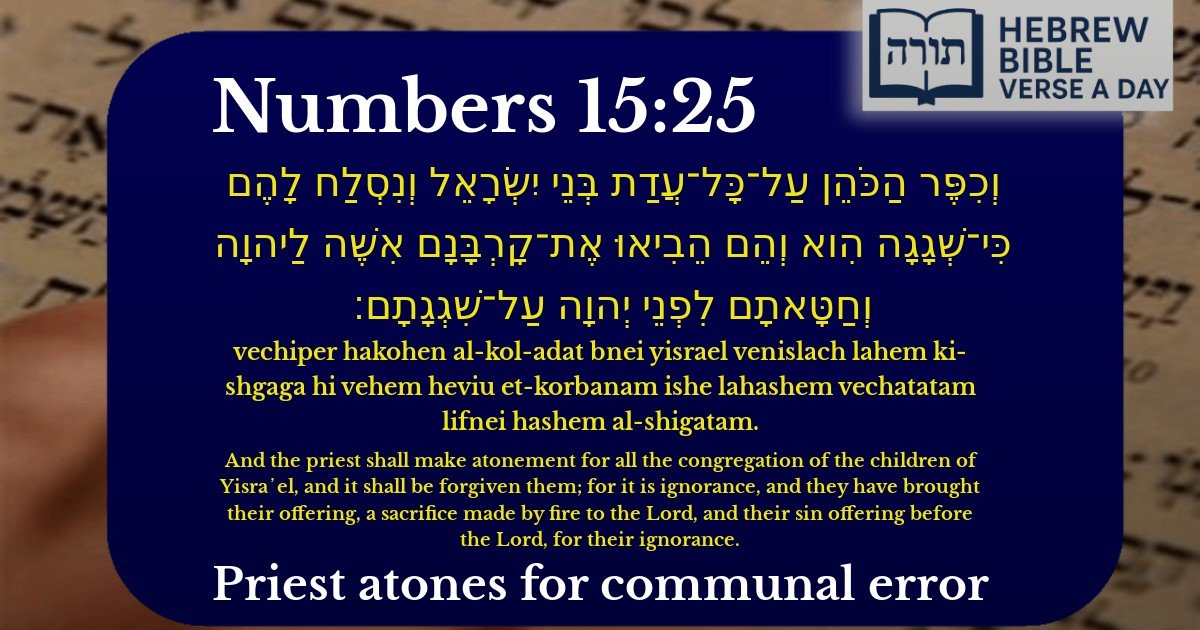
וְכִפֶּר הַכֹּהֵן עַל־כָּל־עֲדַת בְּנֵי יִשְׂרָאֵל וְנִסְלַח לָהֶם כִּי־שְׁגָגָה הִוא וְהֵם הֵבִיאוּ אֶת־קָרְבָּנָם אִשֶּׁה לַיהוָה וְחַטָּאתָם לִפְנֵי יְהוָה עַל־שִׁגְגָתָם׃
English Translation
And the priest shall make atonement for all the congregation of the children of Yisra᾽el, and it shall be forgiven them; for it is ignorance, and they have brought their offering, a sacrifice made by fire to the Lord, and their sin offering before the Lord, for their ignorance.
Transliteration
Vechiper hakohen al-kol-adat bnei yisrael venislach lahem ki-shgaga hi vehem heviu et-korbanam ishe lahashem vechatatam lifnei hashem al-shigatam.
Hebrew Leining Text
וְכִפֶּ֣ר הַכֹּהֵ֗ן עַֽל־כׇּל־עֲדַ֛ת בְּנֵ֥י יִשְׂרָאֵ֖ל וְנִסְלַ֣ח לָהֶ֑ם כִּֽי־שְׁגָגָ֣ה הִ֔וא וְהֵם֩ הֵבִ֨יאוּ אֶת־קׇרְבָּנָ֜ם אִשֶּׁ֣ה לַֽיהֹוָ֗ה וְחַטָּאתָ֛ם לִפְנֵ֥י יְהֹוָ֖ה עַל־שִׁגְגָתָֽם׃
🎵 Listen to leining
Parasha Commentary
📚 Talmud Citations
This verse is quoted in the Talmud.
📖 Horayot 6b
The verse is discussed in the context of communal sacrifices for unintentional sins, particularly focusing on the role of the priest in atonement.
📖 Shevuot 13a
Referenced in a discussion about the procedures for atonement and the conditions under which sacrifices are required for unintentional sins.
Context of the Verse
This verse (Bamidbar 15:25) discusses the atonement process for the entire congregation of Israel when they commit a sin unintentionally (shogeg). The Torah emphasizes the role of the Kohen in facilitating atonement through korbanot (sacrifices), specifically an olah (burnt offering) and a chatat (sin offering).
The Role of the Kohen in Atonement
Rashi explains that the phrase "וְכִפֶּר הַכֹּהֵן" ("the priest shall make atonement") refers to the Kohen Gadol (High Priest), who plays a central role in securing forgiveness for the community. The Rambam (Hilchot Shegagot 12:1) elaborates that this applies specifically to sins committed due to a mistaken ruling by the Sanhedrin, leading the people astray.
The Nature of a Communal Sin
The verse specifies that the sin was committed "כִּי־שְׁגָגָה הִוא" ("for it is ignorance"). The Talmud (Horayot 6b) clarifies that this refers to a situation where the Sanhedrin erroneously permitted an action that was actually forbidden, and the people followed their ruling. The unintentional nature of the sin is key—had it been deliberate, the korban would not suffice.
The Korbanot Brought for Atonement
Forgiveness Through Teshuvah
The Sforno notes that the phrase "וְנִסְלַח לָהֶם" ("and it shall be forgiven them") indicates that mere sacrifice is insufficient without sincere repentance. The korbanot are effective only when accompanied by the people's recognition of their error and commitment to avoid repetition.