

Join Our Newsletter To Be Informed When New Videos Are Posted
Hebrew Text
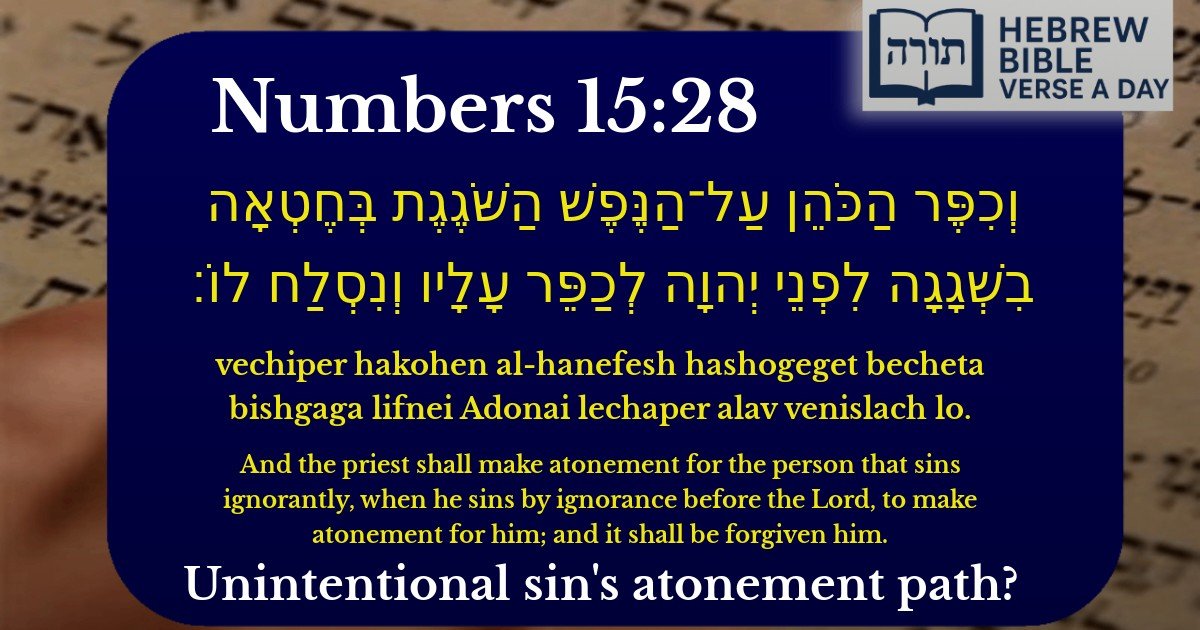
וְכִפֶּר הַכֹּהֵן עַל־הַנֶּפֶשׁ הַשֹּׁגֶגֶת בְּחֶטְאָה בִשְׁגָגָה לִפְנֵי יְהוָה לְכַפֵּר עָלָיו וְנִסְלַח לוֹ׃
English Translation
And the priest shall make atonement for the person that sins ignorantly, when he sins by ignorance before the Lord, to make atonement for him; and it shall be forgiven him.
Transliteration
Vechiper hakohen al-hanefesh hashogeget becheta bishgaga lifnei Adonai lechaper alav venislach lo.
Hebrew Leining Text
וְכִפֶּ֣ר הַכֹּהֵ֗ן עַל־הַנֶּ֧פֶשׁ הַשֹּׁגֶ֛גֶת בְּחֶטְאָ֥הֿ בִשְׁגָגָ֖ה לִפְנֵ֣י יְהֹוָ֑ה לְכַפֵּ֥ר עָלָ֖יו וְנִסְלַ֥ח לֽוֹ׃
🎵 Listen to leining
Parasha Commentary
📚 Talmud Citations
This verse is quoted in the Talmud.
📖 Horayot 10b
The verse is discussed in the context of atonement for unintentional sins, particularly focusing on the role of the priest in the atonement process.
📖 Keritot 25b
This verse is referenced in a discussion about the requirements for atonement and the conditions under which forgiveness is granted for sins committed in ignorance.
Context of the Verse
This verse (Numbers 15:28) discusses the process of atonement for unintentional sins (chet b'shogeg). It is part of a larger passage detailing the laws of sacrifices for both intentional and unintentional transgressions. The Torah emphasizes that even sins committed without malice require atonement, highlighting the importance of spiritual purity.
Meaning of "Kapparah" (Atonement)
Rashi explains that the term v'chiper ("and the priest shall make atonement") refers to the sacrificial process that removes the spiritual impurity caused by the sin. The Kohen's role is essential in facilitating this atonement, as the verse states, lifnei Hashem ("before the Lord"), indicating that the process is divinely ordained.
The Nature of Unintentional Sin
The Rambam (Hilchot Shegagot 1:1) elaborates that an unintentional sin (shogeg) occurs when a person transgresses due to forgetfulness or lack of awareness of the law. Despite the absence of deliberate intent, the act still creates a spiritual blemish requiring rectification. The Talmud (Horayot 8b) further distinguishes between different levels of unintentional sin, such as those caused by negligence versus complete ignorance.
The Role of the Kohen
The Midrash (Sifrei Bamidbar 112) emphasizes that the Kohen serves as an intermediary in the atonement process, symbolizing the need for structured repentance. The verse specifies that the Kohen acts l'chaper alav ("to make atonement for him"), underscoring that the sinner must actively seek reconciliation through the proper channels.
Divine Forgiveness
The phrase v'nislach lo ("and it shall be forgiven him") assures that sincere repentance, coupled with the prescribed atonement, results in divine forgiveness. The Ramban notes that this forgiveness is not merely judicial but also restorative, repairing the relationship between the individual and Hashem.
Practical Implications