

Join Our Newsletter To Be Informed When New Videos Are Posted
Hebrew Text
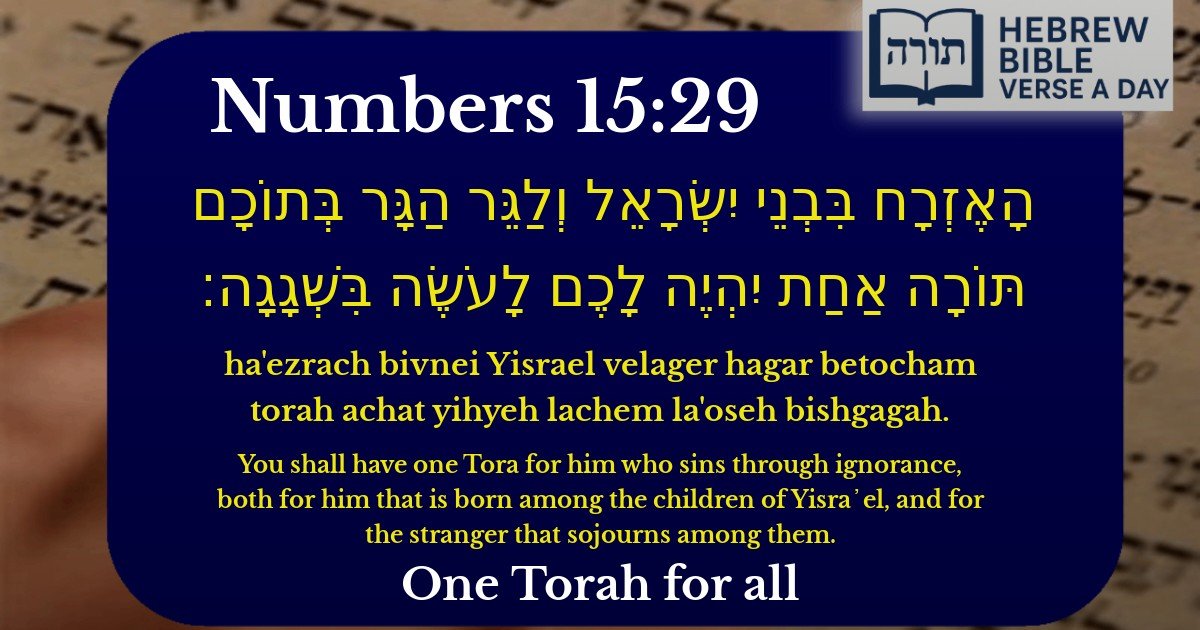
הָאֶזְרָח בִּבְנֵי יִשְׂרָאֵל וְלַגֵּר הַגָּר בְּתוֹכָם תּוֹרָה אַחַת יִהְיֶה לָכֶם לָעֹשֶׂה בִּשְׁגָגָה׃
English Translation
You shall have one Tora for him who sins through ignorance, both for him that is born among the children of Yisra᾽el, and for the stranger that sojourns among them.
Transliteration
Ha'ezrach bivnei Yisrael velager hagar betocham torah achat yihyeh lachem la'oseh bishgagah.
Hebrew Leining Text
הָֽאֶזְרָח֙ בִּבְנֵ֣י יִשְׂרָאֵ֔ל וְלַגֵּ֖ר הַגָּ֣ר בְּתוֹכָ֑ם תּוֹרָ֤ה אַחַת֙ יִהְיֶ֣ה לָכֶ֔ם לָעֹשֶׂ֖ה בִּשְׁגָגָֽה׃
🎵 Listen to leining
Parasha Commentary
📚 Talmud Citations
This verse is quoted in the Talmud.
📖 Keritot 27a
The verse is cited in a discussion about the applicability of Torah laws to both native Israelites and strangers (gerim), emphasizing the principle of equal treatment under the law.
📖 Bava Kamma 38a
Referenced in the context of discussing the legal responsibilities and protections afforded to strangers (gerim) living among the Israelites, highlighting the universality of certain Torah commandments.
Equal Application of Torah Law
The verse (Bamidbar 15:29) establishes a fundamental principle in Halacha: the same Torah laws apply equally to native-born Israelites and converts (gerim). Rashi explains that this teaches us there is no distinction in Torah obligations between those born Jewish and those who join the Jewish people through conversion. The Rambam (Hilchot Shegagot 7:1) codifies this principle, stating that inadvertent sins (shogeg) are treated identically for both groups regarding atonement.
The Nature of the "Ger" in This Context
Ibn Ezra clarifies that the term "ger" here refers specifically to a "ger tzedek" (righteous convert) who has fully embraced Torah observance, not a "ger toshav" (resident alien). The Sifrei (Bamidbar 15:29) emphasizes that this equal treatment applies specifically to mitzvot that were given at Sinai, demonstrating the convert's full integration into the covenant.
Philosophical Implications
Practical Halachic Ramifications
The Mishneh LaMelech (on Rambam Hilchot Shegagot) discusses how this principle affects various areas of law, including:
Spiritual Message
The Or HaChaim highlights that this "one Torah" concept reflects the singular divine origin of our legal system. Just as there is one God, there is one unified system of law for all who commit to serving Him, whether by birth or by choice.