

Join Our Newsletter To Be Informed When New Videos Are Posted
Hebrew Text
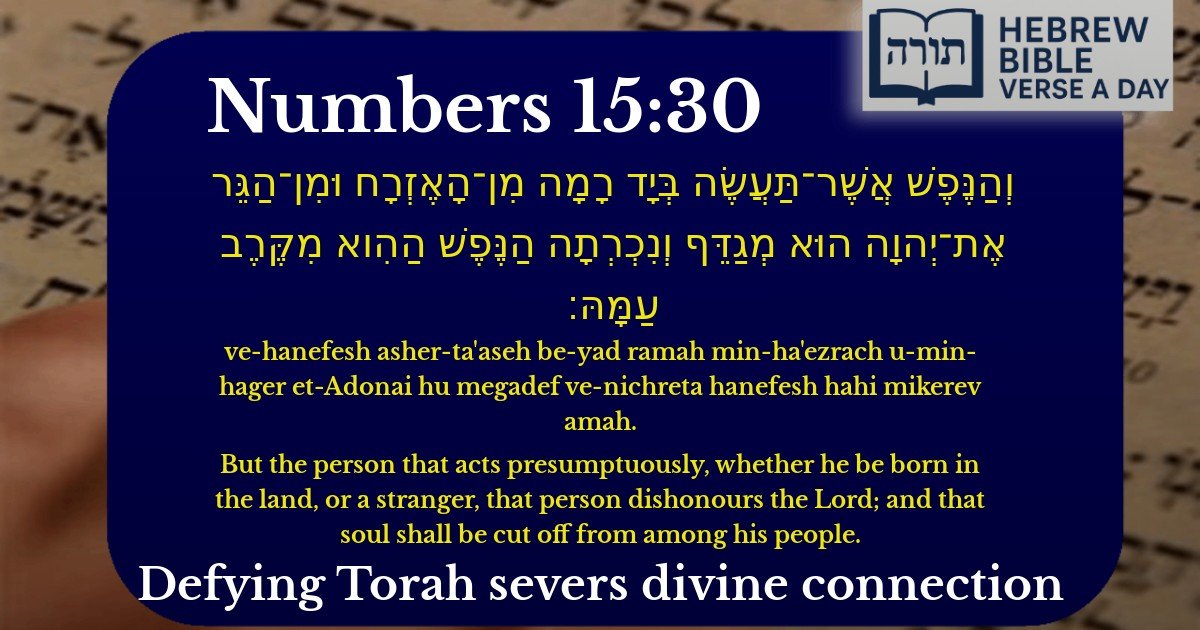
וְהַנֶּפֶשׁ אֲשֶׁר־תַּעֲשֶׂה בְּיָד רָמָה מִן־הָאֶזְרָח וּמִן־הַגֵּר אֶת־יְהוָה הוּא מְגַדֵּף וְנִכְרְתָה הַנֶּפֶשׁ הַהִוא מִקֶּרֶב עַמָּהּ׃
English Translation
But the person that acts presumptuously, whether he be born in the land, or a stranger, that person dishonours the Lord; and that soul shall be cut off from among his people.
Transliteration
Ve-hanefesh asher-ta'aseh be-yad ramah min-ha'ezrach u-min-hager et-Adonai hu megadef ve-nichreta hanefesh hahi mikerev amah.
Hebrew Leining Text
וְהַנֶּ֜פֶשׁ אֲשֶֽׁר־תַּעֲשֶׂ֣ה ׀ בְּיָ֣ד רָמָ֗ה מִן־הָֽאֶזְרָח֙ וּמִן־הַגֵּ֔ר אֶת־יְהֹוָ֖ה ה֣וּא מְגַדֵּ֑ף וְנִכְרְתָ֛ה הַנֶּ֥פֶשׁ הַהִ֖וא מִקֶּ֥רֶב עַמָּֽהּ׃
🎵 Listen to leining
Parasha Commentary
📚 Talmud Citations
This verse is quoted in the Talmud.
📖 Sanhedrin 99a
The verse is discussed in the context of defining the severity of blasphemy and the consequences for those who act presumptuously against God.
📖 Keritot 7b
The verse is referenced in a discussion about the types of sins that warrant being 'cut off' from the community and the atonement processes.
Understanding the Verse
The verse (Bamidbar 15:30) discusses the severe transgression of acting בְּיָד רָמָה ("with a high hand"), which refers to a deliberate and brazen defiance of Hashem's commandments. Rashi explains that this refers to someone who sins לְהַכְעִיס ("to provoke anger"), meaning they rebel against Hashem with full awareness and intent, rather than out of weakness or error.
The Severity of the Sin
According to Rambam (Hilchot Teshuva 3:6-7), this category of sin applies to one who openly denies the authority of the Torah or mocks its commandments. Such a person is considered a מְגַדֵּף ("blasphemer"), not merely in the sense of verbal blasphemy, but as one who defies Hashem through their actions. The punishment of כָּרֵת ("being cut off") signifies a spiritual excision from the Jewish people, as explained in the Talmud (Sanhedrin 90a).
Applicability to Both Natives and Strangers
The verse emphasizes that this law applies equally to הָאֶזְרָח ("the native-born") and הַגֵּר ("the stranger"), meaning a convert. The Sifrei (Bamidbar 112) notes that this underscores the principle that Torah law is binding on all Jews, regardless of origin. A convert who accepts the Torah is held to the same standards as one born into the covenant.
Key Teachings from the Midrash
Practical Implications
The Talmud (Kritut 7a) derives from this verse that repentance does not suspend the punishment of כָּרֵת for one who sins בְּיָד רָמָה, highlighting the gravity of intentional defiance. However, Rambam (Hilchot Teshuva 3:14) teaches that sincere repentance can still bring atonement if the sinner abandons their rebellious mindset.