Frequently Asked Questions
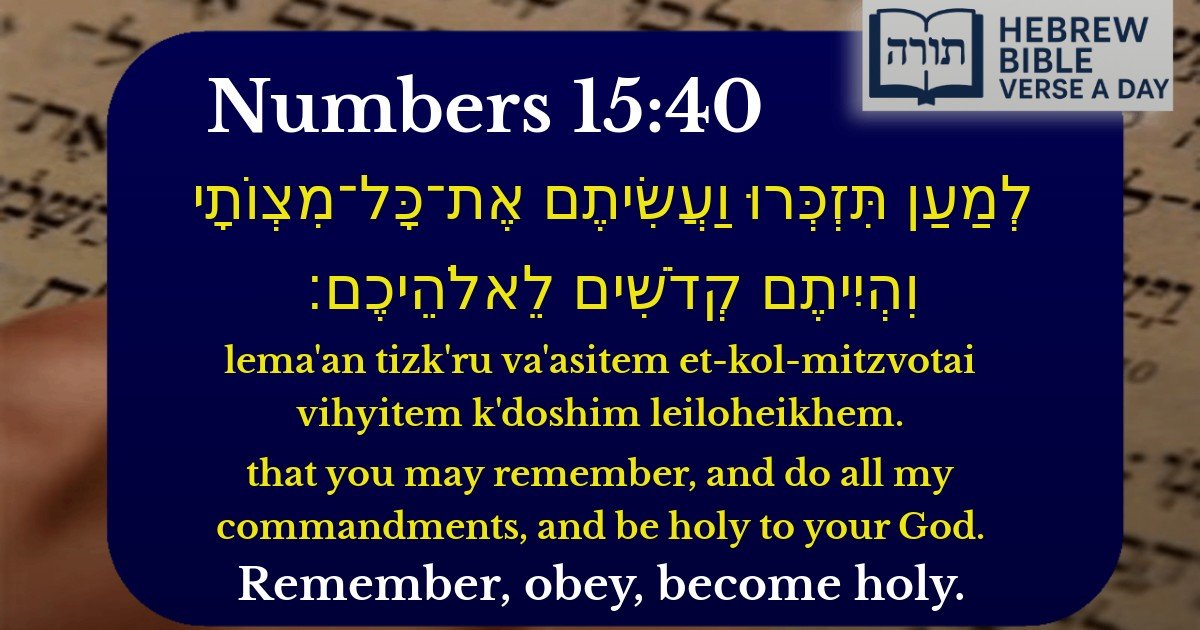
Q: What does Numbers 15:40 mean?
A: Numbers 15:40 teaches that remembering and fulfilling all of Hashem's commandments leads to holiness. Rashi explains that this verse connects to the previous verses about tzitzit (fringes), which serve as a visual reminder to observe the mitzvot. By keeping the commandments, we sanctify ourselves and draw closer to Hashem.
Q: Why is remembering the commandments important in this verse?
A: The Torah emphasizes remembering the commandments because human beings are prone to forgetfulness. The Talmud (Menachot 43b) states that mitzvot like tzitzit act as constant reminders of our spiritual obligations. Remembering leads to action, and action leads to holiness—this is the progression taught in the verse.
Q: How does this verse apply to daily Jewish life?
A: This verse reminds us that every mitzvah we perform brings us closer to holiness. The Rambam (Hilchot Tefillin 4:25-26) explains that commandments like tzitzit, tefillin, and mezuzah serve as constant reminders of our relationship with Hashem. By being mindful of mitzvot throughout the day, we fulfill this verse's instruction to 'remember and do.'
Q: What does it mean to 'be holy to your God' in this verse?
A: The Midrash (Sifrei Bamidbar 115) explains that holiness means separating from sin and dedicating oneself to Hashem's service. The Ramban (on Leviticus 19:2) adds that even in permitted matters, we should practice moderation and sanctify ourselves. This verse teaches that holiness is achieved through conscious mitzvah observance in all aspects of life.
Q: How do tzitzit relate to this verse?
A: This verse appears in the context of the mitzvah of tzitzit. Rashi explains that the blue thread in tzitzit (tekhelet) reminds us of the sea, which reminds us of the sky, which reminds us of Hashem's throne—creating a chain of remembrance leading to mitzvah observance. The Talmud (Menachot 43b) states that tzitzit are equal to all mitzvot because they constantly remind us to fulfill them.


Context in the Torah
The verse (Numbers 15:40) appears in the passage discussing the mitzvah of tzitzit, the fringes worn on the corners of garments. The Torah emphasizes that seeing the tzitzit serves as a reminder to fulfill all of Hashem's commandments and to strive for holiness.
Rashi's Explanation
Rashi explains that the phrase "that you may remember" refers to the visual reminder of the tzitzit, which prompts a person to observe the mitzvot. He connects this to the previous verse (15:39), where the Torah states that seeing the tzitzit prevents one from following after their heart and eyes—meaning it guards against sinful thoughts and desires.
Rambam's Perspective
In Mishneh Torah (Hilchot Tzitzit 3:12), Rambam teaches that the mitzvah of tzitzit is equal in importance to all other mitzvot combined because it serves as a constant reminder of them. The blue thread (techelet) in the tzitzit is particularly significant, as its color resembles the sea, which reflects the sky, which in turn reminds a person of the Divine Throne (based on Chullin 89a).
Holiness Through Mitzvot
The verse concludes with the goal: "and be holy to your God." The Sforno explains that true holiness is achieved not through asceticism or withdrawal from the world, but through the active fulfillment of mitzvot in daily life. By remembering and performing the commandments, a person sanctifies themselves and draws closer to Hashem.
Midrashic Insight
The Midrash (Bamidbar Rabbah 17:6) compares the tzitzit to a servant who wears his master's insignia, constantly reminding him of his duties. Similarly, the mitzvot are our "insignia," marking us as servants of Hashem and guiding our actions toward holiness.
Practical Application