

Join Our Newsletter To Be Informed When New Videos Are Posted
Hebrew Text
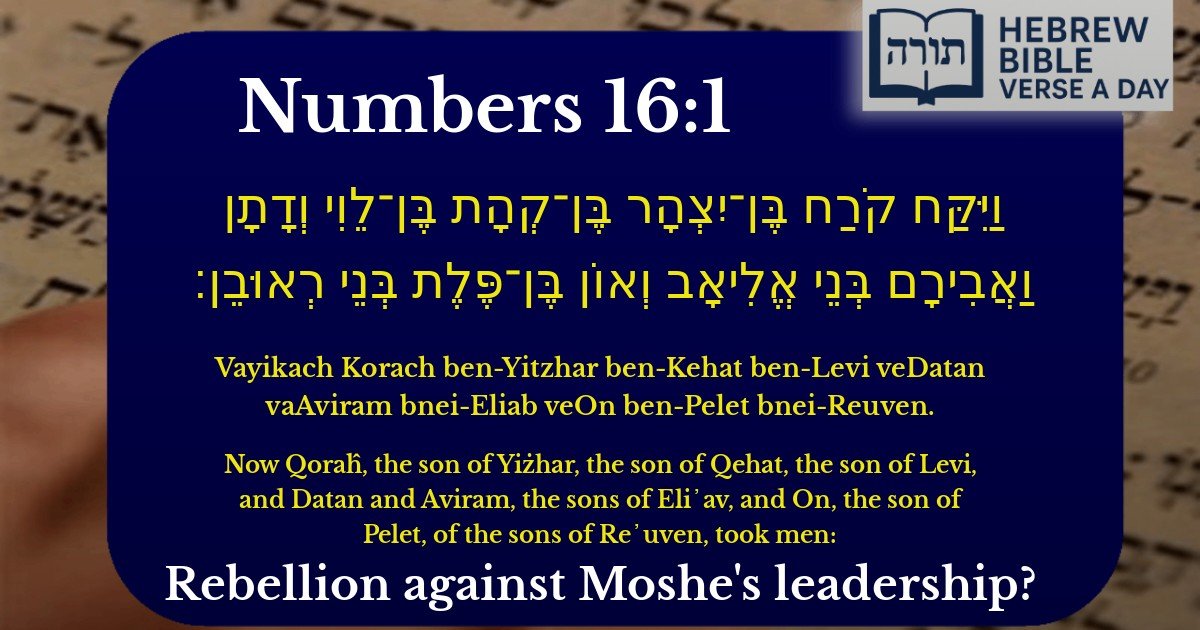
וַיִּקַּח קֹרַח בֶּן־יִצְהָר בֶּן־קְהָת בֶּן־לֵוִי וְדָתָן וַאֲבִירָם בְּנֵי אֱלִיאָב וְאוֹן בֶּן־פֶּלֶת בְּנֵי רְאוּבֵן׃
English Translation
Now Qoraĥ, the son of Yiżhar, the son of Qehat, the son of Levi, and Datan and Aviram, the sons of Eli᾽av, and On, the son of Pelet, of the sons of Re᾽uven, took men:
Transliteration
Vayikach Korach ben-Yitzhar ben-Kehat ben-Levi veDatan vaAviram bnei-Eliab veOn ben-Pelet bnei-Reuven.
Hebrew Leining Text
וַיִּקַּ֣ח קֹ֔רַח בֶּן־יִצְהָ֥ר בֶּן־קְהָ֖ת בֶּן־לֵוִ֑י וְדָתָ֨ן וַאֲבִירָ֜ם בְּנֵ֧י אֱלִיאָ֛ב וְא֥וֹן בֶּן־פֶּ֖לֶת בְּנֵ֥י רְאוּבֵֽן׃
🎵 Listen to leining
Parasha Commentary
📚 Talmud Citations
This verse is quoted in the Talmud.
📖 Sanhedrin 109b
The verse is referenced in the discussion about Korah's rebellion and his followers, Dathan and Abiram, as part of the broader narrative about their challenge to Moses and Aaron's leadership.
📖 Bava Batra 74b
The verse is mentioned in the context of discussing the fate of Korah and his assembly, emphasizing the consequences of their rebellion.
The Context of Korach's Rebellion
The verse introduces the rebellion of Korach and his followers against Moshe and Aharon's leadership. Rashi (Bamidbar 16:1) notes that Korach was a member of the prestigious Kehat family within the tribe of Levi, yet he allowed jealousy to drive him to challenge Aharon's appointment as Kohen Gadol. The Torah emphasizes his lineage to highlight that even someone of noble descent can fall into error if led by improper motives.
Korach's Lineage and Its Significance
The verse traces Korach's lineage back to Levi, which the Midrash (Bamidbar Rabbah 18:2) explains as a subtle critique: despite his distinguished ancestry, he failed to uphold the humility of his forefathers. The Talmud (Sanhedrin 109b) further elaborates that Korach's rebellion was rooted in his resentment over being passed over for leadership roles, despite his qualifications.
The Inclusion of Datan, Aviram, and On
The verse also mentions Datan, Aviram, and On from the tribe of Reuven. Rashi (Bamidbar 16:1) explains that Reuven's descendants camped near Korach's faction, making them susceptible to his influence. The Midrash (Tanchuma Korach 1) suggests that their proximity led to their participation in the rebellion, teaching that one must be cautious of negative influences, even from those nearby.
On ben Pelet's Mysterious Role
On ben Pelet is mentioned but disappears from the narrative. The Talmud (Sanhedrin 109b) credits his wife with saving him by persuading him to withdraw from the rebellion. This teaches the power of wise counsel, particularly from a righteous spouse, in averting disaster.
Lessons from the Verse