

Join Our Newsletter To Be Informed When New Videos Are Posted
Hebrew Text
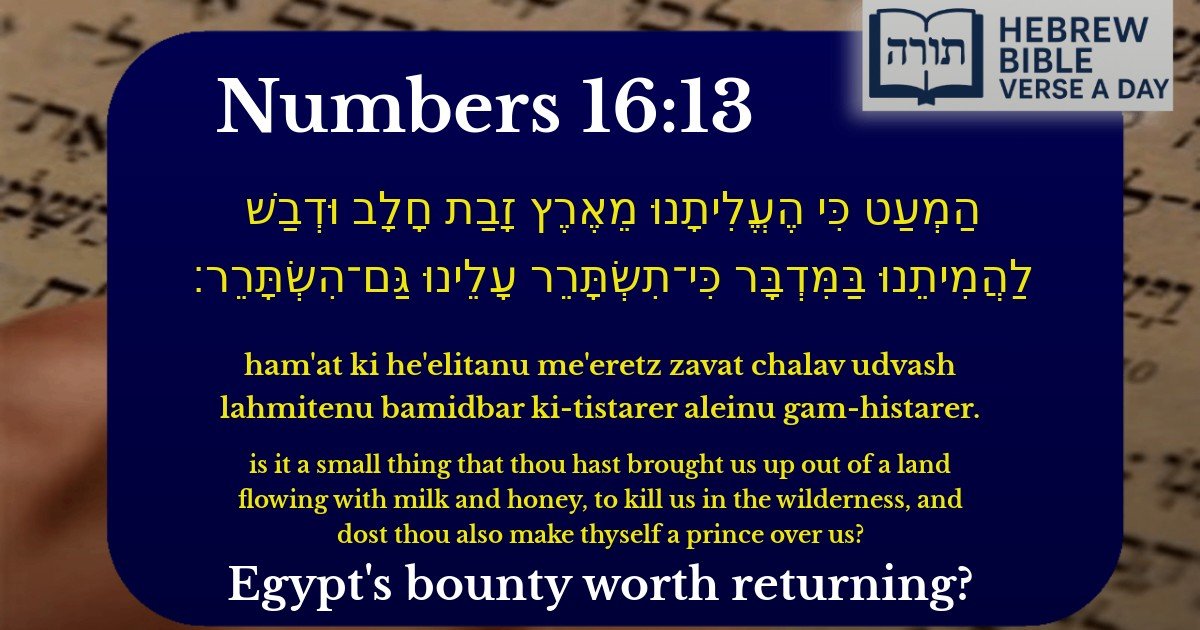
הַמְעַט כִּי הֶעֱלִיתָנוּ מֵאֶרֶץ זָבַת חָלָב וּדְבַשׁ לַהֲמִיתֵנוּ בַּמִּדְבָּר כִּי־תִשְׂתָּרֵר עָלֵינוּ גַּם־הִשְׂתָּרֵר׃
English Translation
is it a small thing that thou hast brought us up out of a land flowing with milk and honey, to kill us in the wilderness, and dost thou also make thyself a prince over us?
Transliteration
Ham'at ki he'elitanu me'eretz zavat chalav udvash lahmitenu bamidbar ki-tistarer aleinu gam-histarer.
Hebrew Leining Text
הַמְעַ֗ט כִּ֤י הֶֽעֱלִיתָ֙נוּ֙ מֵאֶ֨רֶץ זָבַ֤ת חָלָב֙ וּדְבַ֔שׁ לַהֲמִיתֵ֖נוּ בַּמִּדְבָּ֑ר כִּֽי־תִשְׂתָּרֵ֥ר עָלֵ֖ינוּ גַּם־הִשְׂתָּרֵֽר׃
🎵 Listen to leining
Parasha Commentary
📚 Talmud Citations
This verse is quoted in the Talmud.
📖 Sanhedrin 110a
The verse is referenced in the context of discussing the rebellion of Korach and his followers against Moses, illustrating their complaints and the gravity of their challenge to Moses' leadership.
Context of the Verse
This verse (Bamidbar 16:13) is part of the rebellion of Korach and his followers against Moshe and Aharon. Datan and Aviram, who were among the rebels, confront Moshe with these words, expressing their discontent with his leadership and accusing him of bringing them out of Egypt only to perish in the wilderness.
Analysis of the Complaint
The rebels sarcastically refer to Egypt as "a land flowing with milk and honey," a term usually reserved for Eretz Yisrael. Rashi explains that they were mocking Moshe by using this phrase, implying that Egypt was just as good as the promised land. This reflects their distorted perspective and ingratitude toward Hashem's redemption.
Rebellion Against Leadership
The phrase "כִּי־תִשְׂתָּרֵר עָלֵינוּ גַּם־הִשְׂתָּרֵר" ("dost thou also make thyself a prince over us?") reveals their core grievance: they rejected Moshe's authority. The Sforno explains that they saw Moshe's leadership as self-appointed rather than divinely ordained.
Spiritual Lessons
This episode serves as a warning against: