

Join Our Newsletter To Be Informed When New Videos Are Posted
Hebrew Text
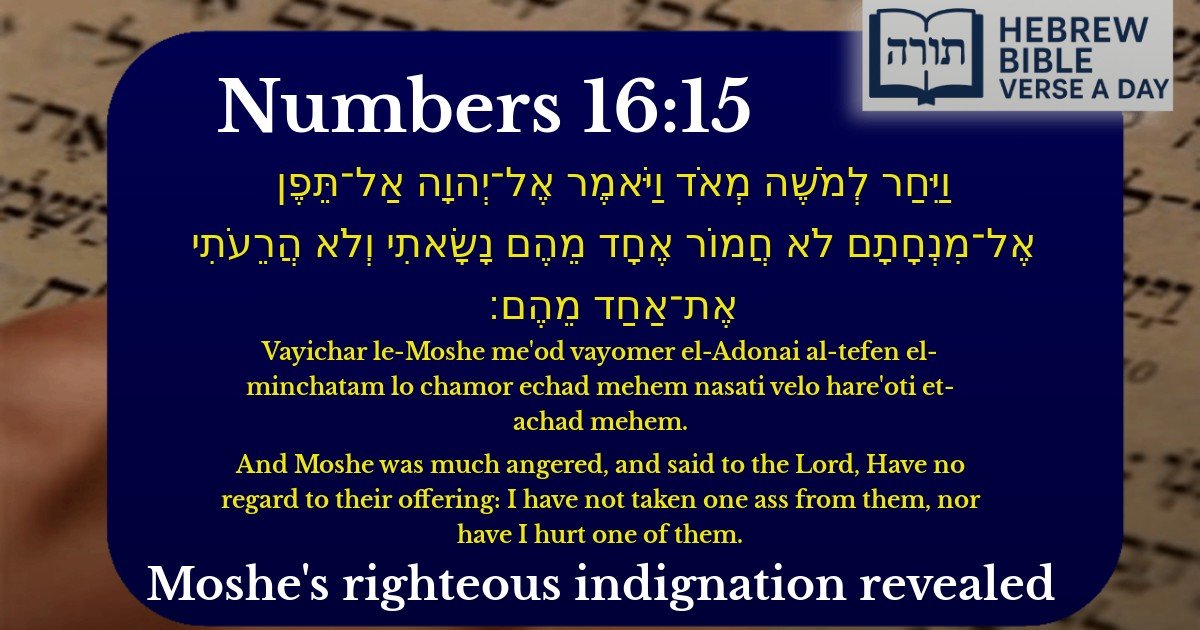
וַיִּחַר לְמֹשֶׁה מְאֹד וַיֹּאמֶר אֶל־יְהוָה אַל־תֵּפֶן אֶל־מִנְחָתָם לֹא חֲמוֹר אֶחָד מֵהֶם נָשָׂאתִי וְלֹא הֲרֵעֹתִי אֶת־אַחַד מֵהֶם׃
English Translation
And Moshe was much angered, and said to the Lord, Have no regard to their offering: I have not taken one ass from them, nor have I hurt one of them.
Transliteration
Vayichar le-Moshe me'od vayomer el-Adonai al-tefen el-minchatam lo chamor echad mehem nasati velo hare'oti et-achad mehem.
Hebrew Leining Text
וַיִּ֤חַר לְמֹשֶׁה֙ מְאֹ֔ד וַיֹּ֙אמֶר֙ אֶל־יְהֹוָ֔ה אַל־תֵּ֖פֶן אֶל־מִנְחָתָ֑ם לֹ֠א חֲמ֨וֹר אֶחָ֤ד מֵהֶם֙ נָשָׂ֔אתִי וְלֹ֥א הֲרֵעֹ֖תִי אֶת־אַחַ֥ד מֵהֶֽם׃
🎵 Listen to leining
Parasha Commentary
📚 Talmud Citations
This verse is not quoted in the Talmud.
Context of the Verse
The verse (Bamidbar 16:15) appears in the episode of Korach's rebellion against Moshe and Aharon. Korach, Datan, Aviram, and their followers challenge Moshe's leadership and Aharon's priesthood, leading to a confrontation. Moshe responds with deep frustration, declaring his innocence before Hashem.
Moshe's Anger and Its Significance
Rashi explains that Moshe's anger ("וַיִּחַר לְמֹשֶׁה מְאֹד") was not personal but stemmed from zeal for Hashem's honor. The rebellion undermined the divine appointment of leadership, prompting Moshe to defend the truth. The Rambam (Hilchos De'os 2:3) teaches that anger is only justified when standing up for righteousness, as Moshe did here.
Moshe's Defense: "I Have Taken Nothing from Them"
Moshe declares, "לֹא חֲמוֹר אֶחָד מֵהֶם נָשָׂאתִי"—"I have not taken one donkey from them." Rashi interprets this as Moshe affirming his financial integrity: he never exploited his leadership for personal gain, not even taking a donkey (a common mode of transportation) for his own use. The Midrash Tanchuma (Korach 5) elaborates that Moshe emphasized his ethical conduct to contrast with corrupt leaders who burden their people.
"Nor Have I Hurt One of Them"
Moshe adds, "וְלֹא הֲרֵעֹתִי אֶת־אַחַד מֵהֶם"—"nor have I harmed any of them." The Sforno explains that Moshe never wronged anyone, even unintentionally, demonstrating his impeccable moral character. The Talmud (Sanhedrin 110a) connects this to the broader principle that leaders must avoid even the appearance of misconduct to maintain public trust.
Spiritual Implications of Moshe's Plea
Moshe's plea, "אַל־תֵּפֶן אֶל־מִנְחָתָם"—"Do not accept their offering," reflects his concern that Korach's rebellion was insincere. The Kli Yakar notes that Moshe recognized their offerings were not for Hashem's sake but for selfish ambition. This aligns with the Talmudic teaching (Berachos 17a) that mitzvos must be performed with pure intentions.
Lessons for Leadership and Integrity