

Join Our Newsletter To Be Informed When New Videos Are Posted
Hebrew Text
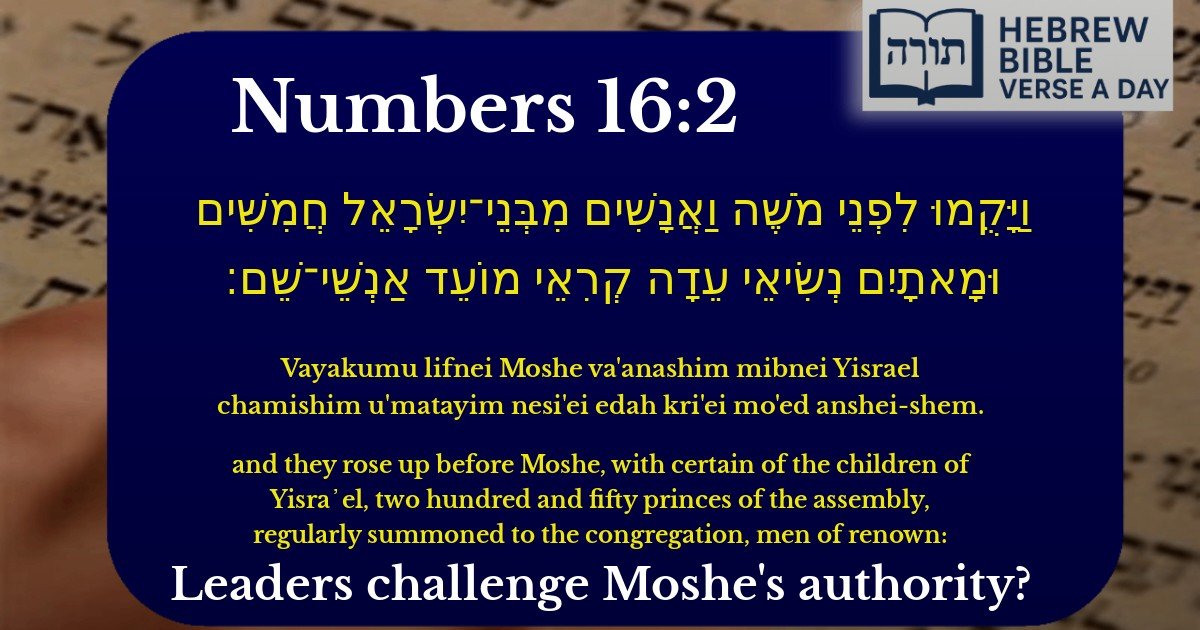
וַיָּקֻמוּ לִפְנֵי מֹשֶׁה וַאֲנָשִׁים מִבְּנֵי־יִשְׂרָאֵל חֲמִשִּׁים וּמָאתָיִם נְשִׂיאֵי עֵדָה קְרִאֵי מוֹעֵד אַנְשֵׁי־שֵׁם׃
English Translation
and they rose up before Moshe, with certain of the children of Yisra᾽el, two hundred and fifty princes of the assembly, regularly summoned to the congregation, men of renown:
Transliteration
Vayakumu lifnei Moshe va'anashim mibnei Yisrael chamishim u'matayim nesi'ei edah kri'ei mo'ed anshei-shem.
Hebrew Leining Text
וַיָּקֻ֙מוּ֙ לִפְנֵ֣י מֹשֶׁ֔ה וַאֲנָשִׁ֥ים מִבְּנֵֽי־יִשְׂרָאֵ֖ל חֲמִשִּׁ֣ים וּמָאתָ֑יִם נְשִׂיאֵ֥י עֵדָ֛ה קְרִאֵ֥י מוֹעֵ֖ד אַנְשֵׁי־שֵֽׁם׃
🎵 Listen to leining
Parasha Commentary
📚 Talmud Citations
This verse is quoted in the Talmud.
📖 Sanhedrin 110a
The verse is referenced in the discussion about the rebellion of Korach and his followers, emphasizing the gravity of their challenge to Moshe's authority.
Context in the Torah
This verse (Bamidbar 16:2) describes the rebellion of Korach and his followers against Moshe and Aharon. The 250 princes of the assembly were prominent leaders who joined Korach in challenging the authority of Moshe and the kehunah (priesthood) of Aharon.
Rashi's Explanation
Rashi notes that these men were "נְשִׂיאֵי עֵדָה" (princes of the assembly) who held positions of leadership in the Sanhedrin or other councils. He emphasizes that they were "אַנְשֵׁי־שֵׁם" (men of renown), indicating their high status in the community. Their prominence made their rebellion particularly dangerous, as it could sway public opinion against Moshe.
Rambam's Perspective
In Moreh Nevuchim (3:51), Rambam discusses how leadership disputes often arise from intellectual pride. These 250 men, though distinguished, erred in believing their own wisdom superseded Moshe's divinely appointed authority. Their status as "קְרִאֵי מוֹעֵד" (regularly summoned to the congregation) suggests they were accustomed to positions of influence, which may have fueled their arrogance.
Midrashic Insights
Halachic Implications
The Chofetz Chaim (in Shmiras HaLashon) derives from this episode the severity of machlokes (dispute), especially when initiated by respected leaders. Their punishment (later in the parsha) underscores the Torah's strict view of challenging legitimate halachic authority.