

Join Our Newsletter To Be Informed When New Videos Are Posted
Hebrew Text
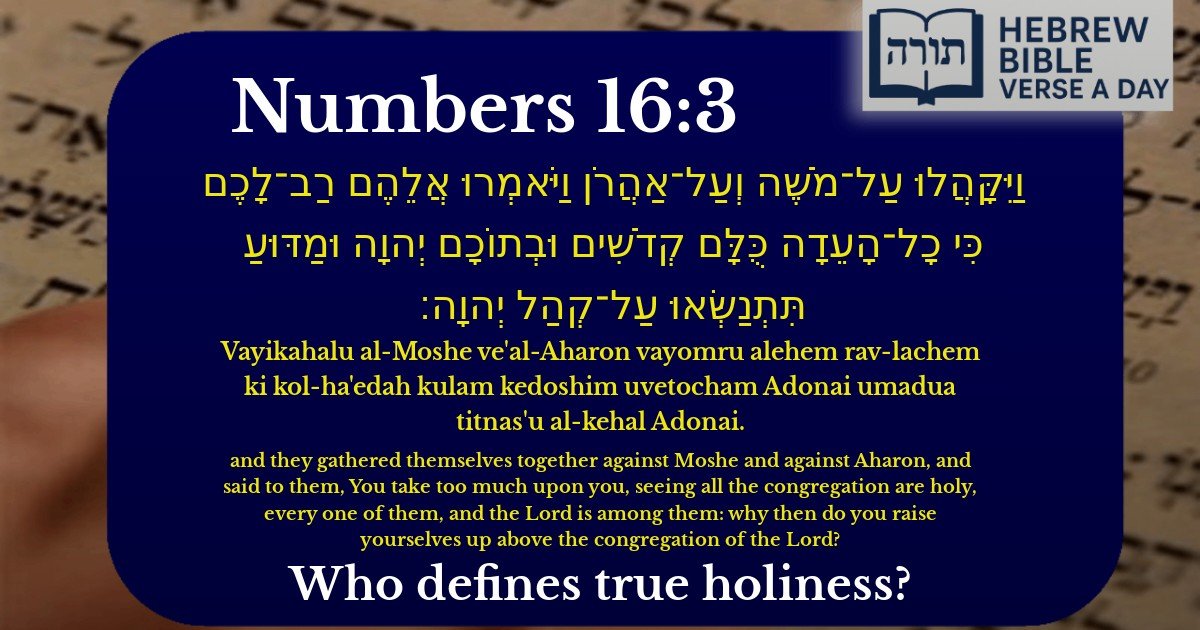
וַיִּקָּהֲלוּ עַל־מֹשֶׁה וְעַל־אַהֲרֹן וַיֹּאמְרוּ אֲלֵהֶם רַב־לָכֶם כִּי כָל־הָעֵדָה כֻּלָּם קְדֹשִׁים וּבְתוֹכָם יְהוָה וּמַדּוּעַ תִּתְנַשְּׂאוּ עַל־קְהַל יְהוָה׃
English Translation
and they gathered themselves together against Moshe and against Aharon, and said to them, You take too much upon you, seeing all the congregation are holy, every one of them, and the Lord is among them: why then do you raise yourselves up above the congregation of the Lord?
Transliteration
Vayikahalu al-Moshe ve'al-Aharon vayomru alehem rav-lachem ki kol-ha'edah kulam kedoshim uvetocham Adonai umadua titnas'u al-kehal Adonai.
Hebrew Leining Text
וַיִּֽקָּהֲל֞וּ עַל־מֹשֶׁ֣ה וְעַֽל־אַהֲרֹ֗ן וַיֹּאמְר֣וּ אֲלֵהֶם֮ רַב־לָכֶם֒ כִּ֤י כׇל־הָֽעֵדָה֙ כֻּלָּ֣ם קְדֹשִׁ֔ים וּבְתוֹכָ֖ם יְהֹוָ֑ה וּמַדּ֥וּעַ תִּֽתְנַשְּׂא֖וּ עַל־קְהַ֥ל יְהֹוָֽה׃
🎵 Listen to leining
Parasha Commentary
📚 Talmud Citations
This verse is quoted in the Talmud.
📖 Sanhedrin 110a
The verse is cited in a discussion about the rebellion of Korach and his followers, illustrating the dangers of challenging divinely appointed leadership.
Context of the Verse
This verse (Bamidbar 16:3) describes the rebellion of Korach and his followers against Moshe and Aharon. The dispute arises from a challenge to their leadership, with Korach claiming that the entire congregation is holy and questioning why Moshe and Aharon elevate themselves above the people.
Rashi's Commentary
Rashi explains that Korach's argument was based on a misunderstanding of the nature of holiness. While it is true that the entire nation is holy—as stated in Shemot 19:6, "You shall be to Me a kingdom of priests and a holy nation"—Korach erred in equating the holiness of the entire nation with the unique roles assigned by Hashem to Moshe and Aharon. Rashi emphasizes that leadership and priesthood were divine appointments, not self-elevation.
Rambam's Perspective
Rambam (Hilchos De'os 6:1-2) discusses the dangers of machlokes (dispute) and how Korach's rebellion exemplifies the sin of challenging divinely ordained authority. He teaches that disputes not for the sake of Heaven, like Korach's, lead to destruction, whereas debates for the sake of truth, like those of Hillel and Shammai, endure.
Midrashic Insights
Halachic Implications
The Talmud (Sanhedrin 110a) derives from this episode that one should not persist in a dispute, as Korach and his followers were punished severely for their rebellion. The Gemara warns that anyone who perpetuates machlokes violates a negative commandment and risks losing their share in the World to Come.
Spiritual Lessons
The incident teaches the importance of recognizing and respecting divinely appointed roles within Klal Yisrael. While all Jews are holy, Hashem assigns specific functions to individuals (e.g., Leviim, Kohanim, Torah scholars) for the community's benefit. Challenging these roles without just cause undermines the unity and structure of Am Yisrael.