

Join Our Newsletter To Be Informed When New Videos Are Posted
Hebrew Text
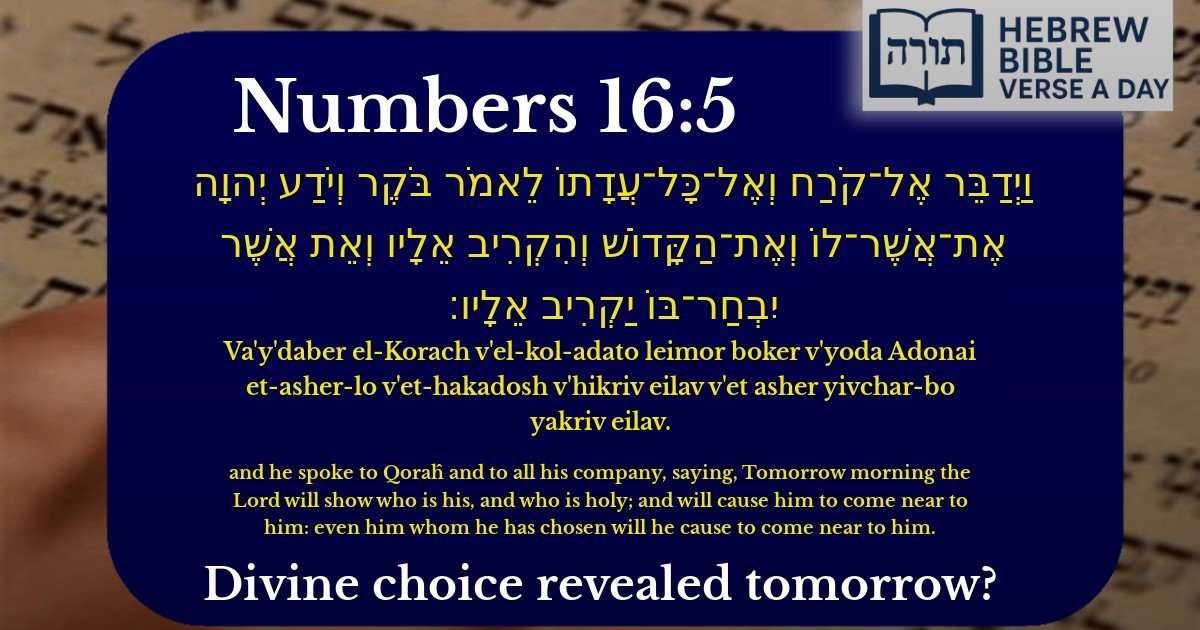
וַיְדַבֵּר אֶל־קֹרַח וְאֶל־כָּל־עֲדָתוֹ לֵאמֹר בֹּקֶר וְיֹדַע יְהוָה אֶת־אֲשֶׁר־לוֹ וְאֶת־הַקָּדוֹשׁ וְהִקְרִיב אֵלָיו וְאֵת אֲשֶׁר יִבְחַר־בּוֹ יַקְרִיב אֵלָיו׃
English Translation
and he spoke to Qoraĥ and to all his company, saying, Tomorrow morning the Lord will show who is his, and who is holy; and will cause him to come near to him: even him whom he has chosen will he cause to come near to him.
Transliteration
Va'y'daber el-Korach v'el-kol-adato leimor boker v'yoda Adonai et-asher-lo v'et-hakadosh v'hikriv eilav v'et asher yivchar-bo yakriv eilav.
Hebrew Leining Text
וַיְדַבֵּ֨ר אֶל־קֹ֜רַח וְאֶֽל־כׇּל־עֲדָתוֹ֮ לֵאמֹר֒ בֹּ֠קֶר וְיֹדַ֨ע יְהֹוָ֧ה אֶת־אֲשֶׁר־ל֛וֹ וְאֶת־הַקָּד֖וֹשׁ וְהִקְרִ֣יב אֵלָ֑יו וְאֵ֛ת אֲשֶׁ֥ר יִבְחַר־בּ֖וֹ יַקְרִ֥יב אֵלָֽיו׃
🎵 Listen to leining
Parasha Commentary
📚 Talmud Citations
This verse is quoted in the Talmud.
📖 Sanhedrin 110a
The verse is discussed in the context of Korach's rebellion, illustrating the divine selection of Aaron and the priesthood.
📖 Yoma 53b
Referenced in a discussion about the selection and sanctity of the High Priest.
The Context of Korach's Rebellion
This verse (Bamidbar 16:5) is part of Moshe's response to Korach's rebellion against the leadership of Moshe and Aharon. Korach, a Levite, challenged their authority, claiming that "the entire congregation is holy" (Bamidbar 16:3). Moshe responds by proposing a divine test to determine whom Hashem has truly chosen for leadership and holiness.
Rashi's Explanation
Rashi explains that Moshe's words, "בֹּקֶר וְיֹדַע יְהוָה" ("Tomorrow morning Hashem will show"), indicate that the matter would be clarified in the morning, as judgment is typically carried out during the day (Sanhedrin 35b). The phrase "אֶת־אֲשֶׁר־לוֹ" ("who is His") refers to Aharon, whom Hashem had already chosen for the priesthood (Rashi on Bamidbar 16:5).
Rambam on Divine Selection
Rambam (Hilchos Klei HaMikdash 4:12) emphasizes that the priesthood is not a matter of human appointment but divine selection. Moshe's declaration underscores that only Hashem determines who is truly holy and fit for service in the Mishkan.
The Midrashic Perspective
Midrash Tanchuma (Korach 5) elaborates that Moshe gave Korach and his followers time to reconsider overnight, demonstrating his mercy and hope that they might repent. The phrase "וְהִקְרִיב אֵלָיו" ("and will cause him to come near") hints at the tragic outcome—those who were not chosen would be consumed by fire (Bamidbar 16:35).
Key Lessons from the Verse