

Join Our Newsletter To Be Informed When New Videos Are Posted
Hebrew Text
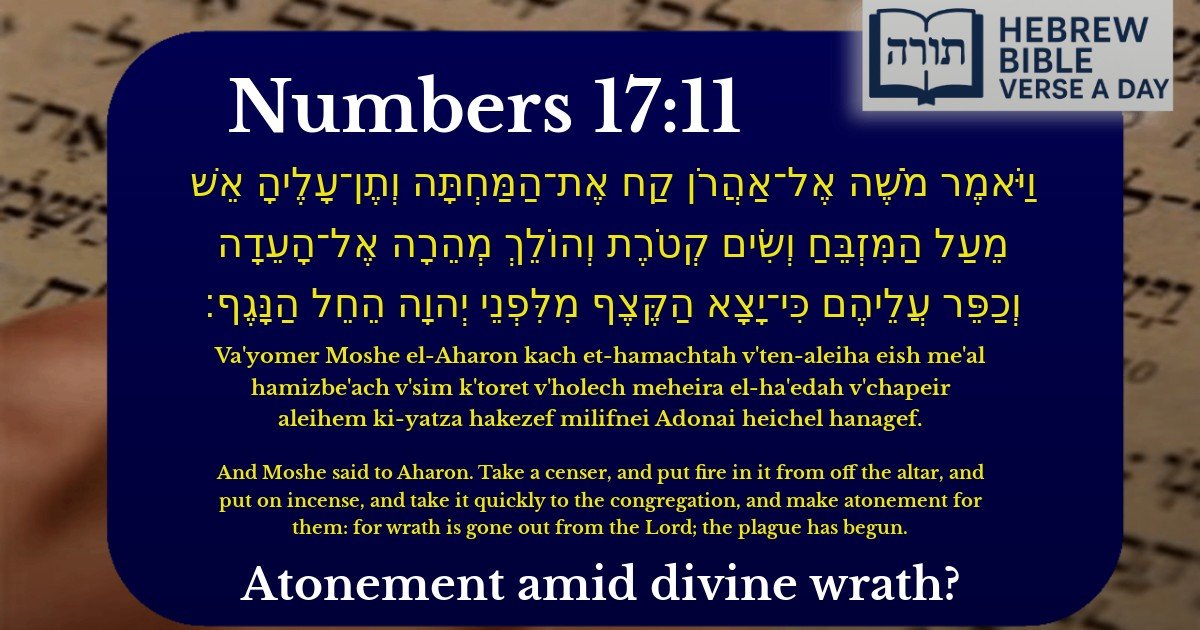
וַיֹּאמֶר מֹשֶׁה אֶל־אַהֲרֹן קַח אֶת־הַמַּחְתָּה וְתֶן־עָלֶיהָ אֵשׁ מֵעַל הַמִּזְבֵּחַ וְשִׂים קְטֹרֶת וְהוֹלֵךְ מְהֵרָה אֶל־הָעֵדָה וְכַפֵּר עֲלֵיהֶם כִּי־יָצָא הַקֶּצֶף מִלִּפְנֵי יְהוָה הֵחֵל הַנָּגֶף׃
English Translation
And Moshe said to Aharon. Take a censer, and put fire in it from off the altar, and put on incense, and take it quickly to the congregation, and make atonement for them: for wrath is gone out from the Lord; the plague has begun.
Transliteration
Va'yomer Moshe el-Aharon kach et-hamachtah v'ten-aleiha eish me'al hamizbe'ach v'sim k'toret v'holech meheira el-ha'edah v'chapeir aleihem ki-yatza hakezef milifnei Adonai heichel hanagef.
Hebrew Leining Text
וַיֹּ֨אמֶר מֹשֶׁ֜ה אֶֽל־אַהֲרֹ֗ן קַ֣ח אֶת־הַ֠מַּחְתָּ֠ה וְתֶן־עָלֶ֨יהָ אֵ֜שׁ מֵעַ֤ל הַמִּזְבֵּ֙חַ֙ וְשִׂ֣ים קְטֹ֔רֶת וְהוֹלֵ֧ךְ מְהֵרָ֛ה אֶל־הָעֵדָ֖ה וְכַפֵּ֣ר עֲלֵיהֶ֑ם כִּֽי־יָצָ֥א הַקֶּ֛צֶף מִלִּפְנֵ֥י יְהֹוָ֖ה הֵחֵ֥ל הַנָּֽגֶף׃
🎵 Listen to leining
Parasha Commentary
📚 Talmud Citations
This verse is quoted in the Talmud.
📖 Shabbat 89a
The verse is referenced in the context of discussing the actions of Moses and Aaron during the plague, highlighting their roles in making atonement for the people.
📖 Yoma 44b
The verse is cited in a discussion about the use of the censer and incense for atonement, particularly in relation to the High Priest's service on Yom Kippur.
Context of the Verse
This verse (Bamidbar 17:11) occurs during the aftermath of Korach's rebellion, when a plague breaks out among the Israelites as divine punishment. Moshe instructs Aharon to take immediate action to halt the plague by offering incense, a powerful atonement ritual.
Rashi's Explanation
Rashi explains that Moshe tells Aharon to act swiftly ("מְהֵרָה") because the plague had already begun ("הֵחֵל הַנָּגֶף"). The incense serves as a protective measure, as Aharon's role as Kohen Gadol is to intercede on behalf of the people. Rashi also notes that the fire must be taken "מֵעַל הַמִּזְבֵּחַ" (from upon the altar) to ensure its sanctity, as only holy fire may be used for such a critical atonement.
Rambam on the Role of Incense
In Hilchot Temidin u'Musafin (3:3), the Rambam explains that the incense (קְטֹרֶת) has a unique capacity to halt plagues, as seen in this episode. Its aromatic smoke symbolizes prayer rising to Heaven, and its use here demonstrates Aharon's role as an intermediary to appease divine wrath.
Midrashic Insights
Halachic Significance
The Kli Yakar emphasizes that Aharon's obedience—acting precisely as Moshe instructed—was key to the atonement's success. This teaches that proper ritual execution, especially in times of crisis, requires adherence to divine command without deviation.