

Join Our Newsletter To Be Informed When New Videos Are Posted
Hebrew Text
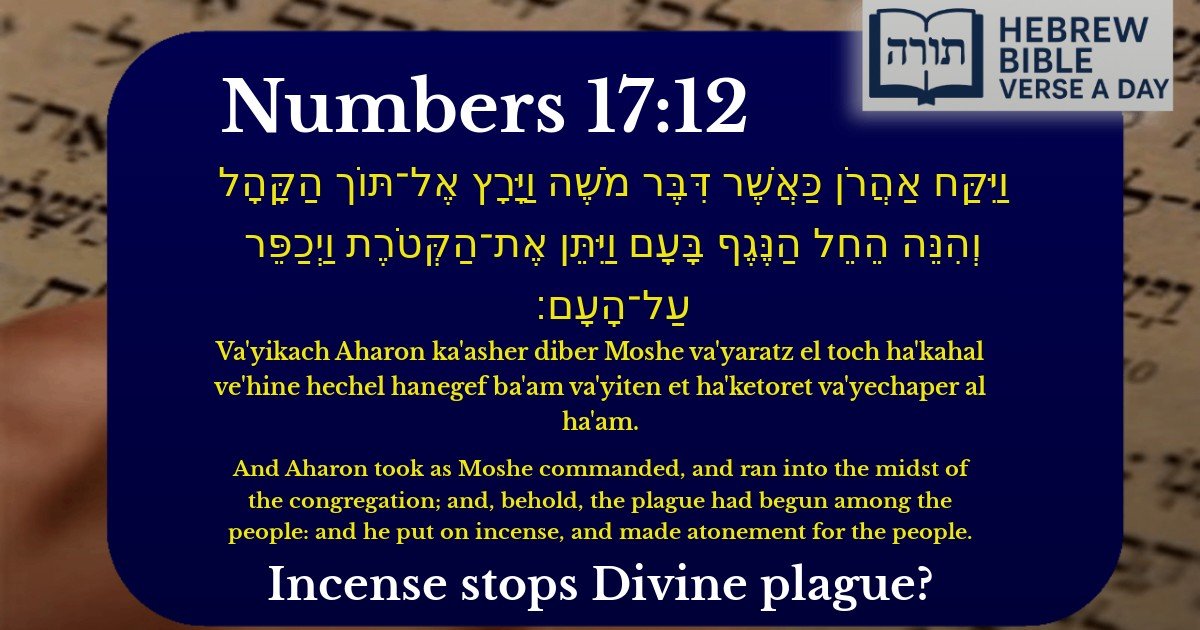
וַיִּקַּח אַהֲרֹן כַּאֲשֶׁר דִּבֶּר מֹשֶׁה וַיָּרָץ אֶל־תּוֹך הַקָּהָל וְהִנֵּה הֵחֵל הַנֶּגֶף בָּעָם וַיִּתֵּן אֶת־הַקְּטֹרֶת וַיְכַפֵּר עַל־הָעָם׃
English Translation
And Aharon took as Moshe commanded, and ran into the midst of the congregation; and, behold, the plague had begun among the people: and he put on incense, and made atonement for the people.
Transliteration
Va'yikach Aharon ka'asher diber Moshe va'yaratz el toch ha'kahal ve'hine hechel hanegef ba'am va'yiten et ha'ketoret va'yechaper al ha'am.
Hebrew Leining Text
וַיִּקַּ֨ח אַהֲרֹ֜ן כַּאֲשֶׁ֣ר ׀ דִּבֶּ֣ר מֹשֶׁ֗ה וַיָּ֙רׇץ֙ אֶל־תּ֣וֹךְ הַקָּהָ֔ל וְהִנֵּ֛ה הֵחֵ֥ל הַנֶּ֖גֶף בָּעָ֑ם וַיִּתֵּן֙ אֶֽת־הַקְּטֹ֔רֶת וַיְכַפֵּ֖ר עַל־הָעָֽם׃
🎵 Listen to leining
Parasha Commentary
📚 Talmud Citations
This verse is quoted in the Talmud.
📖 Shabbat 89a
The verse is referenced in a discussion about Aaron's actions and his role in stopping the plague, highlighting his quick response and the efficacy of the incense offering.
📖 Yoma 44b
The verse is cited in the context of discussing the High Priest's duties and the power of the incense to atone for the people, emphasizing Aaron's righteousness.
Context of the Verse
This verse (Bamidbar 17:12) describes Aharon's swift action to stop a deadly plague that had begun among Bnei Yisrael following Korach's rebellion. The plague was a divine punishment for the people's complaints against Moshe and Aharon's leadership. Aharon's intervention with the ketoret (incense) serves as a powerful act of atonement.
Aharon's Immediate Obedience
Rashi emphasizes that Aharon acted precisely "as Moshe commanded" without hesitation, demonstrating his complete submission to divine instruction. The Midrash (Bamidbar Rabbah 18:10) notes that Aharon "ran" into the midst of the congregation, showing his selfless dedication to saving the people, despite the danger.
The Power of the Ketoret
The Talmud (Yoma 44a) teaches that the ketoret had unique atoning properties, particularly in stopping plagues. Rambam (Hilchot Klei HaMikdash 2:3) explains that the incense served as a physical and spiritual remedy, symbolizing the sweet fragrance of repentance. The Zohar (Bamidbar 195a) adds that the ketoret represents unity—its blend of spices mirrors the need for harmony among the Jewish people.
Atonement Through Aharon's Merit
Symbolism of Running Into the Congregation
The Kli Yakar (Bamidbar 17:12) observes that Aharon did not merely walk but ran, illustrating his boundless love for Klal Yisrael. This act prefigures the Kohen Gadol's service on Yom Kippur, where urgency and devotion are essential for achieving kaparah (atonement).