

Join Our Newsletter To Be Informed When New Videos Are Posted
Hebrew Text
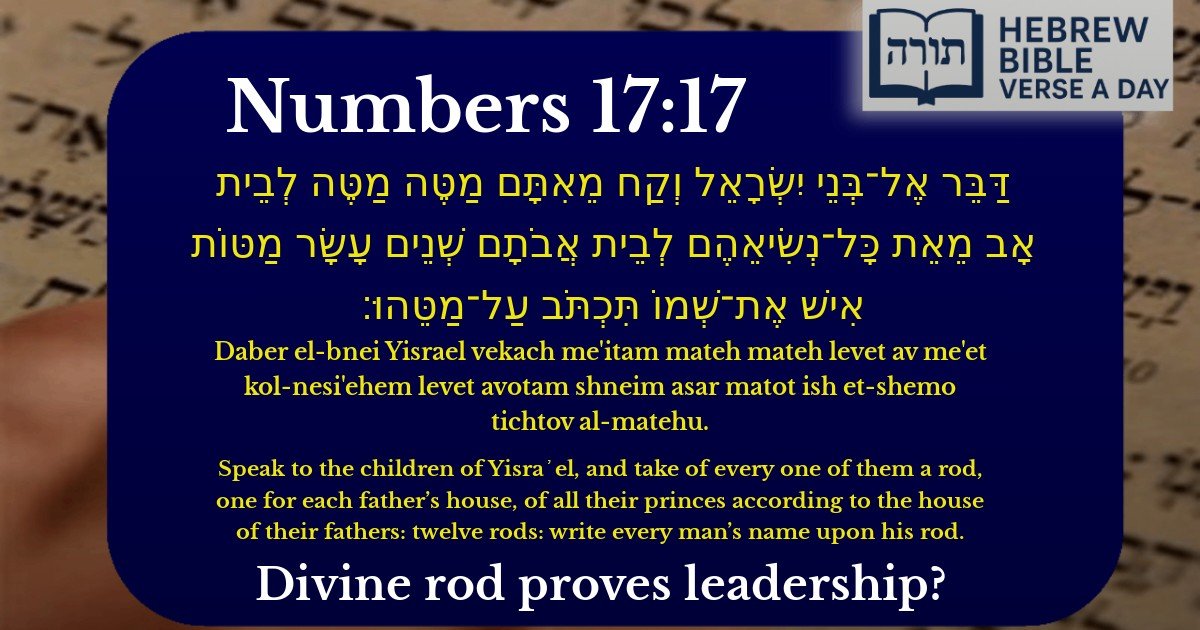
דַּבֵּר אֶל־בְּנֵי יִשְׂרָאֵל וְקַח מֵאִתָּם מַטֶּה מַטֶּה לְבֵית אָב מֵאֵת כָּל־נְשִׂיאֵהֶם לְבֵית אֲבֹתָם שְׁנֵים עָשָׂר מַטּוֹת אִישׁ אֶת־שְׁמוֹ תִּכְתֹּב עַל־מַטֵּהוּ׃
English Translation
Speak to the children of Yisra᾽el, and take of every one of them a rod, one for each father’s house, of all their princes according to the house of their fathers: twelve rods: write every man’s name upon his rod.
Transliteration
Daber el-bnei Yisrael vekach me'itam mateh mateh levet av me'et kol-nesi'ehem levet avotam shneim asar matot ish et-shemo tichtov al-matehu.
Hebrew Leining Text
דַּבֵּ֣ר ׀ אֶל־בְּנֵ֣י יִשְׂרָאֵ֗ל וְקַ֣ח מֵֽאִתָּ֡ם מַטֶּ֣ה מַטֶּה֩ לְבֵ֨ית אָ֜ב מֵאֵ֤ת כׇּל־נְשִֽׂיאֵהֶם֙ לְבֵ֣ית אֲבֹתָ֔ם שְׁנֵ֥ים עָשָׂ֖ר מַטּ֑וֹת אִ֣ישׁ אֶת־שְׁמ֔וֹ תִּכְתֹּ֖ב עַל־מַטֵּֽהוּ׃
🎵 Listen to leining
Parasha Commentary
📚 Talmud Citations
This verse is quoted in the Talmud.
📖 Sanhedrin 19b
The verse is referenced in a discussion about the authority and representation of tribal leaders, illustrating the principle that each tribe's leader had a distinct role and identity.
📖 Horayot 6a
The verse is cited in a discussion about the significance of the rods and the names written on them, emphasizing the individuality and responsibility of each tribal leader.
Context of the Verse
The verse (Bamidbar 17:17) appears in the aftermath of Korach's rebellion, where Hashem commands Moshe to conduct a test with the staffs of the tribal leaders to demonstrate Aharon's divinely chosen role as Kohen Gadol. This follows the challenge to Aharon's priesthood by Korach and his followers (Rashi, Bamidbar 17:17).
The Significance of the Staffs
Each tribal leader was instructed to inscribe his name on his staff, symbolizing personal and tribal identity. The staff (מַטֶּה) represents authority and leadership, as seen earlier with Moshe's staff used for miracles (Ramban, Bamidbar 17:17). The test would publicly affirm Aharon's selection by Hashem.
Twelve Staffs and Their Meaning
Writing the Names on the Staffs
The instruction to inscribe each leader's name on his staff (אִישׁ אֶת־שְׁמוֹ תִּכְתֹּב עַל־מַטֵּהוּ) underscores the personal accountability of leadership. The Midrash (Bamidbar Rabbah 18:6) explains that this act ensured no confusion or dispute over whose staff was whose, reinforcing the clarity of Hashem's choice.
Divine Confirmation of Leadership
The miracle of Aharon's staff budding (later in the parsha) served as an eternal sign (אוֹת) that the Kehunah belongs to him and his descendants (Rambam, Hilchot Klei HaMikdash 4:13). This public demonstration ended further challenges to Aharon's authority.