

Join Our Newsletter To Be Informed When New Videos Are Posted
Hebrew Text
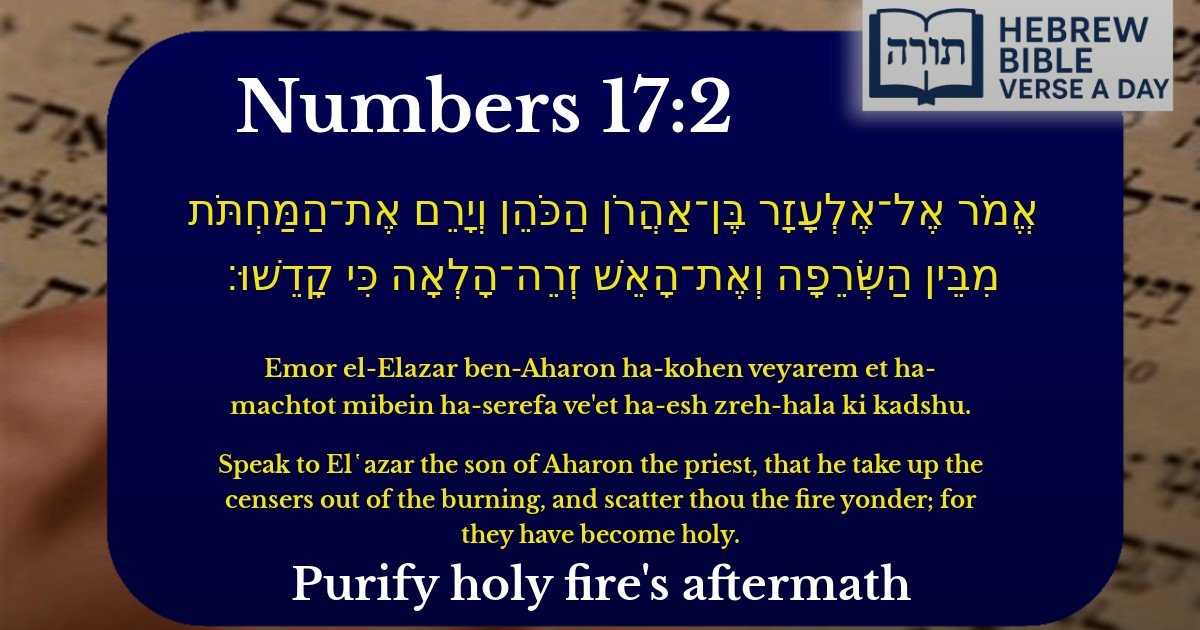
אֱמֹר אֶל־אֶלְעָזָר בֶּן־אַהֲרֹן הַכֹּהֵן וְיָרֵם אֶת־הַמַּחְתֹּת מִבֵּין הַשְּׂרֵפָה וְאֶת־הָאֵשׁ זְרֵה־הָלְאָה כִּי קָדֵשׁוּ׃
English Translation
Speak to El῾azar the son of Aharon the priest, that he take up the censers out of the burning, and scatter thou the fire yonder; for they have become holy.
Transliteration
Emor el-Elazar ben-Aharon ha-kohen veyarem et ha-machtot mibein ha-serefa ve'et ha-esh zreh-hala ki kadshu.
Hebrew Leining Text
אֱמֹ֨ר אֶל־אֶלְעָזָ֜ר בֶּן־אַהֲרֹ֣ן הַכֹּהֵ֗ן וְיָרֵ֤ם אֶת־הַמַּחְתֹּת֙ מִבֵּ֣ין הַשְּׂרֵפָ֔ה וְאֶת־הָאֵ֖שׁ זְרֵה־הָ֑לְאָה כִּ֖י קָדֵֽשׁוּ׃
🎵 Listen to leining
Parasha Commentary
📚 Talmud Citations
This verse is not quoted in the Talmud.
Context of the Verse
This verse (Bamidbar 17:2) appears in the aftermath of the rebellion of Korach and his followers, who challenged the leadership of Moshe and Aharon. After the earth swallowed Korach and his assembly, and fire consumed the 250 men who offered unauthorized incense, Hashem commands Moshe to instruct Elazar, Aharon's son, to gather the fire pans (מַחְתּוֹת) from among the charred remains.
Explanation of the Command
Rashi explains that Elazar, rather than Aharon, was chosen for this task because Aharon, as the Kohen Gadol, could not come into contact with the dead (even indirectly through the charred remains), as it would render him ritually impure (טמא). Elazar, as a regular Kohen, was permitted to handle these items.
Sanctity of the Censers
The verse concludes with the phrase "כִּי קָדֵשׁוּ" ("for they have become holy"). The Midrash (Bamidbar Rabbah 18:20) explains that even though Korach and his followers acted wrongly, the vessels they used became sanctified because they were designated for divine service. This teaches that objects used for a sacred purpose, even improperly, retain a degree of holiness and must be treated with respect.
Practical Halachic Implications
The Rambam (Hilchos Klei HaMikdash 1:7) derives from this verse that vessels used in the Mishkan or Beit HaMikdash, once sanctified, retain their holiness even if misused. Therefore, the censers could not simply be discarded but were later repurposed as a covering for the Mizbeach (Bamidbar 17:3-4), serving as a reminder of the dangers of unauthorized service.