

Join Our Newsletter To Be Informed When New Videos Are Posted
Hebrew Text
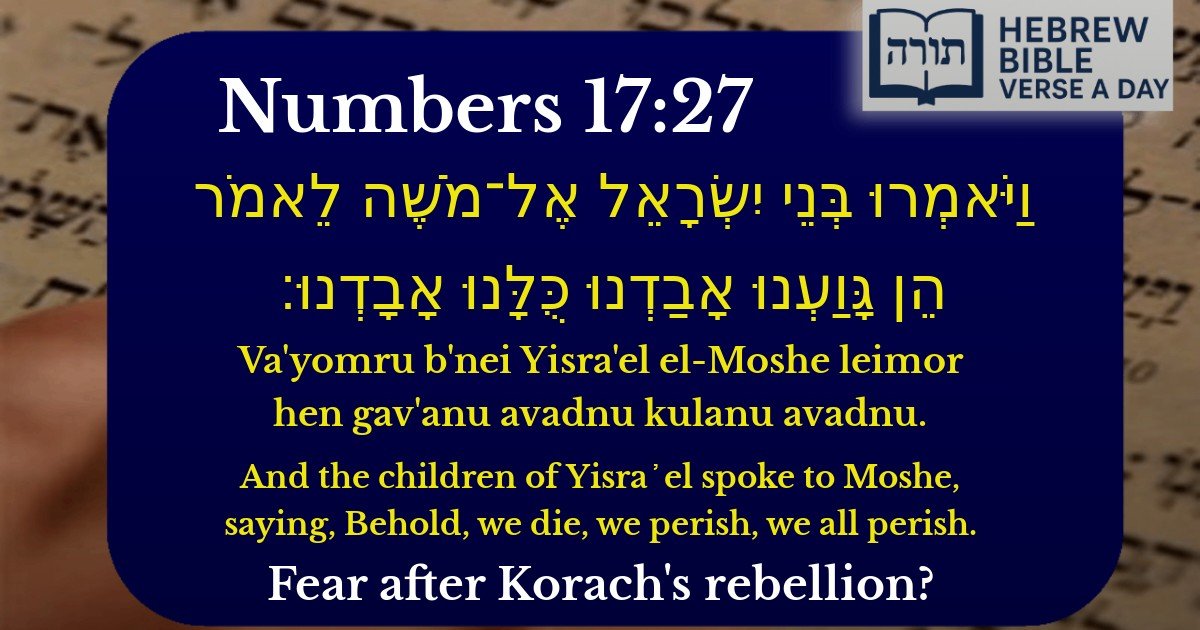
וַיֹּאמְרוּ בְּנֵי יִשְׂרָאֵל אֶל־מֹשֶׁה לֵאמֹר הֵן גָּוַעְנוּ אָבַדְנוּ כֻּלָּנוּ אָבָדְנוּ׃
English Translation
And the children of Yisra᾽el spoke to Moshe, saying, Behold, we die, we perish, we all perish.
Transliteration
Va'yomru b'nei Yisra'el el-Moshe leimor hen gav'anu avadnu kulanu avadnu.
Hebrew Leining Text
וַיֹּֽאמְרוּ֙ בְּנֵ֣י יִשְׂרָאֵ֔ל אֶל־מֹשֶׁ֖ה לֵאמֹ֑ר הֵ֥ן גָּוַ֛עְנוּ אָבַ֖דְנוּ כֻּלָּ֥נוּ אָבָֽדְנוּ׃
🎵 Listen to leining
Parasha Commentary
📚 Talmud Citations
This verse is not quoted in the Talmud.
Context of the Verse
The verse appears in Bamidbar (Numbers) 17:12, following the rebellion of Korach and the subsequent plague that struck the Israelites. After witnessing the earth swallow Korach and his followers, as well as the deaths of 250 men who offered unauthorized incense, the people express despair, fearing further divine punishment.
Rashi's Explanation
Rashi (Bamidbar 17:12) explains that the Israelites' cry, "Behold, we die, we perish, we all perish," reflects their fear of being consumed by divine wrath. They believed that any who approached the Mishkan (Tabernacle) would meet the same fate as Korach's assembly. Rashi emphasizes their exaggerated despair, noting that they repeated "we perish" three times, indicating their extreme distress.
Midrashic Interpretation
The Midrash (Bamidbar Rabbah 18:10) elaborates that the Israelites feared they were doomed due to their participation in Korach's rebellion, either directly or through silent consent. Their triple repetition of "we perish" signifies:
Rambam's Perspective
Rambam (Maimonides) in Moreh Nevuchim (Guide for the Perplexed 3:36) discusses how the Israelites' reaction demonstrates human nature when confronted with overwhelming divine justice. Their despair stemmed from a lack of understanding of Hashem's precise judgment, leading them to assume their fate was sealed.
Chassidic Insight
The Kedushas Levi (Rabbi Levi Yitzchak of Berditchev) interprets the verse as a moment of spiritual awakening. Despite their fear, the Israelites turned to Moshe, showing a recognition of his role as their intercessor. This reflects the principle that sincere repentance (teshuvah) begins with acknowledging one's mistakes and seeking guidance from righteous leaders.