

Join Our Newsletter To Be Informed When New Videos Are Posted
Hebrew Text
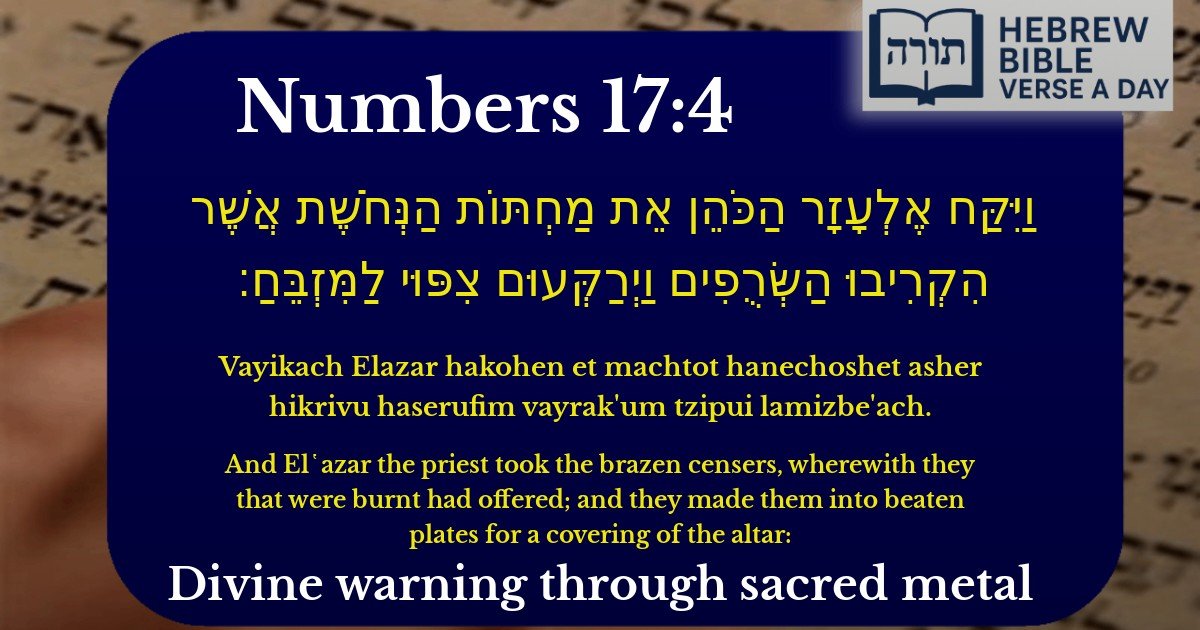
וַיִּקַּח אֶלְעָזָר הַכֹּהֵן אֵת מַחְתּוֹת הַנְּחֹשֶׁת אֲשֶׁר הִקְרִיבוּ הַשְּׂרֻפִים וַיְרַקְּעוּם צִפּוּי לַמִּזְבֵּחַ׃
English Translation
And El῾azar the priest took the brazen censers, wherewith they that were burnt had offered; and they made them into beaten plates for a covering of the altar:
Transliteration
Vayikach Elazar hakohen et machtot hanechoshet asher hikrivu haserufim vayrak'um tzipui lamizbe'ach.
Hebrew Leining Text
וַיִּקַּ֞ח אֶלְעָזָ֣ר הַכֹּהֵ֗ן אֵ֚ת מַחְתּ֣וֹת הַנְּחֹ֔שֶׁת אֲשֶׁ֥ר הִקְרִ֖יבוּ הַשְּׂרֻפִ֑ים וַֽיְרַקְּע֖וּם צִפּ֥וּי לַמִּזְבֵּֽחַ׃
🎵 Listen to leining
Parasha Commentary
📚 Talmud Citations
This verse is quoted in the Talmud.
📖 Yoma 52b
The verse is referenced in a discussion about the altar's covering and the materials used for it, highlighting the actions of Elazar the priest.
📖 Sanhedrin 52b
Mentioned in the context of discussing the fate of Korah's followers and the use of their censers.
Context in the Torah
The verse (Bamidbar 17:4) describes the aftermath of the rebellion of Korach and his followers, where 250 men brought unauthorized incense offerings in copper fire-pans (מַחְתּוֹת הַנְּחֹשֶׁת). After they were consumed by fire, Elazar the Kohen was commanded to repurpose these fire-pans as a covering for the Mizbe'ach (altar).
Rashi's Explanation
Rashi (Bamidbar 17:4) explains that the copper fire-pans were hammered into thin plates (צִפּוּי) to serve as a covering for the Mizbe'ach. This served as a public reminder and warning against unauthorized individuals attempting to serve as Kohanim. The covering acted as a visible deterrent, teaching that only those designated by Hashem may perform the Avodah (Temple service).
Symbolism and Purpose
Halachic Implications
The Talmud (Yoma 54a) derives from this episode that objects used for a mitzvah must be treated with respect even after their initial use. Since the fire-pans were originally intended for sacred service (albeit misused), they could not simply be discarded but were repurposed for a holy function—covering the Mizbe'ach.
Moral Lesson
The Kli Yakar (Bamidbar 17:4) teaches that the transformation of the fire-pans into a covering symbolizes that even the mistakes and rebellions of Bnei Yisrael can be rectified and elevated when redirected toward a holy purpose. The altar's covering thus became a testament to teshuvah and the enduring sanctity of the Mishkan.