

Join Our Newsletter To Be Informed When New Videos Are Posted
Hebrew Text
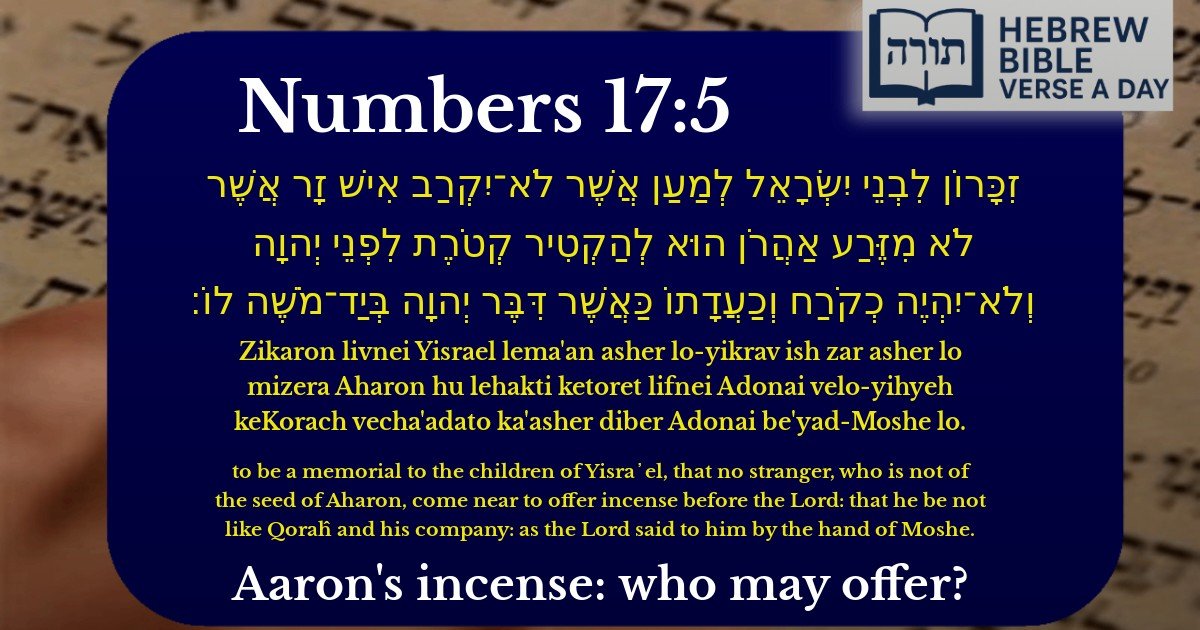
זִכָּרוֹן לִבְנֵי יִשְׂרָאֵל לְמַעַן אֲשֶׁר לֹא־יִקְרַב אִישׁ זָר אֲשֶׁר לֹא מִזֶּרַע אַהֲרֹן הוּא לְהַקְטִיר קְטֹרֶת לִפְנֵי יְהוָה וְלֹא־יִהְיֶה כְקֹרַח וְכַעֲדָתוֹ כַּאֲשֶׁר דִּבֶּר יְהוָה בְּיַד־מֹשֶׁה לוֹ׃
English Translation
to be a memorial to the children of Yisra᾽el, that no stranger, who is not of the seed of Aharon, come near to offer incense before the Lord: that he be not like Qoraĥ and his company: as the Lord said to him by the hand of Moshe.
Transliteration
Zikaron livnei Yisrael lema'an asher lo-yikrav ish zar asher lo mizera Aharon hu lehakti ketoret lifnei Adonai velo-yihyeh keKorach vecha'adato ka'asher diber Adonai be'yad-Moshe lo.
Hebrew Leining Text
זִכָּר֞וֹן לִבְנֵ֣י יִשְׂרָאֵ֗ל לְ֠מַ֠עַן אֲשֶׁ֨ר לֹֽא־יִקְרַ֜ב אִ֣ישׁ זָ֗ר אֲ֠שֶׁ֠ר לֹ֣א מִזֶּ֤רַע אַהֲרֹן֙ ה֔וּא לְהַקְטִ֥יר קְטֹ֖רֶת לִפְנֵ֣י יְהֹוָ֑ה וְלֹֽא־יִהְיֶ֤ה כְקֹ֙רַח֙ וְכַ֣עֲדָת֔וֹ כַּאֲשֶׁ֨ר דִּבֶּ֧ר יְהֹוָ֛ה בְּיַד־מֹשֶׁ֖ה לֽוֹ׃ {פ}
🎵 Listen to leining
Parasha Commentary
📚 Talmud Citations
This verse is quoted in the Talmud.
📖 Sanhedrin 110a
The verse is referenced in the discussion about Korah's rebellion and the prohibition against non-priests offering incense.
📖 Yoma 19b
The verse is cited in the context of discussing the exclusive rights of the priests to perform certain Temple services.
Context of the Verse
This verse (Bamidbar 17:5) follows the rebellion of Korach and his followers, who challenged the divine appointment of Aharon and his descendants to the priesthood. The verse serves as a warning and a reminder to Bnei Yisrael about the sanctity of the Kehunah (priesthood) and the severe consequences of unauthorized individuals attempting to perform sacred Temple service.
The Prohibition Against Strangers Offering Ketoret
Rashi explains that the term "זָר" (stranger) refers to anyone not descended from Aharon, even if they are from the tribe of Levi. The ketoret (incense) was an especially sacred service in the Mishkan and later the Beit HaMikdash, and its offering was restricted exclusively to Kohanim. Rambam (Hilchot Klei HaMikdash 2:3) emphasizes that this prohibition applies even if a non-Kohen is otherwise righteous and learned—the sanctity of the priesthood is inviolable.
Korach as a Cautionary Example
The verse explicitly links this prohibition to the fate of Korach and his followers. The Midrash (Bamidbar Rabbah 18:8) elaborates that Korach's sin was not merely rebellion but an attempt to usurp the divinely ordained roles of Moshe and Aharon. The earth swallowing Korach and his assembly serves as an eternal reminder of the consequences of challenging Hashem's chosen structure of leadership and avodah (service).
The Purpose of the Memorial
The phrase "זִכָּרוֹן לִבְנֵי יִשְׂרָאֵל" (a memorial to the children of Israel) indicates that this event was to be remembered for all generations. The Talmud (Sanhedrin 110a) teaches that one who perpetuates disputes, as Korach did, violates a Torah prohibition. The copper-covered altar (mentioned earlier in the parsha) served as a visible reminder of this lesson, ensuring that future generations would not repeat Korach's error.
Practical Implications