

Join Our Newsletter To Be Informed When New Videos Are Posted
Hebrew Text
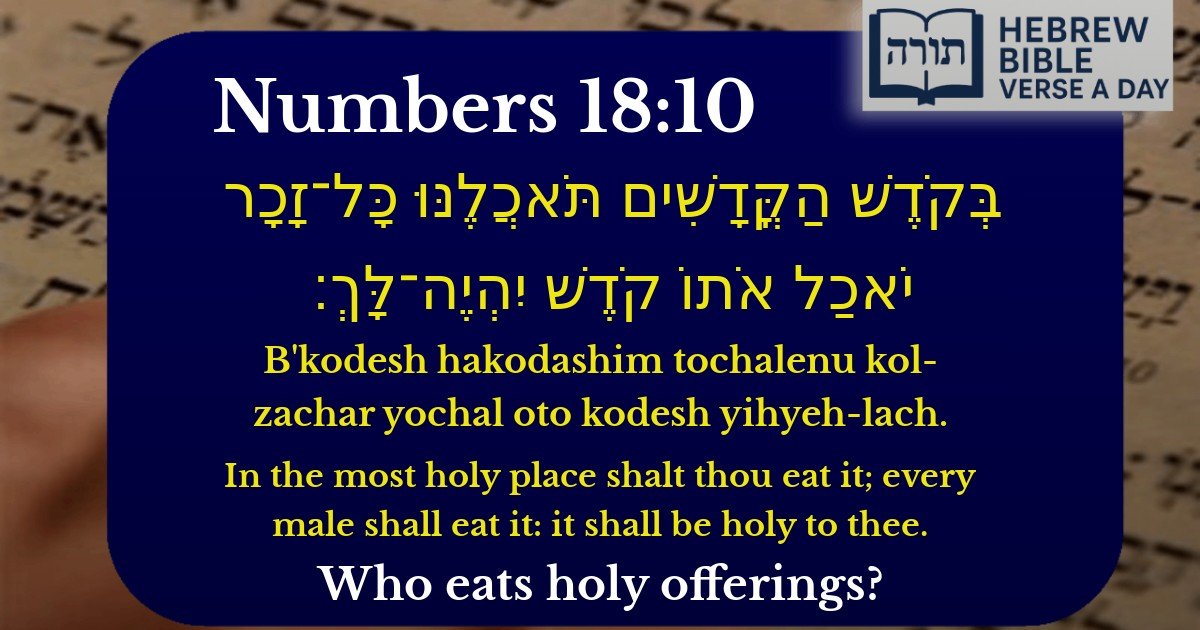
בְּקֹדֶשׁ הַקֳּדָשִׁים תֹּאכֲלֶנּוּ כָּל־זָכָר יֹאכַל אֹתוֹ קֹדֶשׁ יִהְיֶה־לָּךְ׃
English Translation
In the most holy place shalt thou eat it; every male shall eat it: it shall be holy to thee.
Transliteration
B'kodesh hakodashim tochalenu kol-zachar yochal oto kodesh yihyeh-lach.
Hebrew Leining Text
בְּקֹ֥דֶשׁ הַקֳּדָשִׁ֖ים תֹּאכְלֶ֑נּוּ כׇּל־זָכָר֙ יֹאכַ֣ל אֹת֔וֹ קֹ֖דֶשׁ יִֽהְיֶה־לָּֽךְ׃
🎵 Listen to leining
Parasha Commentary
📚 Talmud Citations
This verse is quoted in the Talmud.
📖 Menachot 73b
The verse is discussed in the context of the laws regarding the consumption of sacrificial offerings, specifically the most holy offerings (kodshei kodashim), and who is permitted to eat them.
📖 Zevachim 56a
The verse is referenced in a discussion about the proper place and manner of consuming sacrificial offerings, emphasizing the holiness and restrictions surrounding their consumption.
Context and Source
The verse (Vayikra 6:11) discusses the consumption of the Mincha (meal offering) brought by a Kohen. Unlike other meal offerings, which are partially burned on the altar and partially eaten by Kohanim, this offering is entirely consumed by the Kohanim in the Kodesh HaKodashim (the Courtyard of the Mishkan or Temple).
Interpretation of "B'Kodesh HaKodashim"
Rashi explains that "B'Kodesh HaKodashim" does not refer to the Holy of Holies (the innermost sanctum), but rather to the Azarah (Temple courtyard), which is also called "Kodesh HaKodashim" in this context because of its sanctity. The Kohanim must eat the offering within the sacred precincts of the Mishkan or Beit HaMikdash, emphasizing the holiness of the act.
Exclusivity to Male Kohanim
The phrase "כָּל־זָכָר יֹאכַל אֹתוֹ" ("every male shall eat it") teaches that only male Kohanim may partake of this offering, as derived from the Talmud (Zevachim 101a). This excludes women and non-Kohanim, reinforcing the unique role of the Kohanim in Temple service.
Holiness of the Offering
The concluding phrase "קֹדֶשׁ יִהְיֶה־לָּךְ" ("it shall be holy to thee") underscores the stringent laws of purity and sanctity surrounding the consumption of the offering. Rambam (Hilchot Ma'aseh HaKorbanot 10:12) elaborates that it must be eaten in a state of ritual purity and with proper intent (kavanah), as befits its sacred nature.
Midrashic Insight
The Midrash (Torat Kohanim) connects this verse to the broader theme of the Kohanim's devotion to divine service. By restricting consumption to the sacred space and to male Kohanim, the Torah elevates the act of eating the offering into an extension of the Temple service itself.