

Join Our Newsletter To Be Informed When New Videos Are Posted
Hebrew Text
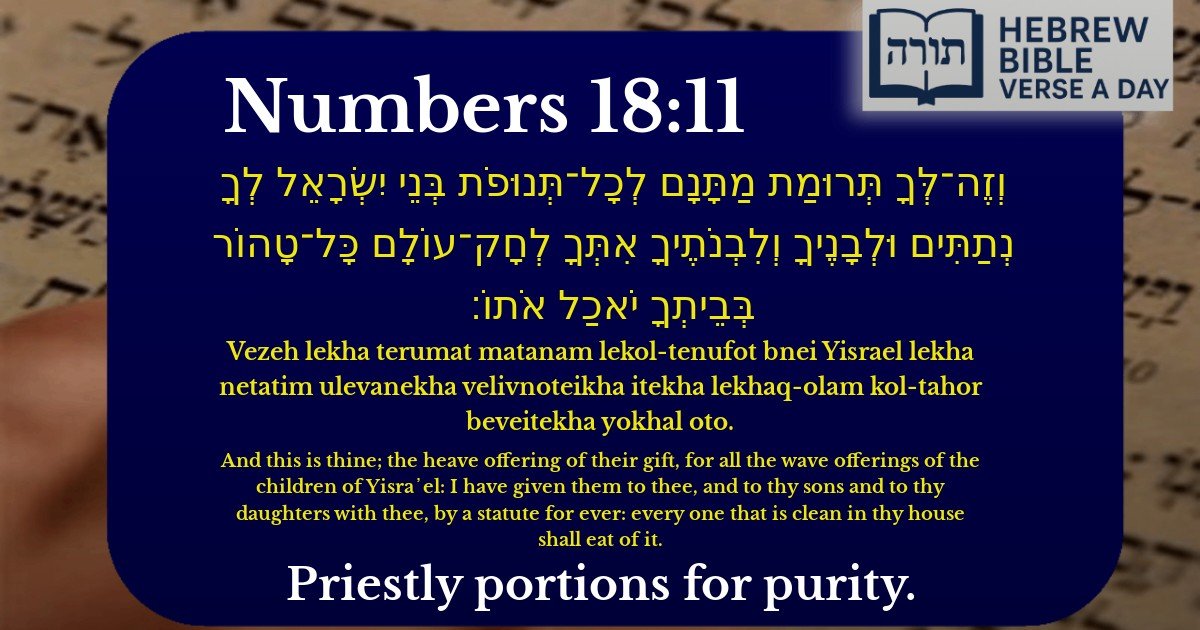
וְזֶה־לְּךָ תְּרוּמַת מַתָּנָם לְכָל־תְּנוּפֹת בְּנֵי יִשְׂרָאֵל לְךָ נְתַתִּים וּלְבָנֶיךָ וְלִבְנֹתֶיךָ אִתְּךָ לְחָק־עוֹלָם כָּל־טָהוֹר בְּבֵיתְךָ יֹאכַל אֹתוֹ׃
English Translation
And this is thine; the heave offering of their gift, for all the wave offerings of the children of Yisra᾽el: I have given them to thee, and to thy sons and to thy daughters with thee, by a statute for ever: every one that is clean in thy house shall eat of it.
Transliteration
Vezeh lekha terumat matanam lekol-tenufot bnei Yisrael lekha netatim ulevanekha velivnoteikha itekha lekhaq-olam kol-tahor beveitekha yokhal oto.
Hebrew Leining Text
וְזֶה־לְּךָ֞ תְּרוּמַ֣ת מַתָּנָ֗ם לְכׇל־תְּנוּפֹת֮ בְּנֵ֣י יִשְׂרָאֵל֒ לְךָ֣ נְתַתִּ֗ים וּלְבָנֶ֧יךָ וְלִבְנֹתֶ֛יךָ אִתְּךָ֖ לְחׇק־עוֹלָ֑ם כׇּל־טָה֥וֹר בְּבֵיתְךָ֖ יֹאכַ֥ל אֹתֽוֹ׃
🎵 Listen to leining
Parasha Commentary
📚 Talmud Citations
This verse is quoted in the Talmud.
📖 Chullin 132b
The verse is referenced in a discussion about the laws of terumah (heave offerings) and who is permitted to eat them, emphasizing the eternal statute mentioned in the verse.
📖 Yevamot 86b
Cited in a discussion about the rights of priests and their families to partake of the terumah, highlighting the inclusion of sons and daughters as per the verse.
Context of the Verse
This verse (Bamidbar 18:11) is part of Hashem's instruction to Aharon regarding the portions of korbanot (offerings) designated for the Kohanim and their families. It specifies the distribution of terumah (heave offerings) and tenufah (wave offerings) to Aharon and his descendants as an eternal statute.
Explanation of Key Terms
Inheritance for Aharon's Descendants
The verse states that these portions are given not only to Aharon but also to his sons and daughters. The Talmud (Chullin 132a) clarifies that while sons receive a share by default, daughters may partake only if they are unmarried and living in their father's household. Once married, they are no longer eligible.
Purity Requirements
The phrase כָּל־טָהוֹר בְּבֵיתְךָ יֹאכַל אֹתוֹ ("every one that is clean in thy house shall eat of it") teaches that only those in a state of ritual purity may consume these sanctified portions. The Rambam (Hilchot Terumot 7:1) rules that this applies even to non-Kohanim who are part of the household (e.g., servants), provided they are tahor (ritually pure).
Spiritual Significance
The Midrash (Bamidbar Rabbah 18:8) highlights that these gifts to the Kohanim symbolize the unique role of the priesthood in maintaining the spiritual connection between Bnei Yisrael and Hashem. By sustaining the Kohanim through these offerings, the people ensure the continuity of divine service.