
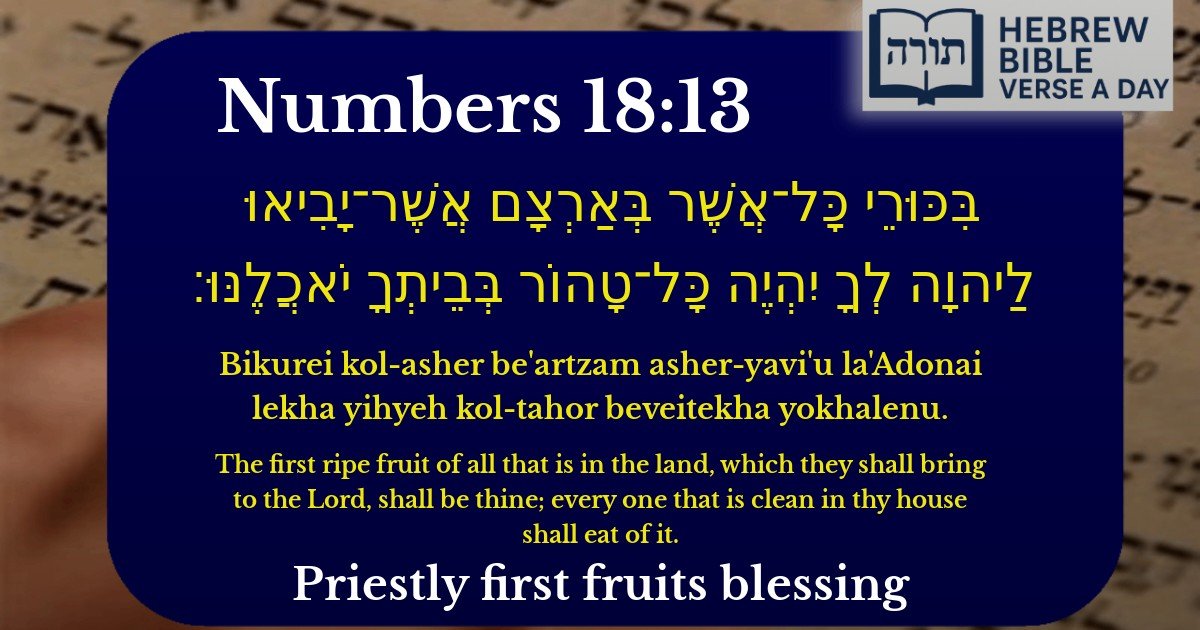

Numbers 18:13 - Priestly first fruits blessing

Numbers 18:13 - במדבר 18:13

Hebrew Text

בִּכּוּרֵי כָּל־אֲשֶׁר בְּאַרְצָם אֲשֶׁר־יָבִיאוּ לַיהוָה לְךָ יִהְיֶה כָּל־טָהוֹר בְּבֵיתְךָ יֹאכֲלֶנּוּ׃

English Translation

The first ripe fruit of all that is in the land, which they shall bring to the Lord, shall be thine; every one that is clean in thy house shall eat of it.

Transliteration

Bikurei kol-asher be'artzam asher-yavi'u la'Adonai lekha yihyeh kol-tahor beveitekha yokhalenu.

Hebrew Leining Text

בִּכּוּרֵ֞י כׇּל־אֲשֶׁ֧ר בְּאַרְצָ֛ם אֲשֶׁר־יָבִ֥יאוּ לַיהֹוָ֖ה לְךָ֣ יִהְיֶ֑ה כׇּל־טָה֥וֹר בְּבֵיתְךָ֖ יֹאכְלֶֽנּוּ׃

🎵 Listen to leining

Parasha Commentary

Verse Context and Overview

The verse (Numbers 18:13) discusses the laws of bikkurim (first fruits) and their allocation to the Kohanim (priests). It emphasizes that the first ripe fruits of the land must be brought to Hashem and given to the Kohen, and that any ritually pure member of the Kohen's household may partake of them.

Explanation of the Verse

The verse establishes two key halachic principles:

  • Bikkurim for the Kohanim: Rashi (based on Chullin 132b) explains that this verse refers specifically to the mitzvah of bikkurim, which applies only to the seven species for which Eretz Yisrael is praised (Deuteronomy 8:8). The first fruits of these species must be brought to the Beit HaMikdash and given to the Kohen.
  • Permission for Pure Household Members: The latter part of the verse teaches that not only the Kohen himself, but any tahor (ritually pure) member of his household—including his wife, children, and servants—may eat from the bikkurim (Rambam, Hilchot Bikkurim 1:1).

Halachic Insights

The Rambam (Hilchot Bikkurim 2:1) elaborates that bikkurim must be brought specifically from Eretz Yisrael and only during the time of the Beit HaMikdash. The Sifrei (cited in Rashi) notes that the phrase "לְךָ יִהְיֶה" ("shall be thine") emphasizes the exclusive right of the Kohanim to these offerings, excluding non-Kohanim from partaking.

Spiritual Significance

The Midrash Tanchuma (Korach 10) connects bikkurim to gratitude, teaching that bringing the first fruits acknowledges Hashem as the source of all blessing. The Kli Yakar adds that the requirement for purity (tahor) in the household underscores the sanctity of the offering—only those in a state of spiritual readiness may partake.

Practical Implications

  • Terumah vs. Bikkurim: Unlike terumah, which is given to the Kohen in all circumstances, bikkurim require a ceremonial presentation at the Beit HaMikdash with a declaration (Deuteronomy 26:1-11).
  • Purity Laws: The mention of "טָהוֹר" teaches that one must be mindful of tumah (impurity) even in the home, as it affects eligibility to consume sanctified foods (Talmud Yevamot 74a).

📚 Talmud Citations

This verse is not quoted in the Talmud.

Frequently Asked Questions

Q: What does Numbers 18:13 mean?
A: Numbers 18:13 states that the first ripe fruits (בִּכּוּרִים) of the land must be brought to Hashem and given to the Kohanim (priests). Only those who are ritually pure (טָהוֹר) in the Kohen's household may eat these offerings. This teaches the importance of dedicating the first and best of our produce to Hashem and supporting those who serve in the Mishkan (Tabernacle) or Beit Hamikdash (Temple).
Q: Why are the first fruits given to the Kohanim?
A: The first fruits are given to the Kohanim because they were chosen by Hashem to serve in the Mishkan and Beit Hamikdash, and they did not receive a portion of land in Israel like the other tribes (Bamidbar 18:20). By giving them the first fruits, we acknowledge their sacred role and ensure they have sustenance while performing their holy duties.
Q: Who is allowed to eat the first fruits according to this verse?
A: The verse specifies that only those who are טָהוֹר (ritually pure) in the Kohen's household may eat the first fruits. This excludes anyone who is in a state of tumah (ritual impurity), such as from contact with the dead or other impure substances. This teaches the importance of maintaining purity, especially when consuming holy offerings.
Q: How does the concept of first fruits apply today?
A: Although we currently lack the Beit Hamikdash, the concept of dedicating the first and best to Hashem remains relevant. Many have the custom to separate challah from dough (Hafrashat Challah) or give ma'aser (tithes) to support Torah scholars, echoing the principle of honoring Hashem with our first and finest possessions.
Q: What is the significance of bringing the first fruits to Hashem?
A: Bringing the first fruits expresses gratitude to Hashem for the harvest and acknowledges that everything comes from Him. The Mishnah (Bikkurim 3:1) describes the joyous procession to Jerusalem with the first fruits, showing our appreciation and reinforcing our dependence on Hashem's blessings for sustenance.