

Join Our Newsletter To Be Informed When New Videos Are Posted
Hebrew Text
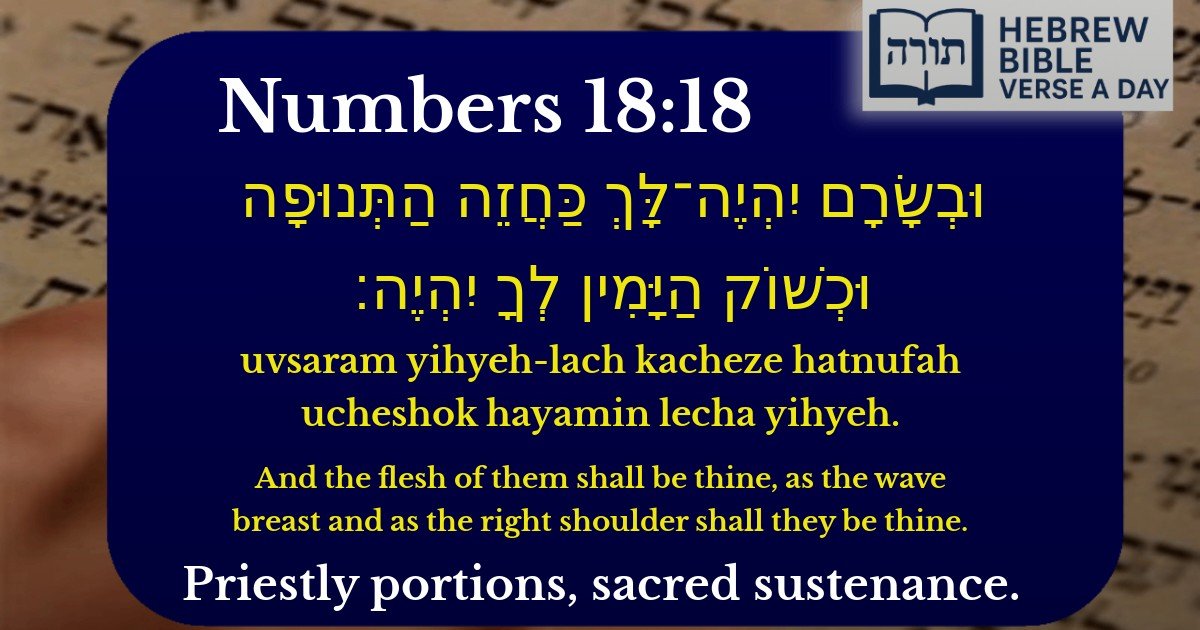
וּבְשָׂרָם יִהְיֶה־לָּךְ כַּחֲזֵה הַתְּנוּפָה וּכְשׁוֹק הַיָּמִין לְךָ יִהְיֶה׃
English Translation
And the flesh of them shall be thine, as the wave breast and as the right shoulder shall they be thine.
Transliteration
Uvsaram yihyeh-lach kacheze hatnufah ucheshok hayamin lecha yihyeh.
Hebrew Leining Text
וּבְשָׂרָ֖ם יִהְיֶה־לָּ֑ךְ כַּחֲזֵ֧ה הַתְּנוּפָ֛ה וּכְשׁ֥וֹק הַיָּמִ֖ין לְךָ֥ יִהְיֶֽה׃
🎵 Listen to leining
Parasha Commentary
📚 Talmud Citations
This verse is quoted in the Talmud.
📖 Chullin 132b
The verse is discussed in the context of the laws regarding the portions of sacrifices that are given to the priests, specifically comparing the flesh of certain offerings to the wave breast and right shoulder.
📖 Menachot 62a
The verse is referenced in a discussion about the various types of offerings and the specific parts that are designated for the priests.
Context in the Torah
This verse appears in Bamidbar (Numbers) 18:18, within the broader discussion of the gifts given to the Kohanim (priests) from the offerings brought in the Mishkan (Tabernacle) and later the Beit HaMikdash (Temple). The verse specifies the portions of certain sacrifices that are designated as the rightful share of the Kohanim.
Explanation of the Verse
The verse states: "וּבְשָׂרָם יִהְיֶה־לָּךְ כַּחֲזֵה הַתְּנוּפָה וּכְשׁוֹק הַיָּמִין לְךָ יִהְיֶה" ("And the flesh of them shall be thine, as the wave breast and as the right shoulder shall they be thine"). This refers to the portions of certain sacrifices (specifically, the zevach shelamim, or peace offerings) that are allocated to the Kohanim.
Symbolism and Halachic Significance
The Chazeh (breast) and Shok (shoulder) represent two aspects of divine service:
These portions were given to the Kohanim as a reminder that their role required both heartfelt devotion and active labor in the Mishkan/Beit HaMikdash.
Practical Halachah
According to the Shulchan Aruch (Yoreh De'ah 61), these laws remain relevant in principle, though in practice they apply only when the Beit HaMikdash is standing. The Kohanim today still retain certain rights and sanctity, but the actual distribution of these portions is deferred until the restoration of the Temple service.