

Join Our Newsletter To Be Informed When New Videos Are Posted
Hebrew Text
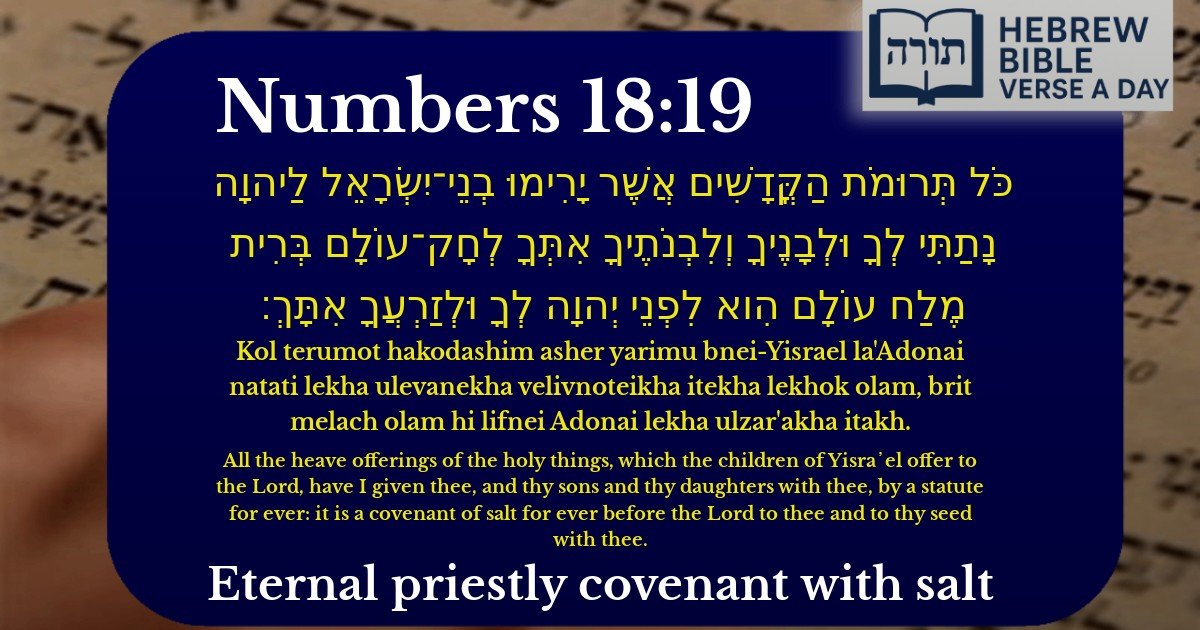
כֹּל תְּרוּמֹת הַקֳּדָשִׁים אֲשֶׁר יָרִימוּ בְנֵי־יִשְׂרָאֵל לַיהוָה נָתַתִּי לְךָ וּלְבָנֶיךָ וְלִבְנֹתֶיךָ אִתְּךָ לְחָק־עוֹלָם בְּרִית מֶלַח עוֹלָם הִוא לִפְנֵי יְהוָה לְךָ וּלְזַרְעֲךָ אִתָּךְ׃
English Translation
All the heave offerings of the holy things, which the children of Yisra᾽el offer to the Lord, have I given thee, and thy sons and thy daughters with thee, by a statute for ever: it is a covenant of salt for ever before the Lord to thee and to thy seed with thee.
Transliteration
Kol terumot hakodashim asher yarimu bnei-Yisrael la'Adonai natati lekha ulevanekha velivnoteikha itekha lekhok olam, brit melach olam hi lifnei Adonai lekha ulzar'akha itakh.
Hebrew Leining Text
כֹּ֣ל ׀ תְּרוּמֹ֣ת הַקֳּדָשִׁ֗ים אֲשֶׁ֨ר יָרִ֥ימוּ בְנֵֽי־יִשְׂרָאֵל֮ לַֽיהֹוָה֒ נָתַ֣תִּֽי לְךָ֗ וּלְבָנֶ֧יךָ וְלִבְנֹתֶ֛יךָ אִתְּךָ֖ לְחׇק־עוֹלָ֑ם בְּרִית֩ מֶ֨לַח עוֹלָ֥ם הִוא֙ לִפְנֵ֣י יְהֹוָ֔ה לְךָ֖ וּֽלְזַרְעֲךָ֥ אִתָּֽךְ׃
🎵 Listen to leining
Parasha Commentary
📚 Talmud Citations
This verse is quoted in the Talmud.
📖 Kiddushin 54a
The verse is referenced in a discussion about the laws of priestly gifts and the eternal covenant of salt, emphasizing the perpetual nature of these offerings to the priests and their descendants.
📖 Chullin 132b
The verse is cited in the context of discussing the distribution of heave offerings and the rights of the priests and their families to these holy gifts.
Overview of the Verse
This verse (Bamidbar 18:19) is part of Hashem's instruction to Aharon regarding the portions of the terumot (heave offerings) and kodashim (holy things) that are designated for the Kohanim. It emphasizes the eternal nature of this covenant between Hashem and the descendants of Aharon.
The Gift of Terumot to the Kohanim
Rashi explains that the term "כֹּל תְּרוּמֹת הַקֳּדָשִׁים" refers to all the sacred contributions brought by Bnei Yisrael, including terumah gedolah (the portion given to the Kohen from produce) and terumat ma'aser (the tithe of the Levite's tithe given to the Kohen). These are granted to the Kohanim as an eternal inheritance.
The Eternal Covenant ("חָק־עוֹלָם")
The Rambam (Hilchot Terumot 1:26) emphasizes that this mitzvah is everlasting and applies in all times, even outside the Land of Israel when the Temple is not standing. The phrase "לְחָק־עוֹלָם" underscores that this is a permanent statute, not subject to change.
The Significance of "Bris Melach" (Covenant of Salt)
The Talmud (Chullin 89a) explains that salt represents an everlasting bond, as it preserves food and never spoils. The Midrash (Bamidbar Rabbah 18:19) further connects this to the idea that just as salt enhances flavor, the covenant with the Kohanim enhances the spiritual service of Bnei Yisrael.
Inclusion of Sons and Daughters ("וּלְבָנֶיךָ וְלִבְנֹתֶיךָ")
The Kli Yakar notes that the verse explicitly mentions both sons and daughters to teach that even the daughters of Kohanim have a share in certain sanctified foods (e.g., terumah), though they may not eat them unless they remain unmarried or return to their father's household (as per the laws in Mishnah Terumot 8:1).
Spiritual Inheritance for Future Generations ("וּלְזַרְעֲךָ אִתָּךְ")
The Sforno explains that this covenant extends to all future descendants of Aharon, ensuring that the sacred service remains within their lineage. The phrase "לִפְנֵי יְהוָה" reinforces that this is a divine decree, not subject to human alteration.