Frequently Asked Questions
Q: What does Numbers 18:21 mean?
A: Numbers 18:21 states that the tribe of Levi (the Levites) were given the tithes (ma'aser) from the other tribes of Israel as their inheritance. This was in exchange for their service in the Mishkan (Tabernacle) and later the Beit HaMikdash (Temple). Unlike the other tribes, the Levites did not receive a portion of land in Israel, so their sustenance came from these tithes.
Q: Why did the Levites receive tithes instead of land?
A: The Levites were chosen by Hashem to serve in the Mishkan and Beit HaMikdash, dedicating their lives to spiritual service (Avodah). Since their role required them to be available for this sacred work, they did not receive a physical portion of land like the other tribes. Instead, their 'inheritance' was the tithes given by the rest of Israel, ensuring they could focus on their holy duties (Rashi on Numbers 18:20).
Q: What can we learn from this verse today?
A: This verse teaches the importance of supporting those who dedicate their lives to Torah study and spiritual leadership. Just as the Levites were sustained by the tithes, today we support rabbis, teachers, and Torah scholars (talmidei chachamim) so they can focus on guiding the Jewish people. The Rambam (Hilchos Shemittah 13:12) emphasizes that supporting Torah scholars is a great mitzvah.
Q: Were the Levites allowed to keep all the tithes for themselves?
A: No, the Levites themselves had to separate a tenth of the tithes they received (called 'terumas ma'aser') and give it to the Kohanim (priests), as commanded in Numbers 18:26-28. This teaches humility and gratitude—even those who serve in the Mishkan must acknowledge a higher authority (Chazal in Chulin 131a).
Q: Does this law still apply today?
A: While the full system of tithes (ma'aser) only applies when the Beit HaMikdash is standing, the concept of supporting Torah scholars and communal leaders remains a vital mitzvah. Additionally, some farmers in Israel still separate terumos and ma'asros (tithes) from their produce as a remembrance of this mitzvah (Rambam, Hilchos Ma'aser 1:26).

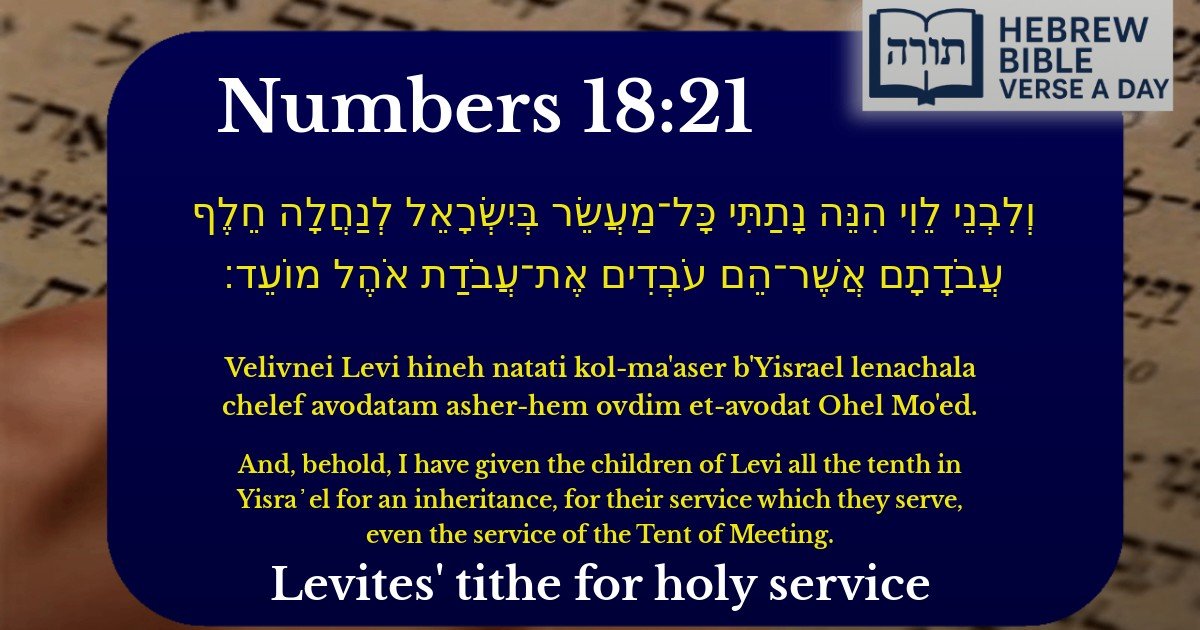

Allocation of Ma'aser to the Levites
The verse (Bamidbar 18:21) establishes that the tribe of Levi, who were designated for Divine service, would not receive a territorial portion in Eretz Yisrael like the other tribes. Instead, Hashem grants them ma'aser (tithes) from the produce of the other tribes as their inheritance. This arrangement is in exchange for their sacred duties in the Mishkan (and later the Beis HaMikdash).
Rashi's Explanation
Rashi clarifies that this refers specifically to ma'aser rishon (the first tithe), which is given to the Levites from all agricultural produce. He emphasizes that this is their compensation for being excluded from land ownership, as stated in Devarim 18:1-2. The Levites, in turn, are commanded to separate terumas ma'aser (a tenth of their tithe) for the Kohanim (Bamidbar 18:26-28).
Rambam's Halachic Perspective
In Hilchos Ma'aser (1:1-2), the Rambam codifies that ma'aser rishon is a biblical obligation from all produce grown in Eretz Yisrael. The Levite's right to this tithe is absolute, even if the owner has already separated other tithes (terumah and ma'aser sheini). The Rambam also notes (Hilchos Shemitah 13:10) that this applies even during the Shemitah year when other agricultural laws are suspended.
Talmudic Insights
Midrashic Interpretation
The Sifrei (Bamidbar 118) connects this verse to the episode of Korach's rebellion, suggesting that this Divine decree reaffirmed the unique status of the Levites after their loyalty during that crisis. The Midrash Tanchuma (Korach 12) elaborates that their dedication to serving Hashem merited this perpetual inheritance.