Frequently Asked Questions
Q: What does Numbers 18:22 mean when it says the Israelites should not come near the Tent of Meeting?
A: This verse teaches that only the Kohanim (priests) and Levi'im (Levites) were permitted to perform certain sacred duties in the Mishkan (Tabernacle) and later the Beit HaMikdash (Temple). Regular Israelites were forbidden from approaching these holy areas to prevent accidental transgression of sacred boundaries, which could lead to severe consequences (Rashi on Numbers 18:22).
Q: Why was it dangerous for regular Israelites to approach the Tent of Meeting?
A: The Mishkan and its vessels had extreme kedusha (holiness), and unauthorized contact or improper service could result in severe punishment. The verse warns that approaching improperly would make one 'bear sin and die' - teaching that boundaries in divine service must be respected (Rambam, Hilchot Bi'at HaMikdash 1:1).
Q: How does the concept in Numbers 18:22 apply today without the Temple?
A: While we no longer have the Mishkan or Beit HaMikdash, this verse teaches us the importance of respecting boundaries in holy matters. Today, this applies to synagogue customs (like not entering certain areas reserved for prayer leaders) and showing proper reverence in places of Torah study (Talmud, Berachot 62b).
Q: What is the connection between Numbers 18:22 and the role of the Kohanim?
A: This verse comes in the context of establishing the exclusive roles of Aharon's descendants (Kohanim) and the Levi'im in Temple service. It emphasizes that these sacred duties were assigned specifically to them, and others must not intrude on these responsibilities (Midrash Tanchuma, Korach 11).
Q: Does Numbers 18:22 mean regular Jews couldn't participate in worship at all?
A: No - Israelites brought korbanot (offerings) through the Kohanim, participated in festivals, and had other ways to connect to divine service. This verse only restricts unauthorized entry into sacred spaces and performing priestly duties, not general worship (Talmud, Zevachim 115b).

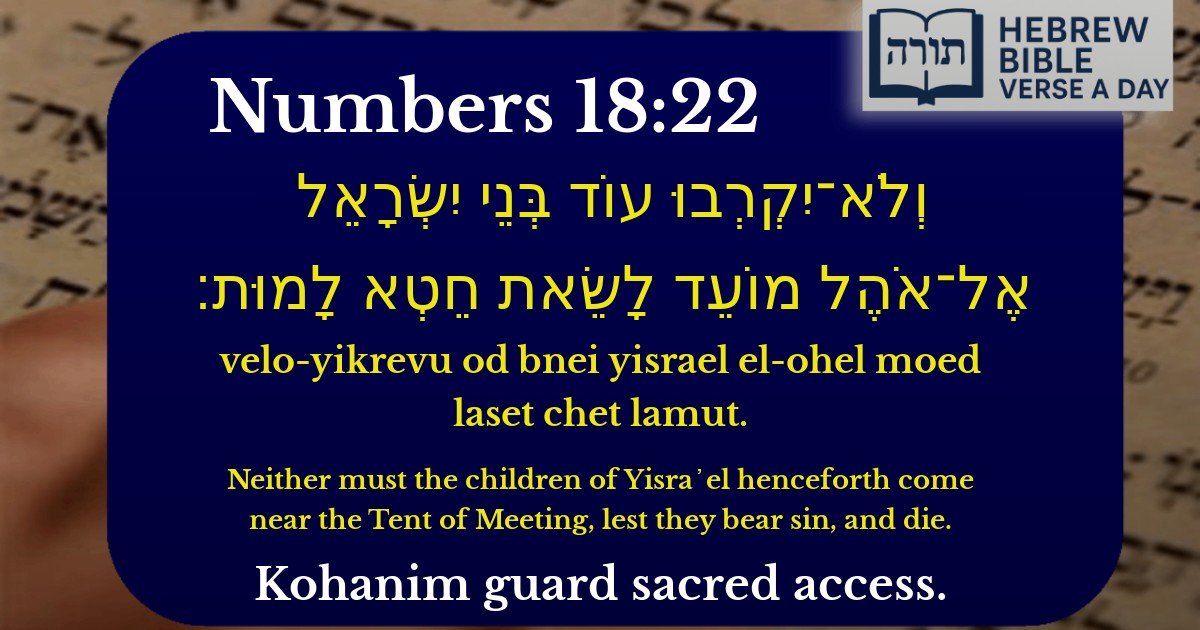

Context of the Verse
The verse (Bamidbar 18:22) appears in the context of the Torah's instructions regarding the roles of the Kohanim (priests) and Levi'im (Levites) in the Mishkan (Tabernacle). Hashem designates the Levi'im to assist the Kohanim and warns Bnei Yisrael against encroaching upon the sacred service, which is reserved for these designated groups.
Rashi's Explanation
Rashi explains that this verse serves as a prohibition for non-Kohanim and non-Levi'im from approaching the Mishkan to perform any service. The phrase "לָשֵׂאת חֵטְא לָמוּת" ("to bear sin and die") means that unauthorized involvement in the sacred service would incur severe consequences, as it constitutes a trespass against Hashem's commandments.
Rambam's Perspective
In Hilchot Klei HaMikdash (3:12), the Rambam codifies this prohibition, stating that any non-Kohen who performs the Avodah (Temple service) is liable for karet (spiritual excision) or death at the hands of Heaven. This underscores the severity of violating the sanctity of the Mishkan's designated roles.
Midrashic Insight
The Midrash Tanchuma (Korach 11) connects this verse to the rebellion of Korach, who challenged the exclusive roles of Aharon and his sons. The warning here serves as a reminder that the division of sacred duties is divinely ordained, and any attempt to usurp these roles leads to severe consequences.
Practical Implications
Chassidic Interpretation
The Sefat Emet (Parashat Korach) explains that this prohibition also carries a deeper lesson: every individual in Klal Yisrael has a unique spiritual role. Just as the Kohanim and Levi'im have their designated service, each Jew must fulfill their personal mission without encroaching on another's path in avodat Hashem.