

Join Our Newsletter To Be Informed When New Videos Are Posted
Hebrew Text
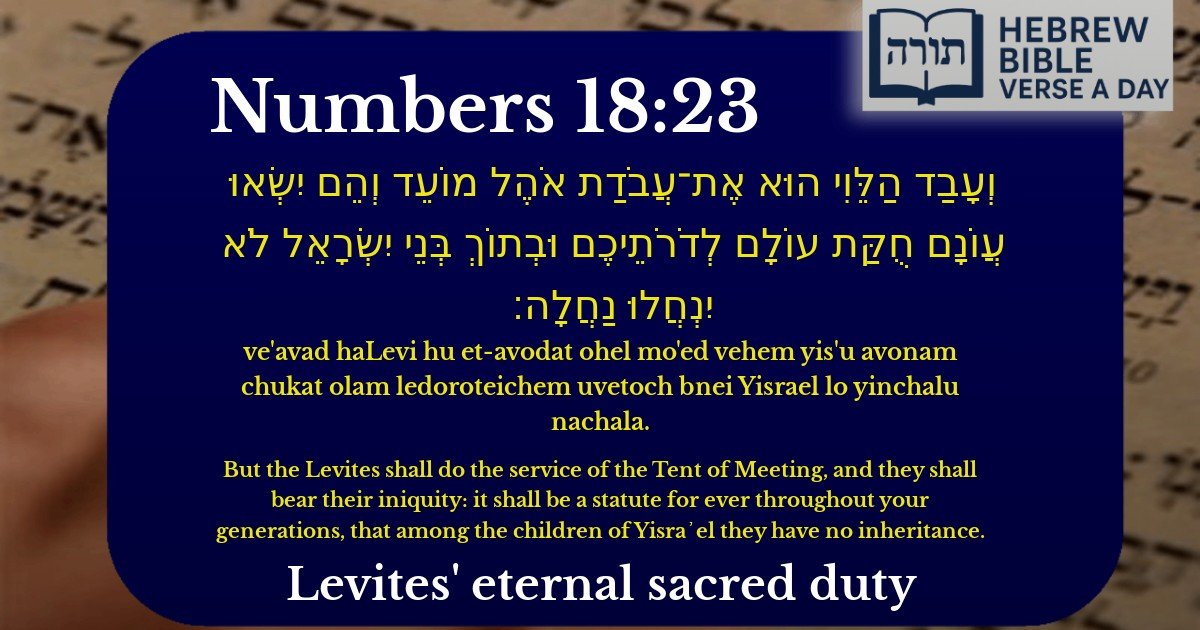
וְעָבַד הַלֵּוִי הוּא אֶת־עֲבֹדַת אֹהֶל מוֹעֵד וְהֵם יִשְׂאוּ עֲוֺנָם חֻקַּת עוֹלָם לְדֹרֹתֵיכֶם וּבְתוֹךְ בְּנֵי יִשְׂרָאֵל לֹא יִנְחֲלוּ נַחֲלָה׃
English Translation
But the Levites shall do the service of the Tent of Meeting, and they shall bear their iniquity: it shall be a statute for ever throughout your generations, that among the children of Yisra᾽el they have no inheritance.
Transliteration
Ve'avad haLevi hu et-avodat ohel mo'ed vehem yis'u avonam chukat olam ledoroteichem uvetoch bnei Yisrael lo yinchalu nachala.
Hebrew Leining Text
וְעָבַ֨ד הַלֵּוִ֜י ה֗וּא אֶת־עֲבֹדַת֙ אֹ֣הֶל מוֹעֵ֔ד וְהֵ֖ם יִשְׂא֣וּ עֲוֺנָ֑ם חֻקַּ֤ת עוֹלָם֙ לְדֹרֹ֣תֵיכֶ֔ם וּבְתוֹךְ֙ בְּנֵ֣י יִשְׂרָאֵ֔ל לֹ֥א יִנְחֲל֖וּ נַחֲלָֽה׃
🎵 Listen to leining
Parasha Commentary
📚 Talmud Citations
This verse is quoted in the Talmud.
📖 Arakhin 11a
The verse is referenced in a discussion about the roles and responsibilities of the Levites, particularly their service in the Tent of Meeting and their lack of inheritance among the children of Israel.
📖 Yoma 66a
The verse is cited in a discussion about the Levites' service and their unique status among the tribes of Israel, emphasizing their role in the Temple service and their lack of territorial inheritance.
The Role of the Levites in the Mishkan
The verse (Bamidbar 18:23) establishes the unique role of the Levites in serving in the Mishkan (Tent of Meeting). Rashi explains that their service includes guarding the Mishkan, singing during offerings, and carrying its vessels during travels. Unlike the other tribes, the Levites were not given a territorial inheritance in Eretz Yisrael, as their primary responsibility was divine service.
Bearing Their Iniquity
The phrase "וְהֵם יִשְׂאוּ עֲוֺנָם" ("they shall bear their iniquity") is interpreted in several ways:
A Perpetual Statute
The term "חֻקַּת עוֹלָם" ("a statute forever") emphasizes that this arrangement is immutable. The Talmud (Yoma 26a) derives from this that even in future times, the Levites retain their unique status, regardless of changes in the Temple service.
No Inheritance Among Bnei Yisrael
The verse concludes by reiterating that the Levites do not receive a portion of land like the other tribes. The Midrash (Bamidbar Rabbah 18:2) teaches that Hashem Himself is their inheritance (Devarim 10:9), meaning their sustenance comes from tithes and offerings rather than agricultural land. This separation ensures their complete devotion to spiritual leadership.