

Join Our Newsletter To Be Informed When New Videos Are Posted
Hebrew Text
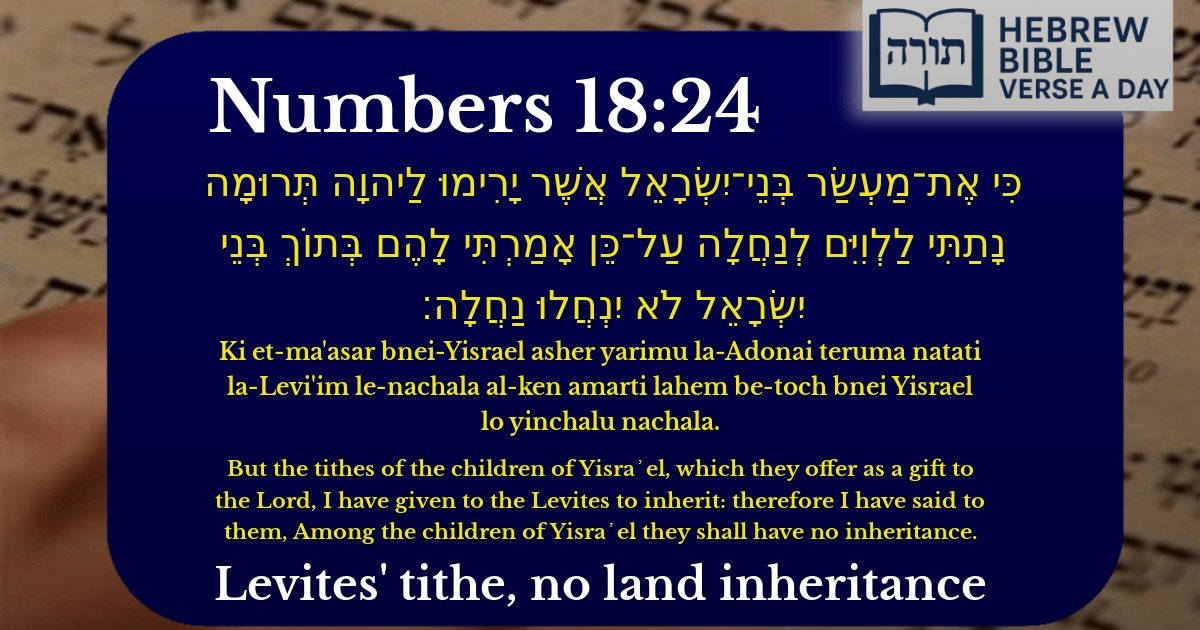
כִּי אֶת־מַעְשַׂר בְּנֵי־יִשְׂרָאֵל אֲשֶׁר יָרִימוּ לַיהוָה תְּרוּמָה נָתַתִּי לַלְוִיִּם לְנַחֲלָה עַל־כֵּן אָמַרְתִּי לָהֶם בְּתוֹךְ בְּנֵי יִשְׂרָאֵל לֹא יִנְחֲלוּ נַחֲלָה׃
English Translation
But the tithes of the children of Yisra᾽el, which they offer as a gift to the Lord, I have given to the Levites to inherit: therefore I have said to them, Among the children of Yisra᾽el they shall have no inheritance.
Transliteration
Ki et-ma'asar bnei-Yisrael asher yarimu la-Adonai teruma natati la-Levi'im le-nachala al-ken amarti lahem be-toch bnei Yisrael lo yinchalu nachala.
Hebrew Leining Text
כִּ֞י אֶת־מַעְשַׂ֣ר בְּנֵֽי־יִשְׂרָאֵ֗ל אֲשֶׁ֨ר יָרִ֤ימוּ לַֽיהֹוָה֙ תְּרוּמָ֔ה נָתַ֥תִּי לַלְוִיִּ֖ם לְנַחֲלָ֑ה עַל־כֵּן֙ אָמַ֣רְתִּי לָהֶ֔ם בְּתוֹךְ֙ בְּנֵ֣י יִשְׂרָאֵ֔ל לֹ֥א יִנְחֲל֖וּ נַחֲלָֽה׃ {פ}
🎵 Listen to leining
Parasha Commentary
📚 Talmud Citations
This verse is quoted in the Talmud.
📖 Chullin 131b
The verse is cited in a discussion about the tithes given to the Levites and their inheritance rights among the children of Israel.
📖 Bava Batra 122a
Referenced in the context of discussing the Levites' lack of territorial inheritance in the land of Israel.
The Commandment of Tithes to the Levites
The verse (Bamidbar 18:24) establishes the halachic principle that the Levites are to receive the ma'aser (tithe) from Bnei Yisrael in place of a territorial inheritance in Eretz Yisrael. Rashi explains that this tithe is the ma'aser rishon (first tithe), which is given to the Levites as their portion, as they were set apart for Divine service and did not receive a portion of land like the other tribes.
Reason for the Levites' Exclusion from Land Inheritance
Rambam (Hilchot Shemitah ve'Yovel 13:12) elaborates that since the Levites were designated for avodat Hashem (service to G-d) in the Mishkan and later the Beit HaMikdash, they were not to be distracted by agricultural labor. The Sforno adds that their lack of land inheritance ensured their dependence on the tithes, reinforcing their role as spiritual leaders who would inspire the nation in Torah and mitzvot.
Halachic Implications of Ma'aser Rishon
Spiritual Significance
The Midrash Tanchuma (Korach 10) emphasizes that this arrangement teaches the interdependence of Klal Yisrael: just as the Levites rely on the tithes from the people, the people rely on the Levites for spiritual guidance. The Netziv (Ha'amek Davar) adds that this system ensures that material blessings (symbolized by the land) remain connected to their Divine source through the Levites' service.