

Join Our Newsletter To Be Informed When New Videos Are Posted
Hebrew Text
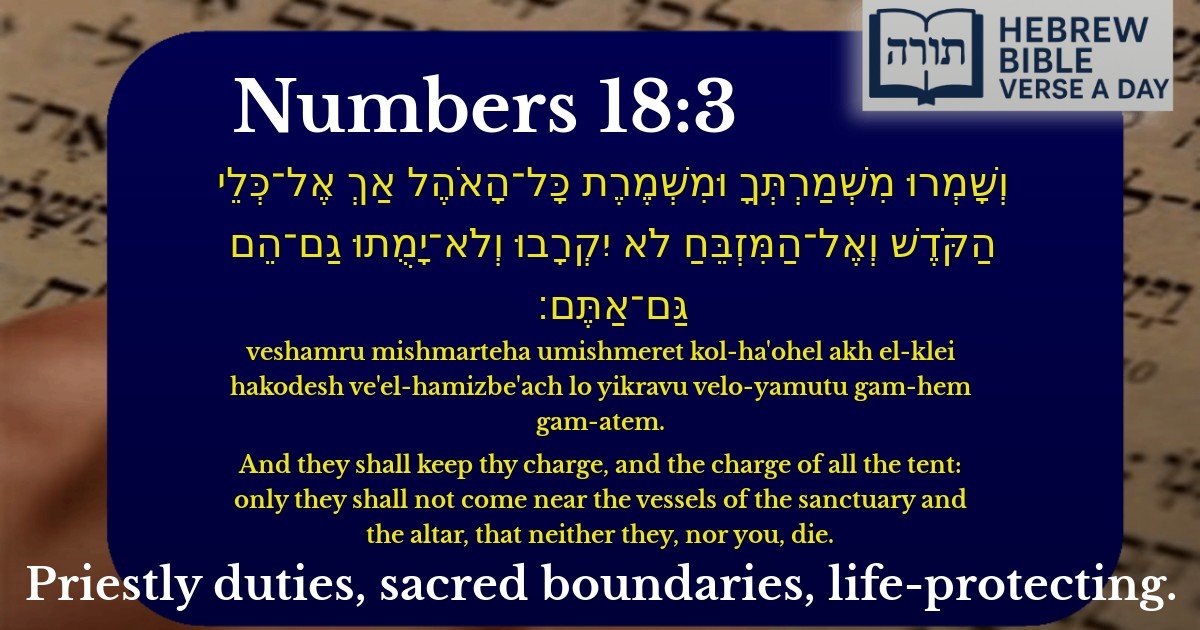
וְשָׁמְרוּ מִשְׁמַרְתְּךָ וּמִשְׁמֶרֶת כָּל־הָאֹהֶל אַךְ אֶל־כְּלֵי הַקֹּדֶשׁ וְאֶל־הַמִּזְבֵּחַ לֹא יִקְרָבוּ וְלֹא־יָמֻתוּ גַם־הֵם גַּם־אַתֶּם׃
English Translation
And they shall keep thy charge, and the charge of all the tent: only they shall not come near the vessels of the sanctuary and the altar, that neither they, nor you, die.
Transliteration
Veshamru mishmarteha umishmeret kol-ha'ohel akh el-klei hakodesh ve'el-hamizbe'ach lo yikravu velo-yamutu gam-hem gam-atem.
Hebrew Leining Text
וְשָֽׁמְרוּ֙ מִֽשְׁמַרְתְּךָ֔ וּמִשְׁמֶ֖רֶת כׇּל־הָאֹ֑הֶל אַךְ֩ אֶל־כְּלֵ֨י הַקֹּ֤דֶשׁ וְאֶל־הַמִּזְבֵּ֙חַ֙ לֹ֣א יִקְרָ֔בוּ וְלֹֽא־יָמֻ֥תוּ גַם־הֵ֖ם גַּם־אַתֶּֽם׃
🎵 Listen to leining
Parasha Commentary
📚 Talmud Citations
This verse is quoted in the Talmud.
📖 Zevachim 17b
The verse is cited in a discussion about the roles and restrictions of the Levites and priests in the Temple service, emphasizing the boundaries set for approaching sacred objects.
📖 Sanhedrin 83b
Referenced in a broader discussion about the laws of ritual purity and the consequences of unauthorized approach to sacred items.
Context of the Verse
This verse (Bamidbar 18:3) is part of Hashem's instructions to Aharon regarding the roles and responsibilities of the Kohanim and Levi'im in the Mishkan. It delineates the boundaries between the sacred duties of the Kohanim and the supporting roles of the Levi'im.
Explanation of the Text
The verse states: "And they shall keep thy charge, and the charge of all the tent"—referring to the Levi'im, who are assigned to assist the Kohanim in guarding and maintaining the Mishkan. However, "only they shall not come near the vessels of the sanctuary and the altar"—this establishes a clear prohibition against the Levi'im performing the innermost sacred services reserved exclusively for the Kohanim.
Rashi's Commentary
Rashi explains that the phrase "they shall keep thy charge" refers to the Levi'im guarding the Mishkan under the direction of the Kohanim. The warning "that neither they, nor you, die" emphasizes the severe consequences of overstepping these boundaries—death for both the Levi'im who encroach and the Kohanim who fail to prevent it.
Rambam's Perspective
In Hilchot Klei HaMikdash (3:9), the Rambam codifies this prohibition, stating that a Levi who performs the avodah (Temple service) is liable for death at the hands of Heaven, just as a non-Kohen who does so. This underscores the divine severity of violating these roles.
Midrashic Insight
The Midrash Tanchuma (Korach 11) connects this verse to the rebellion of Korach, illustrating how the improper desire to usurp the Kohen's role leads to catastrophe. The boundaries set here are meant to preserve harmony and sanctity within the service of Hashem.
Practical Implications