
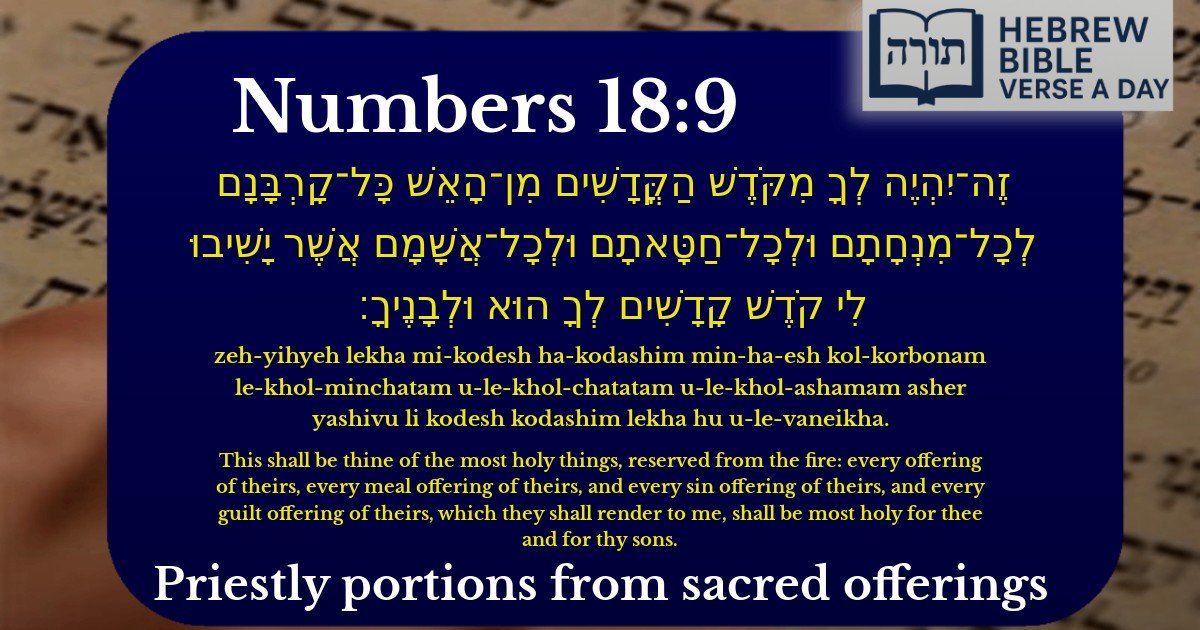

Numbers 18:9 - Priestly portions from sacred offerings

Numbers 18:9 - במדבר 18:9

Hebrew Text

זֶה־יִהְיֶה לְךָ מִקֹּדֶשׁ הַקֳּדָשִׁים מִן־הָאֵשׁ כָּל־קָרְבָּנָם לְכָל־מִנְחָתָם וּלְכָל־חַטָּאתָם וּלְכָל־אֲשָׁמָם אֲשֶׁר יָשִׁיבוּ לִי קֹדֶשׁ קָדָשִׁים לְךָ הוּא וּלְבָנֶיךָ׃

English Translation

This shall be thine of the most holy things, reserved from the fire: every offering of theirs, every meal offering of theirs, and every sin offering of theirs, and every guilt offering of theirs, which they shall render to me, shall be most holy for thee and for thy sons.

Transliteration

Zeh-yihyeh lekha mi-kodesh ha-kodashim min-ha-esh kol-korbonam le-khol-minchatam u-le-khol-chatatam u-le-khol-ashamam asher yashivu li kodesh kodashim lekha hu u-le-vaneikha.

Hebrew Leining Text

זֶֽה־יִהְיֶ֥ה לְךָ֛ מִקֹּ֥דֶשׁ הַקֳּדָשִׁ֖ים מִן־הָאֵ֑שׁ כׇּל־קׇ֠רְבָּנָ֠ם לְֽכׇל־מִנְחָתָ֞ם וּלְכׇל־חַטָּאתָ֗ם וּלְכׇל־אֲשָׁמָם֙ אֲשֶׁ֣ר יָשִׁ֣יבוּ לִ֔י קֹ֣דֶשׁ קׇֽדָשִׁ֥ים לְךָ֛ ה֖וּא וּלְבָנֶֽיךָ׃

🎵 Listen to leining

Parasha Commentary

Context of the Verse

This verse (Numbers 18:9) is part of Parshat Korach, where Hashem delineates the portions of the korbanot (offerings) that are designated for the Kohanim (priests). The verse specifies which offerings are considered kodesh kodashim (most holy) and reserved exclusively for the Kohanim and their sons.

Explanation of "Kodesh Kodashim"

Rashi explains that "kodesh kodashim" refers to offerings that are of the highest sanctity and must be eaten within the confines of the Azara (Temple courtyard) by male Kohanim only. These include:

  • Mincha (meal offerings) – such as the minchat chavitin of the Kohen Gadol (Rambam, Hilchot Maaseh Hakorbanot 10:12).
  • Chatat (sin offerings) – brought for unintentional sins (Talmud Zevachim 44a).
  • Asham (guilt offerings) – brought for certain transgressions, such as misuse of sanctified property (Vayikra 5:15).

Exclusion from the Fire

The phrase "min ha'esh" ("from the fire") teaches that the Kohanim receive their portion after the parts of the offering that are burned on the altar (Ramban). The Kohanim do not partake of the parts consumed by the fire, which are entirely for Hashem.

Inheritance for Future Generations

The verse concludes by stating that these holy portions belong to the Kohanim "and for your sons". The Talmud (Chullin 132b) derives from this that the rights to these offerings are hereditary, passed down to all future generations of Kohanim.

Practical Halachic Implications

According to the Rambam (Hilchot Maaseh Hakorbanot 10:1-2), these laws apply only when the Beit HaMikdash stands. The Kohanim must eat these portions in a state of ritual purity, within the designated area, and within the prescribed time limits (usually one day and one night).

📚 Talmud Citations

This verse is not quoted in the Talmud.

Frequently Asked Questions

Q: What does Numbers 18:9 mean?
A: Numbers 18:9 explains that certain portions of the sacrifices brought in the Mishkan (Tabernacle) and later the Beit HaMikdash (Temple) were designated as 'most holy' and given to the Kohanim (priests) for their consumption. This includes parts of meal offerings, sin offerings, and guilt offerings that were not completely burned on the altar. Rashi clarifies that these portions were reserved exclusively for the Kohanim and their families as their share for serving in the Temple.
Q: Why is this verse important?
A: This verse is important because it establishes the rights and responsibilities of the Kohanim regarding the holiest sacrifices. The Rambam (Hilchot Ma'aseh HaKorbanot 10:1) explains that these laws ensure the Kohanim are properly sustained so they can focus on their sacred duties. It also teaches the concept that those who serve in holy matters receive their sustenance from holy sources.
Q: What can we learn from Numbers 18:9 today?
A: While we don't have the Temple today, we learn from this verse the importance of properly supporting those who dedicate their lives to Torah study and spiritual service. The Talmud (Ketubot 105b) derives from this that communities must support their Torah scholars, just as the Kohanim were supported through the sacrifices. It also teaches the sanctity with which we must treat holy matters.
Q: What does 'most holy' mean in this verse?
A: 'Most holy' (kodesh kodashim) refers to the highest level of sanctity among the sacrifices. The Mishnah (Zevachim 5:4) explains that these offerings could only be eaten by male Kohanim within the Temple courtyard, unlike lesser sanctified offerings which could be eaten by any Kohen family member anywhere in Jerusalem. This extreme holiness required special handling and restrictions.
Q: Why were only certain parts of the sacrifices given to the Kohanim?
A: The Torah designates specific portions for different purposes - some for G-d (burned on the altar), some for the Kohanim, and sometimes parts for the person bringing the sacrifice. Rashi (on Leviticus 6:9) explains this division teaches that holiness is shared - between Heaven, the priesthood, and the Jewish people. The Kohanim's portion specifically came from parts not burned, showing their role in completing the service.