

Join Our Newsletter To Be Informed When New Videos Are Posted
Hebrew Text
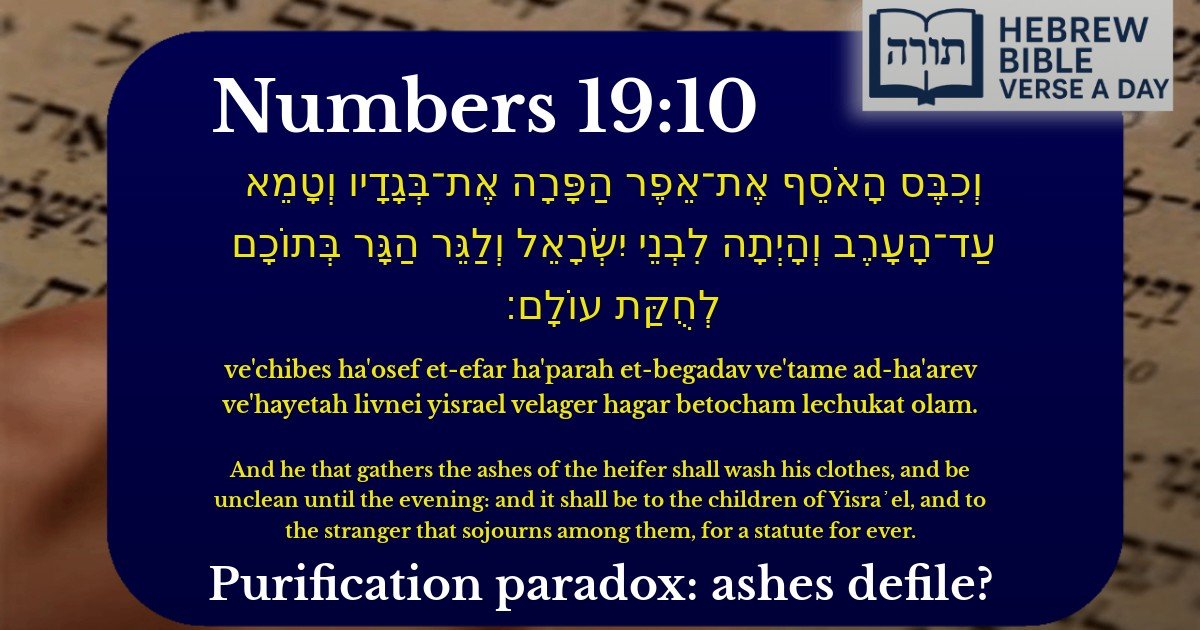
וְכִבֶּס הָאֹסֵף אֶת־אֵפֶר הַפָּרָה אֶת־בְּגָדָיו וְטָמֵא עַד־הָעָרֶב וְהָיְתָה לִבְנֵי יִשְׂרָאֵל וְלַגֵּר הַגָּר בְּתוֹכָם לְחֻקַּת עוֹלָם׃
English Translation
And he that gathers the ashes of the heifer shall wash his clothes, and be unclean until the evening: and it shall be to the children of Yisra᾽el, and to the stranger that sojourns among them, for a statute for ever.
Transliteration
Ve'chibes ha'osef et-efar ha'parah et-begadav ve'tame ad-ha'arev ve'hayetah livnei yisrael velager hagar betocham lechukat olam.
Hebrew Leining Text
וְ֠כִבֶּ֠ס הָאֹסֵ֨ף אֶת־אֵ֤פֶר הַפָּרָה֙ אֶת־בְּגָדָ֔יו וְטָמֵ֖א עַד־הָעָ֑רֶב וְֽהָיְתָ֞ה לִבְנֵ֣י יִשְׂרָאֵ֗ל וְלַגֵּ֛ר הַגָּ֥ר בְּתוֹכָ֖ם לְחֻקַּ֥ת עוֹלָֽם׃
🎵 Listen to leining
Parasha Commentary
📚 Talmud Citations
This verse is quoted in the Talmud.
📖 Yoma 14a
The verse is referenced in the discussion about the impurity of those involved in the preparation of the red heifer ashes.
📖 Niddah 9b
Cited in the context of discussing the laws of impurity and the status of those who come into contact with the ashes of the red heifer.
📖 Parah 4:4
The Mishnah references this verse in detailing the procedures for the red heifer ritual and the impurity it causes to those handling its ashes.
The Paradox of the Red Heifer
The verse (Bamidbar 19:10) describes the purification process involving the parah adumah (red heifer), which presents a profound paradox in Jewish law. Rashi explains that while the ashes of the red heifer purify those contaminated by contact with the dead, the one who prepares it becomes impure. This teaches that the same mitzvah can have opposite effects—purification for some and impurity for others—highlighting the inscrutable nature of divine commandments (chukim).
Impurity of the Gatherer
The Torah states that the one who gathers the ashes becomes impure until evening. Rambam (Hilchos Parah Adumah 15:1) clarifies that this impurity applies even to the Kohen who performs the mitzvah, demonstrating that ritual impurity is not inherently sinful but rather a halachic state resulting from certain sacred acts. The Talmud (Yoma 14a) notes that this underscores the principle that one must not avoid mitzvos even if they entail temporary impurity.
Inclusion of the Ger Toshav
The verse emphasizes that the red heifer applies equally to "the children of Israel and the stranger who dwells among them." The Midrash (Bamidbar Rabbah 19:8) explains that this teaches the ger toshav (resident alien) is included in the laws of purity, showing that Torah obligations extend to those who accept its basic principles. Sforno adds that this inclusion reflects the universal potential for spiritual elevation through adherence to divine statutes.
An Eternal Statute
The phrase "l'chukas olam" (a statute forever) is interpreted by the Talmud (Yoma 67b) as emphasizing that the red heifer's laws are unchanging, even if their rationale remains hidden. The Ramban explains that this eternal nature applies to all chukim, which we observe solely because of divine command, reinforcing the principle of na'aseh v'nishma (we will do and we will hear).