

Numbers 19:13 - Purify or be cut off?

Numbers 19:13 - במדבר 19:13

Hebrew Text

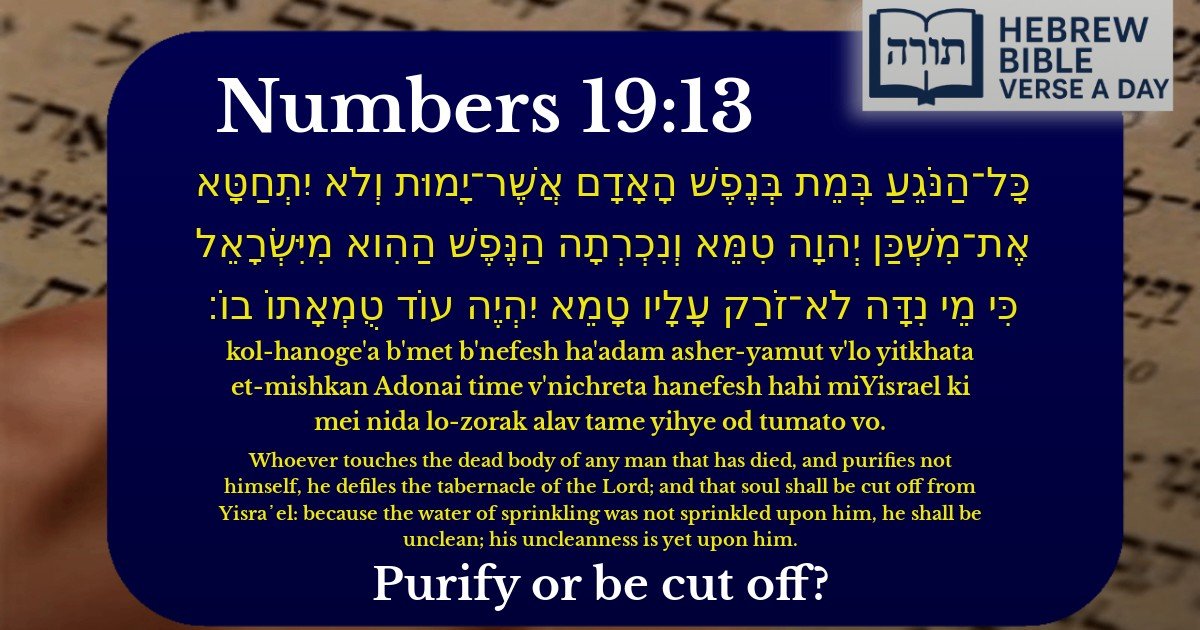
כָּל־הַנֹּגֵעַ בְּמֵת בְּנֶפֶשׁ הָאָדָם אֲשֶׁר־יָמוּת וְלֹא יִתְחַטָּא אֶת־מִשְׁכַּן יְהוָה טִמֵּא וְנִכְרְתָה הַנֶּפֶשׁ הַהִוא מִיִּשְׂרָאֵל כִּי מֵי נִדָּה לֹא־זֹרַק עָלָיו טָמֵא יִהְיֶה עוֹד טֻמְאָתוֹ בוֹ׃

English Translation

Whoever touches the dead body of any man that has died, and purifies not himself, he defiles the tabernacle of the Lord; and that soul shall be cut off from Yisra᾽el: because the water of sprinkling was not sprinkled upon him, he shall be unclean; his uncleanness is yet upon him.

Transliteration

Kol-hanoge'a b'met b'nefesh ha'adam asher-yamut v'lo yitkhata et-mishkan Adonai time v'nichreta hanefesh hahi miYisrael ki mei nida lo-zorak alav tame yihye od tumato vo.

Hebrew Leining Text

כׇּֽל־הַנֹּגֵ֡עַ בְּמֵ֣ת בְּנֶ֩פֶשׁ֩ הָאָדָ֨ם אֲשֶׁר־יָמ֜וּת וְלֹ֣א יִתְחַטָּ֗א אֶת־מִשְׁכַּ֤ן יְהֹוָה֙ טִמֵּ֔א וְנִכְרְתָ֛ה הַנֶּ֥פֶשׁ הַהִ֖וא מִיִּשְׂרָאֵ֑ל כִּי֩ מֵ֨י נִדָּ֜ה לֹא־זֹרַ֤ק עָלָיו֙ טָמֵ֣א יִהְיֶ֔ה ע֖וֹד טֻמְאָת֥וֹ בֽוֹ׃

🎵 Listen to leining

Parasha Commentary

Overview of the Verse

This verse from Bamidbar (Numbers 19:13) discusses the severe consequences of coming into contact with a dead body (tum'at met) without undergoing the proper purification process. The Torah emphasizes the sanctity of life and the need to maintain ritual purity, especially in relation to the Mishkan (Tabernacle).

Key Concepts in the Verse

  • Tum'at Met (Impurity from the Dead): Contact with a corpse renders a person tamei (ritually impure), requiring purification through the ashes of the parah adumah (red heifer).
  • Defilement of the Mishkan: Entering the Mishkan or Temple in a state of impurity is a grave offense, as it profanes the sacred space.
  • Karet (Spiritual Excision): The penalty of karet is invoked for willful neglect of purification, indicating the severity of the transgression.

Commentary from Rashi

Rashi explains that the phrase "and does not purify himself" implies a deliberate refusal to undergo the purification process. He notes that the defilement of the Mishkan occurs when an impure person enters its sacred precincts, thereby violating its sanctity. Rashi further clarifies that "the water of sprinkling was not sprinkled upon him" refers to the absence of the purification waters mixed with the ashes of the red heifer.

Rambam's Perspective

In Hilchot Tum'at Met (Laws of Impurity from the Dead), the Rambam (Maimonides) elaborates on the necessity of the parah adumah ritual. He emphasizes that the Torah's requirement for purification underscores the importance of maintaining holiness, particularly in relation to the Divine Presence that dwells among Israel.

Midrashic Insights

The Midrash (Bamidbar Rabbah) connects this verse to the broader theme of life and death, teaching that the laws of purity serve as a reminder of the distinction between the sacred and the profane. The parah adumah represents a paradox—it purifies the impure while rendering the pure impure—symbolizing the profound mysteries of Divine law.

Practical Halachic Implications

  • One who becomes tamei met must undergo purification before entering the Temple or handling sacred objects.
  • The penalty of karet applies only if the neglect was intentional (mezid), not if it was accidental (shogeg).
  • Today, in the absence of the Temple, these laws remain relevant for Kohanim (priests), who must avoid contact with the dead to maintain their ritual purity.

📚 Talmud Citations

This verse is quoted in the Talmud.

📖 Yoma 14a
The verse is referenced in the discussion about the laws of impurity and the necessity of purification after contact with a dead body.
📖 Nazir 43b
The verse is cited in the context of discussing the impurity contracted by touching a corpse and the requirements for purification.
📖 Zevachim 20b
The verse is mentioned in the discussion about the defilement of the Tabernacle and the consequences of not purifying oneself after contact with a dead body.

Frequently Asked Questions

Q: What does Numbers 19:13 mean?
A: Numbers 19:13 discusses the laws of ritual impurity (tumah) that come from contact with a dead body. According to Orthodox Jewish interpretation, if someone touches a corpse and does not purify themselves with the special 'mei niddah' (waters of purification made from the red heifer ashes), they become spiritually impure. This impurity prevents them from entering holy spaces like the Mishkan (Tabernacle) until they undergo purification. Rashi explains that neglecting this purification process is a serious offense that can lead to being 'cut off' from the Jewish people.
Q: Why is purification after touching a dead body important in Judaism?
A: Purification is important because death represents the greatest form of ritual impurity (tumah) in Jewish law. The Torah teaches that holiness and impurity cannot coexist in sacred spaces. The Rambam (Hilchot Tum'at Met) explains that maintaining purity allows a person to participate in Temple service and connect with Hashem. Without purification, one remains in a state of tumah, which restricts access to holy matters.
Q: What is the 'water of sprinkling' mentioned in Numbers 19:13?
A: The 'water of sprinkling' refers to the special purification water made from the ashes of the red heifer (para aduma), mixed with spring water. The Talmud (Yoma 14a) describes this as a unique mitzvah given to purify those who have come into contact with the dead. Even King Solomon could not fully understand its deeper meaning (Midrash Bamidbar Rabbah 19:3), yet it remains an essential part of Jewish purity laws.
Q: Does this law still apply today without the Temple?
A: While the full purification process with the red heifer ashes cannot be performed today due to the absence of the Temple, the concept of tumah (impurity) from contact with the dead still has halachic implications. The Shulchan Aruch (Yoreh De'ah 372) discusses precautions related to kohanim (priests), who must avoid contact with the dead to maintain their purity. Additionally, immersion in a mikveh is still practiced in some cases of tumah, though the full purification process will only be reinstated with the rebuilding of the Temple.
Q: What does it mean to be 'cut off from Israel' in this verse?
A: Being 'cut off' (karet) is a severe spiritual penalty mentioned in the Torah for certain transgressions. According to Rashi and the Talmud (Keritot 2a), this can mean premature death or being spiritually separated from the Jewish people in the World to Come. In the context of Numbers 19:13, it refers to the consequence of willfully neglecting the purification process after contact with the dead, thereby defiling the Mishkan. The Rambam (Hilchot Tumat Met 6:6) emphasizes the importance of taking these laws seriously.