Frequently Asked Questions
Q: What is the meaning of Numbers 19:17?
A: Numbers 19:17 describes part of the purification process for someone who became ritually impure (tamei) through contact with a dead body. The verse explains that ashes from the red heifer (a special purification offering) are mixed with 'living water' (fresh, flowing water) in a vessel to create the purification solution. This mixture was then used to sprinkle on the impure person on the third and seventh day of their purification process, as explained in the following verses.
Q: Why is the red heifer ashes mixed with water?
A: According to Jewish tradition (as explained in Rashi and the Talmud, Tractate Parah), the mixing of the red heifer's ashes with living water creates the essential purification solution that removes tum'at met (impurity from contact with death). The paradox is that while this mixture purifies the impure, it makes those involved in its preparation impure. This mitzvah is considered a chok - a statute beyond human comprehension, demonstrating our commitment to follow Hashem's commandments even when we don't understand them.
Q: What does 'living water' mean in this verse?
A: 'Living water' (mayim chayim) refers to fresh, flowing water from a natural source like a spring or river, as opposed to stagnant water. The Mishnah (Parah 8:9) specifies that this water must be drawn directly from such a source into the vessel where it will be mixed with the ashes. This requirement emphasizes the concept of purity coming from natural, life-giving sources, in contrast to the impurity of death being purified.
Q: How does this purification process apply today?
A: While we currently lack the red heifer ashes needed for this purification process (as the Temple is not standing), the concepts remain important in Jewish thought. The laws teach us about the spiritual impact of death and the need for purification. Many of the associated ideas influence current practices around taharah (purification of the dead) and mourning. The red heifer ritual also represents the profound mysteries of Torah that we accept even without full understanding.
Q: Why is this purification done in a vessel?
A: The requirement to mix the ashes and water in a vessel (keli) teaches us about the importance of proper vessels and containers in holy matters. The Talmud (Shabbat 95b) discusses how the vessel must be fit for this sacred purpose. This teaches that spiritual processes require proper physical preparations and that even the containers we use for mitzvot have significance in serving Hashem.

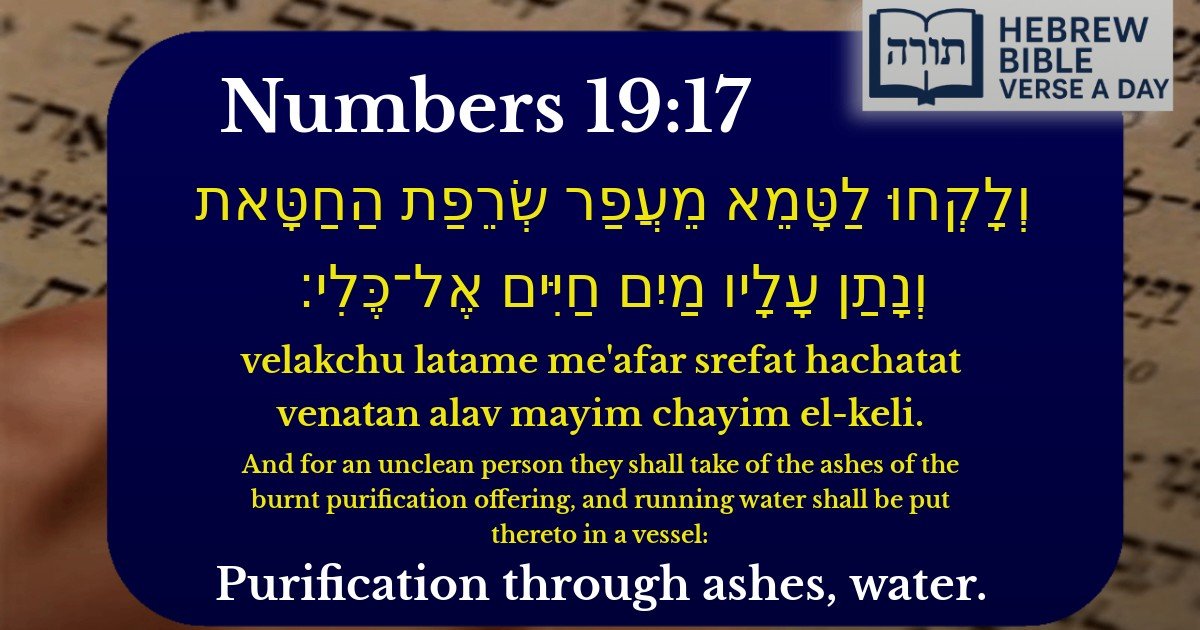

Verse Context in Parashat Chukat
This verse (Bamidbar 19:17) describes part of the purification process for one who has become tamei (ritually impure) through contact with a corpse. The Torah outlines the preparation of the mei chatat (waters of purification) using the ashes of the parah adumah (red heifer) mixed with mayim chayim (living water). This is a foundational element of the chukat haTorah (statute of the Torah), whose deeper meaning is acknowledged as beyond full human comprehension (Rashi on Bamidbar 19:2).
Key Components of the Purification Process
Symbolism and Deeper Meaning
The Midrash Tanchuma (Chukat 6) connects this purification process to the concept of death's impurity being counteracted by elements associated with life: the red heifer (whose color recalls blood, the essence of life) and living water. The paradoxical nature of the parah adumah—purifying the impure while making the pure impure—is highlighted as the ultimate chok (statute beyond human logic). The Ramban suggests this teaches that purity ultimately comes from Hashem's command, not human reasoning.
Practical Halachic Considerations
The Mishneh Torah (Hilchot Parah Adumah 11:1-4) details the exacting procedures required for this mitzvah, including:
This underscores how even the preparation of the purifying waters requires meticulous adherence to halachic parameters.