
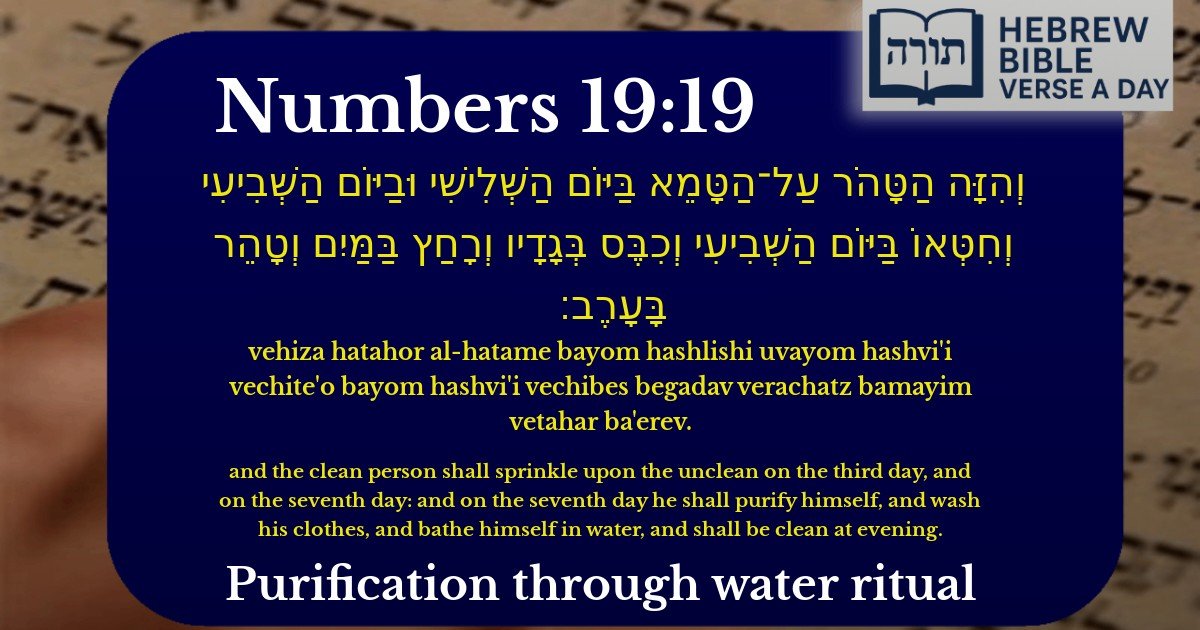

Numbers 19:19 - Purification through water ritual

Numbers 19:19 - במדבר 19:19

Hebrew Text

וְהִזָּה הַטָּהֹר עַל־הַטָּמֵא בַּיּוֹם הַשְּׁלִישִׁי וּבַיּוֹם הַשְּׁבִיעִי וְחִטְּאוֹ בַּיּוֹם הַשְּׁבִיעִי וְכִבֶּס בְּגָדָיו וְרָחַץ בַּמַּיִם וְטָהֵר בָּעָרֶב׃

English Translation

and the clean person shall sprinkle upon the unclean on the third day, and on the seventh day: and on the seventh day he shall purify himself, and wash his clothes, and bathe himself in water, and shall be clean at evening.

Transliteration

Vehiza hatahor al-hatame bayom hashlishi uvayom hashvi'i vechite'o bayom hashvi'i vechibes begadav verachatz bamayim vetahar ba'erev.

Hebrew Leining Text

וְהִזָּ֤ה הַטָּהֹר֙ עַל־הַטָּמֵ֔א בַּיּ֥וֹם הַשְּׁלִישִׁ֖י וּבַיּ֣וֹם הַשְּׁבִיעִ֑י וְחִטְּאוֹ֙ בַּיּ֣וֹם הַשְּׁבִיעִ֔י וְכִבֶּ֧ס בְּגָדָ֛יו וְרָחַ֥ץ בַּמַּ֖יִם וְטָהֵ֥ר בָּעָֽרֶב׃

🎵 Listen to leining

Parasha Commentary

Context of the Verse

This verse (Bamidbar 19:19) is part of the Torah's discussion of the parah adumah (red heifer) ritual, which purifies individuals who have become tamei (ritually impure) through contact with a corpse. The process involves sprinkling specially prepared waters on the third and seventh days, followed by immersion and laundering clothes.

Rashi's Explanation

Rashi (Bamidbar 19:19) explains that the "clean person" refers to one who is ritually pure and authorized to perform the sprinkling. The sprinkling must be done specifically on the third and seventh days—not earlier or later—to be valid. Rashi emphasizes that the purification is not complete until evening (ba'erev), even after all other steps are taken.

Rambam's Halachic Perspective

In Hilchos Parah Adumah (11:1-2), Rambam codifies this process, stating that sprinkling on the wrong day invalidates the purification. He also notes that immersion in a mikveh and laundering clothes are essential components, not mere formalities.

Symbolism of the Third and Seventh Days

  • Third Day: The Midrash (Bamidbar Rabbah 19:8) connects this to the third day of Creation, when vegetation emerged—symbolizing renewal after the spiritual "death" of impurity.
  • Seventh Day: Represents completion, paralleling Shabbat and the full cycle of purification. The Sforno adds that the seven-day process mirrors the natural grieving period, aligning physical and spiritual cleansing.

The Evening Completion

The Talmud (Chagigah 11a) derives from "v'taher ba'erev" that purification is only finalized at nightfall, teaching that certain mitzvos require both action and time to take effect. This reflects the idea that spiritual growth often follows gradual processes.

📚 Talmud Citations

This verse is quoted in the Talmud.

📖 Yoma 8a
The verse is referenced in the discussion about the purification process on the third and seventh days, particularly in the context of ritual impurity and the requirements for becoming clean.
📖 Niddah 70b
The verse is cited in the context of discussing the laws of purification, especially the timing and methods of purification for those who are ritually unclean.

Frequently Asked Questions

Q: What does Numbers 19:19 mean in the context of purification?
A: Numbers 19:19 describes the process of purification for someone who has become ritually impure (tamei) through contact with a dead body. A ritually clean person sprinkles special water (mixed with ashes of the red heifer) on the impure person on the third and seventh days. On the seventh day, the impure person must also wash their clothes, immerse in a mikveh (ritual bath), and wait until evening to become fully pure again. This is part of the Torah's laws of purity and impurity (tumah and taharah).
Q: Why does the purification process take seven days?
A: The seven-day purification period reflects the Torah's understanding that spiritual impurity requires a gradual process of cleansing. The Sages explain that the number seven represents completion in the natural world (like the seven days of creation). The third and seventh days are specifically mentioned because they mark stages in the purification process, with the seventh day bringing full purification after immersion and waiting until evening (Rashi on Numbers 19:19).
Q: Do these purification laws still apply today?
A: While the laws of purity and impurity remain part of Torah tradition, many aspects cannot currently be practiced because we lack the Temple and the red heifer ashes needed for this purification process. However, the concept of spiritual purity remains important in Jewish life today, particularly in laws related to family purity (taharat hamishpacha) and immersion in a mikveh, which still follow similar principles of purification through water and time.
Q: Why does the impure person need to wash clothes and bathe in water?
A: The washing of clothes and immersion in water (mikveh) symbolize both physical and spiritual cleansing. The Rambam explains that these external actions help impress upon the person the seriousness of their spiritual state and the need for inner renewal (Hilchot Parah Adumah 11:12). The Torah frequently connects physical cleanliness with spiritual purity, teaching that our external actions affect our internal state.
Q: What is the significance of becoming clean 'at evening'?
A: The requirement to wait until evening (from sunset onward) for complete purity teaches that spiritual processes cannot be rushed. Evening marks a transition between days in Jewish law, symbolizing completion. Rashi explains that this waiting period gives the person time for reflection and ensures the purification is complete (Rashi on Leviticus 22:6-7). This concept appears in other purification laws as well, showing the importance of patience in spiritual growth.