

Join Our Newsletter To Be Informed When New Videos Are Posted
Hebrew Text
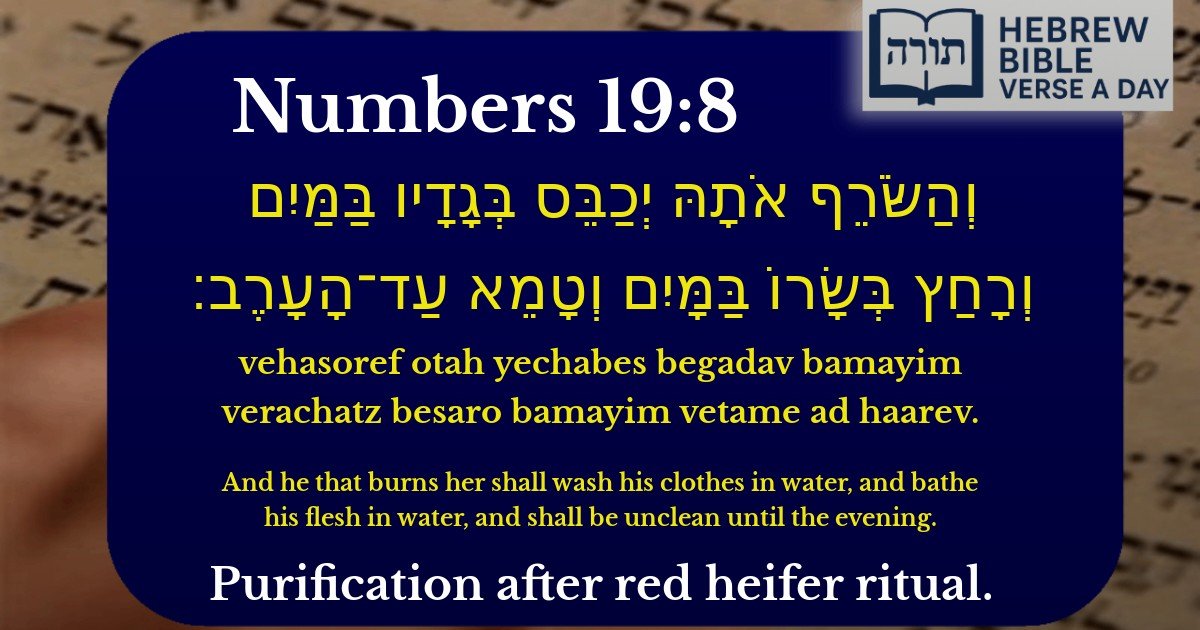
וְהַשֹּׂרֵף אֹתָהּ יְכַבֵּס בְּגָדָיו בַּמַּיִם וְרָחַץ בְּשָׂרוֹ בַּמָּיִם וְטָמֵא עַד־הָעָרֶב׃
English Translation
And he that burns her shall wash his clothes in water, and bathe his flesh in water, and shall be unclean until the evening.
Transliteration
Vehasoref otah yechabes begadav bamayim verachatz besaro bamayim vetame ad haarev.
Hebrew Leining Text
וְהַשֹּׂרֵ֣ף אֹתָ֔הּ יְכַבֵּ֤ס בְּגָדָיו֙ בַּמַּ֔יִם וְרָחַ֥ץ בְּשָׂר֖וֹ בַּמָּ֑יִם וְטָמֵ֖א עַד־הָעָֽרֶב׃
🎵 Listen to leining
Parasha Commentary
📚 Talmud Citations
This verse is not quoted in the Talmud.
Context and Source
The verse (Vayikra 4:12) discusses the laws pertaining to the burning of a chatas (sin offering) outside the camp. The Torah mandates that the one who burns the offering must wash his clothes and immerse in water, remaining in a state of ritual impurity until evening.
Rashi's Explanation
Rashi (Vayikra 4:12) explains that the requirement to wash clothes and bathe is due to the impurity contracted from handling the remains of the sin offering. Even though the offering itself is holy, its ashes transmit impurity once the mitzvah of burning is complete. This teaches that holiness and impurity can coexist in certain contexts.
Rambam's Perspective
In Hilchos Pesulei HaMukdashin (19:10), the Rambam rules that this law applies specifically to a sin offering burned outside the camp. The impurity is not from the sacrifice itself but from the act of completing its disposal, marking a transition from sacred service to mundane handling.
Talmudic Insights
Midrashic Interpretation
The Toras Kohanim (4:12) connects this law to the broader principle that involvement with sin, even for the sake of atonement, leaves a residual effect requiring purification. The washing symbolizes spiritual cleansing after engaging with the consequences of transgression.
Halachic Implications
Poskim (see Mishneh LaMelech on Rambam ibid.) discuss whether this impurity applies today in the absence of the Beis HaMikdash. While the practical halacha is limited, the underlying lesson about the spiritual impact of handling sacred matters remains relevant.