Frequently Asked Questions
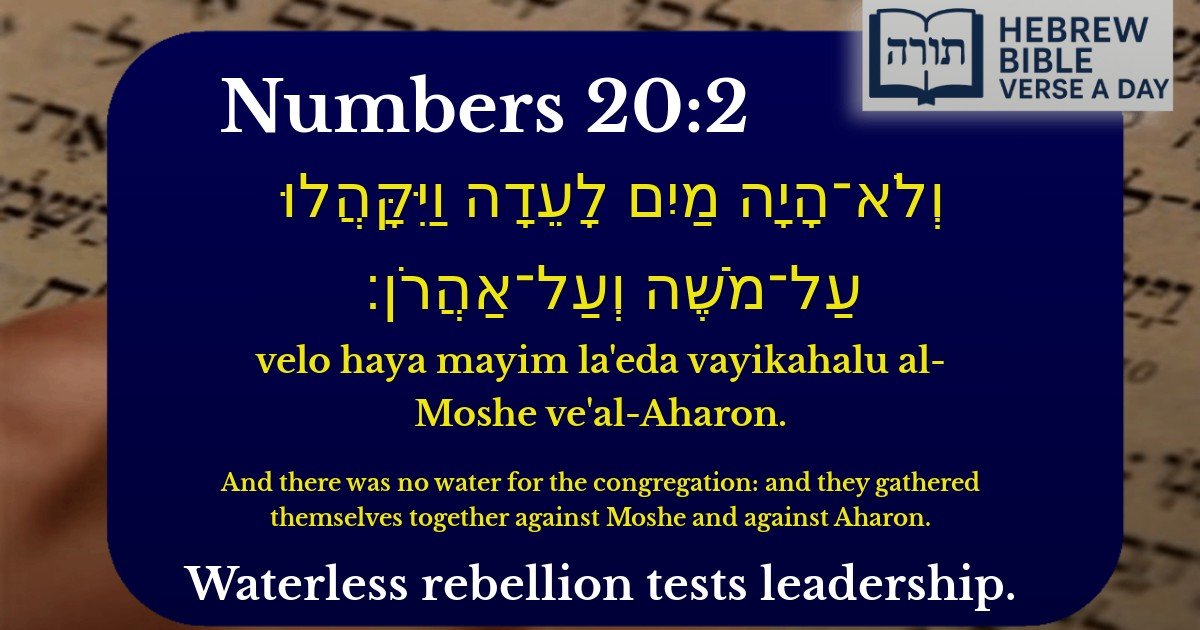
Q: Why was there no water for the congregation in Numbers 20:2?
A: According to Rashi, the water stopped because Miriam, Moshe's sister, had just passed away (as mentioned in the previous verse). The well that provided water for Bnei Yisrael in the desert was in her merit. When she died, the water ceased, showing how the righteous sustain the world even through natural miracles.
Q: Why did the people gather against Moshe and Aharon in this verse?
A: The Talmud (Taanit 9a) explains that the people complained because they were suddenly without water in the desert. Instead of trusting in Hashem or respectfully approaching Moshe and Aharon, they gathered in protest, demonstrating a lack of faith despite the many miracles they had already witnessed.
Q: What lesson can we learn from Numbers 20:2 about dealing with difficulties?
A: The Midrash teaches that this episode shows the importance of gratitude and patience. Bnei Yisrael had water for decades in the desert in Miriam's merit, yet they immediately complained when it stopped. We learn to recognize the good we have and approach challenges with trust in Hashem rather than anger.
Q: How does this verse connect to Miriam's passing in the previous verse?
A: Rashi explains the direct connection: the well that traveled with Bnei Yisrael in the desert existed in the merit of Miriam's righteousness (as referenced in Talmud Sotah 9a). When she died (Numbers 20:1), the water disappeared, showing how the physical world depends on the spiritual merit of tzaddikim (righteous people).
Q: Why is this incident at Mei Merivah (Waters of Strife) important in the Torah?
A: This event is critical because it leads to Moshe and Aharon being barred from entering Eretz Yisrael (as later explained in Numbers 20:12). The Rambam teaches that even great leaders are held to high standards, and this episode underscores the importance of exactness in fulfilling Hashem's commandments, especially for those who guide others.


Context of the Verse
The verse (Bamidbar 20:2) describes a crisis faced by Bnei Yisrael in the wilderness—a lack of water—which led them to gather against Moshe and Aharon. This event occurred in the 40th year of their wandering, shortly before entering Eretz Yisrael, and is known as the incident of Mei Merivah (the Waters of Strife).
Rashi's Explanation
Rashi (Bamidbar 20:2) notes that the phrase "וַיִּקָּהֲלוּ עַל־מֹשֶׁה וְעַל־אַהֲרֹן" ("they gathered against Moshe and Aharon") indicates a rebellious assembly. He explains that this was not merely a request for water but an act of defiance, comparing it to the gathering of enemies in battle (as the word "וַיִּקָּהֲלוּ" is used in Tehillim 2:2 for hostile gatherings).
The Midrashic Perspective
The Midrash (Bamidbar Rabbah 19:8) elaborates that the people's complaint was not just about physical thirst but reflected a deeper spiritual failing. It connects this incident to Miriam's recent passing (mentioned in the previous verse), suggesting that the miraculous well that accompanied Bnei Yisrael in the desert was in her merit. When she died, the water ceased, symbolizing the loss of her spiritual influence.
Rambam on Leadership and Trust
Rambam (Hilchos De'os 1:4) discusses the importance of trust in Hashem, particularly in times of hardship. He emphasizes that the people's failure here was not merely impatience but a lack of emunah (faith) in Moshe and Aharon as Hashem's chosen leaders. Their gathering "against" Moshe and Aharon, rather than approaching them respectfully, demonstrated a breakdown in trust.
The Talmud's Insight
The Talmud (Ta'anis 9a) notes that this incident marked a turning point in Moshe's leadership. Unlike earlier miracles (e.g., striking the rock in Shemos 17), here Moshe was commanded to speak to the rock (Bamidbar 20:8) but struck it instead. The Talmud explains that this deviation—though seemingly minor—had severe consequences, as it diminished the sanctification of Hashem's name in the eyes of the people.
Key Lessons from the Verse