Frequently Asked Questions
Q: What is the meaning of the song 'Spring up, O well' in Numbers 21:17?
A: The verse describes the Jewish people singing a song of gratitude to Hashem for providing water from the well (Be'er) in the desert. According to Rashi, this well was a miraculous gift that accompanied them throughout their 40-year journey, sustaining them in the wilderness. The song expresses thanks and joy for this divine kindness.
Q: Why did the Jewish people sing about the well in the desert?
A: The Jewish people sang about the well to acknowledge and thank Hashem for the continuous miracle of water in the harsh desert. The Midrash (Taanit 9a) teaches that this well was given in the merit of Miriam the prophetess and was one of the three great miracles that sustained Israel in the wilderness (along with the manna and the Clouds of Glory).
Q: What lesson can we learn from the song 'Spring up, O well'?
A: This verse teaches us the importance of recognizing and expressing gratitude for Hashem's daily miracles. Just as the Jewish people sang to acknowledge the well's sustenance, we should also appreciate the 'small' blessings in life. The Rambam (Hilchot Berachot 1:4) emphasizes that thanking Hashem for kindness is a fundamental Jewish value.
Q: How does the miracle of the well apply to us today?
A: While we no longer have Miriam's well, the principle remains: Hashem provides our needs in every generation. The Talmud (Avodah Zarah 5a) explains that just as the well appeared in the desert, Hashem makes a way for us even in difficult situations. We must trust in Him and express gratitude for our sustenance.
Q: What does 'sing to it' mean in this verse?
A: The phrase 'sing to it' (עֱנוּ־לָהּ) means to respond to the well with song and praise. Rashi explains that the Jewish people sang to the well as a way of praising Hashem for the miracle. This reflects the Jewish tradition of using song and music as a form of divine service and thanksgiving, as seen in the Psalms and Temple service.

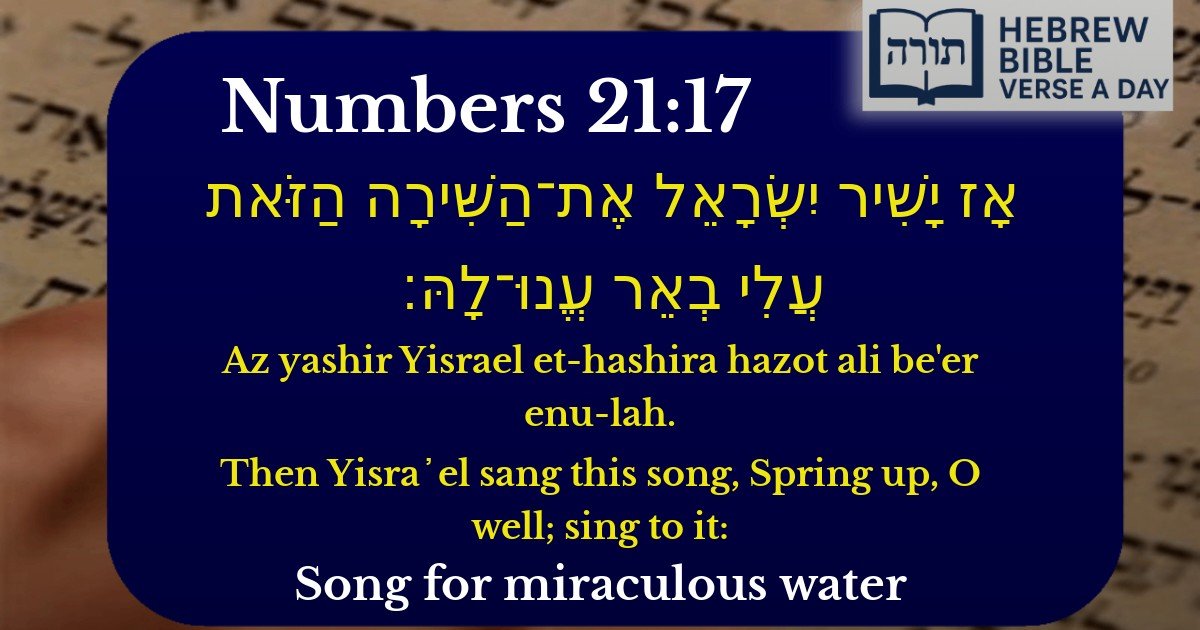

The Song of the Well in the Wilderness
The verse "Then Yisra᾽el sang this song, Spring up, O well; sing to it" (Bamidbar 21:17) describes the miraculous well that accompanied the Israelites in the desert, providing them with water. This well is attributed to the merit of Miriam, as taught in the Talmud (Taanit 9a), and ceased flowing upon her passing (Rashi on Bamidbar 20:2). The song reflects gratitude for this divine sustenance.
Rashi's Explanation
Rashi explains that the phrase "עֲלִי בְאֵר" (Spring up, O well) was a call to the well to rise and provide water. The Israelites sang to the well in poetic form, acknowledging its life-giving waters. Rashi further notes that the well was a reward for Miriam's righteousness, as she watched over Moshe as a baby (Shemot 2:4).
The Midrashic Perspective
The Midrash (Bamidbar Rabbah 19:25) elaborates that the well was not merely a natural phenomenon but a miraculous gift. It traveled with the Israelites, ascending mountains and descending valleys, ensuring they always had water. The song was a way for the people to express their appreciation for this ongoing miracle.
Rambam on Miracles in the Desert
Rambam (Moreh Nevuchim 3:50) discusses how the desert miracles, including the well, were designed to instill faith in Hashem's providence. The song served as a public declaration of trust in divine care, reinforcing the lesson that sustenance comes from Hashem.
Structure of the Song