

Join Our Newsletter To Be Informed When New Videos Are Posted
Hebrew Text
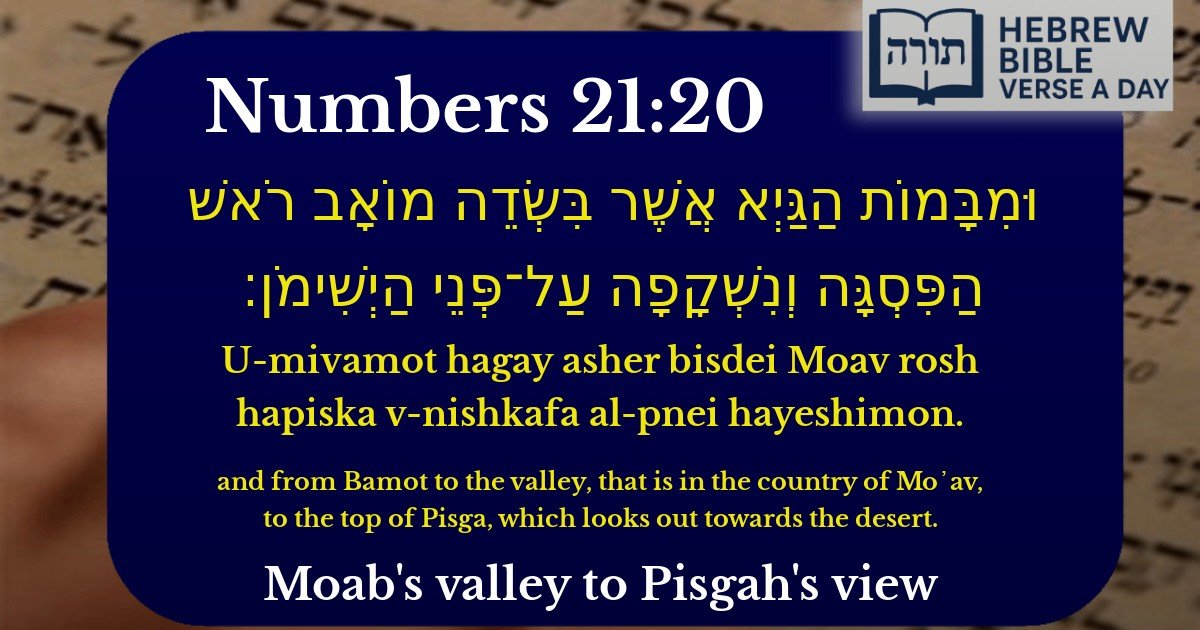
וּמִבָּמוֹת הַגַּיְא אֲשֶׁר בִּשְׂדֵה מוֹאָב רֹאשׁ הַפִּסְגָּה וְנִשְׁקָפָה עַל־פְּנֵי הַיְשִׁימֹן׃
English Translation
and from Bamot to the valley, that is in the country of Mo᾽av, to the top of Pisga, which looks out towards the desert.
Transliteration
U-mivamot hagay asher bisdei Moav rosh hapiska v-nishkafa al-pnei hayeshimon.
Hebrew Leining Text
וּמִבָּמ֗וֹת הַגַּיְא֙ אֲשֶׁר֙ בִּשְׂדֵ֣ה מוֹאָ֔ב רֹ֖אשׁ הַפִּסְגָּ֑ה וְנִשְׁקָ֖פָה עַל־פְּנֵ֥י הַיְשִׁימֹֽן׃ {פ}
🎵 Listen to leining
Parasha Commentary
📚 Talmud Citations
This verse is not quoted in the Talmud.
Geographical Context in the Torah
The verse describes the geographical boundaries of the land of Moav, specifically referencing Bamot (the high places), the valley, and Pisga, which overlooks the desert (Yeshimon). Rashi (on Bamidbar 21:20) explains that Bamot refers to elevated places where idolatrous worship was conducted, while Pisga is identified as the mountain from which Moshe viewed Eretz Yisrael before his passing (Devarim 34:1). The Yeshimon (desert) is understood as a barren, desolate region.
Spiritual Significance of the Locations
The Midrash (Bamidbar Rabbah 19:16) teaches that these places symbolize spiritual challenges. Bamot represents the dangers of foreign worship, while Pisga (meaning "summit") alludes to clarity and divine vision—as Moshe saw the Promised Land from its peak. The Yeshimon reflects the trials of the wilderness, where Bnei Yisrael were tested before entering Eretz Yisrael.
Moav’s Role in Jewish Tradition
Rambam (Hilchos Melachim 5:7) discusses Moav’s status in halacha, noting that while certain prohibitions applied to them, the Torah still delineates their land with precision. The mention of these locations emphasizes that even lands outside Eretz Yisrael are under Hashem’s providence, as they were part of the journey of Bnei Yisrael.
Lessons from the Verse