

Join Our Newsletter To Be Informed When New Videos Are Posted
Hebrew Text
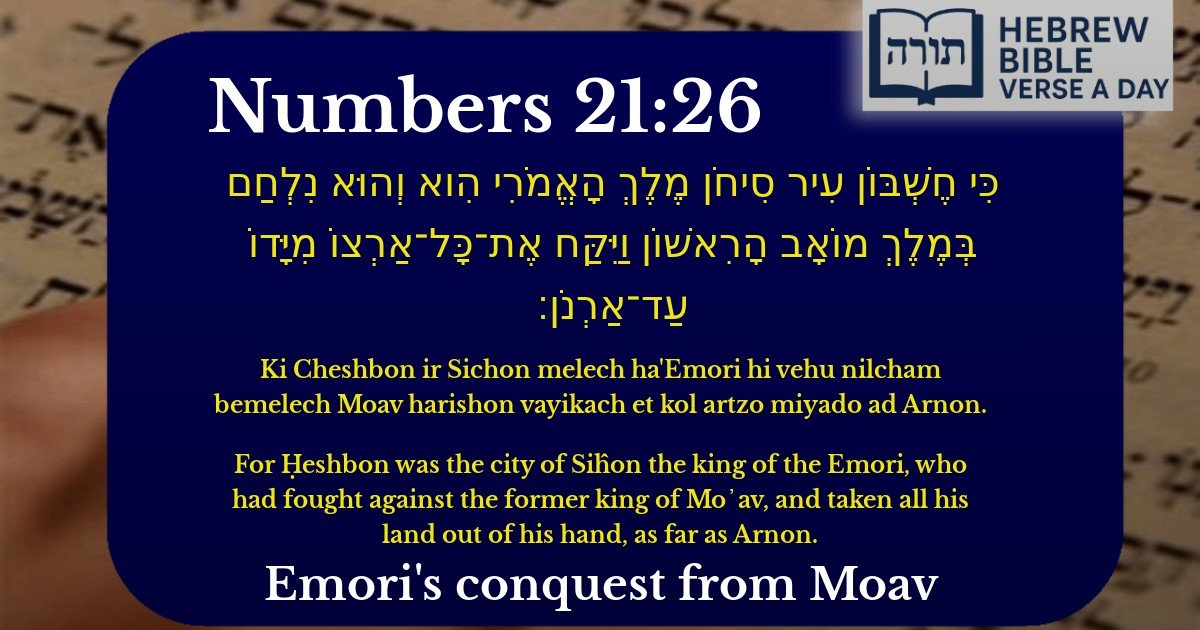
כִּי חֶשְׁבּוֹן עִיר סִיחֹן מֶלֶךְ הָאֱמֹרִי הִוא וְהוּא נִלְחַם בְּמֶלֶךְ מוֹאָב הָרִאשׁוֹן וַיִּקַּח אֶת־כָּל־אַרְצוֹ מִיָּדוֹ עַד־אַרְנֹן׃
English Translation
For Ḥeshbon was the city of Siĥon the king of the Emori, who had fought against the former king of Mo᾽av, and taken all his land out of his hand, as far as Arnon.
Transliteration
Ki Cheshbon ir Sichon melech ha'Emori hi vehu nilcham bemelech Moav harishon vayikach et kol artzo miyado ad Arnon.
Hebrew Leining Text
כִּ֣י חֶשְׁבּ֔וֹן עִ֗יר סִיחֹ֛ן מֶ֥לֶךְ הָאֱמֹרִ֖י הִ֑וא וְה֣וּא נִלְחַ֗ם בְּמֶ֤לֶךְ מוֹאָב֙ הָֽרִאשׁ֔וֹן וַיִּקַּ֧ח אֶת־כׇּל־אַרְצ֛וֹ מִיָּד֖וֹ עַד־אַרְנֹֽן׃
🎵 Listen to leining
Parasha Commentary
📚 Talmud Citations
This verse is not quoted in the Talmud.
Context of the Verse
This verse appears in Bamidbar (Numbers) 21:26, recounting the historical background of the land east of the Jordan River before Bnei Yisrael's conquest. The verse explains that Ḥeshbon was originally a Moabite city but was conquered by Sihon, king of the Emorites, who took it from Moav in battle. This historical note is significant because it establishes the legitimacy of Israel's claim to the land after defeating Sihon.
Rashi's Commentary
Rashi (on Bamidbar 21:26) explains that this verse serves as a response to Moav's later claims against Israel. The Torah records this history to demonstrate that Sihon had already taken this land from Moav, so Israel was not seizing Moabite territory but rather land that had become Emorite property. Rashi cites Midrash Tanchuma (Chukat 24), which emphasizes that this was a divine arrangement—Hashem allowed Sihon to conquer Moav first so that Israel would not be morally culpable for taking land directly from Moav (since Moav was descended from Lot, and Hashem had forbidden Israel from provoking them, as stated in Devarim 2:9).
Ramban's Insight
Ramban (Nachmanides) adds that the verse underscores the providential nature of Israel's conquests. He notes that Sihon's earlier war against Moav was part of Hashem's plan to prepare the land for Israel. By the time Bnei Yisrael arrived, the land was no longer under Moabite control, thus removing any ethical dilemma in conquering it. Ramban also connects this to the broader theme of Eretz Yisrael being apportioned according to divine will.
Midrashic Interpretation
The Midrash Rabbah (Bamidbar Rabbah 19:25) elaborates on the phrase "the former king of Moav", suggesting that Sihon defeated a particularly powerful Moabite ruler, demonstrating his military strength. This further highlights that Israel's subsequent victory over Sihon was miraculous, as they overcame a formidable enemy who had himself conquered others.
Halachic Implications