

Join Our Newsletter To Be Informed When New Videos Are Posted
Hebrew Text
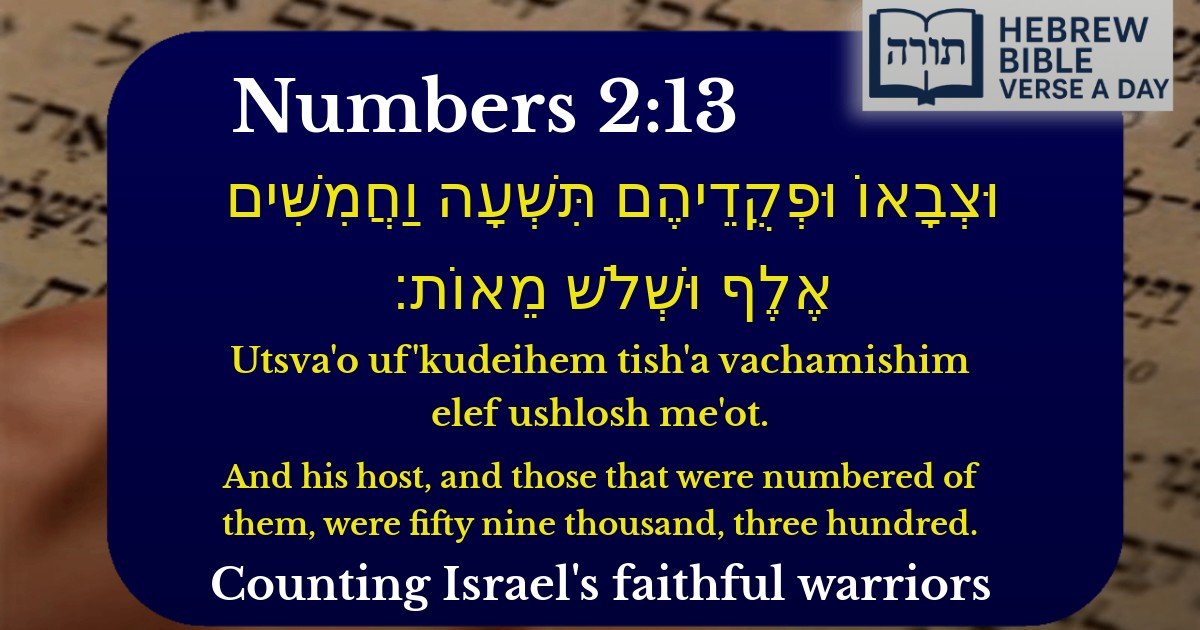
וּצְבָאוֹ וּפְקֻדֵיהֶם תִּשְׁעָה וַחֲמִשִּׁים אֶלֶף וּשְׁלֹשׁ מֵאוֹת׃
English Translation
And his host, and those that were numbered of them, were fifty nine thousand, three hundred.
Transliteration
Utsva'o uf'kudeihem tish'a vachamishim elef ushlosh me'ot.
Hebrew Leining Text
וּצְבָא֖וֹ וּפְקֻדֵיהֶ֑ם תִּשְׁעָ֧ה וַחֲמִשִּׁ֛ים אֶ֖לֶף וּשְׁלֹ֥שׁ מֵאֽוֹת׃
🎵 Listen to leining
Parasha Commentary
📚 Talmud Citations
This verse is not quoted in the Talmud.
Context in the Torah
This verse appears in Bamidbar (Numbers) 2:16, as part of the census of the tribes of Israel in the wilderness. It refers to the count of the tribe of Reuven, led by Elitzur ben Shedeur. The Torah meticulously records the numbers of each tribe to emphasize their individual and collective roles in Klal Yisrael.
Rashi's Explanation
Rashi (Bamidbar 2:16) notes that the phrase "וּצְבָאוֹ וּפְקֻדֵיהֶם" ("his host and those that were numbered of them") refers to the military divisions of the tribe of Reuven. The term צבא (host) indicates their readiness for battle, while פקודים (those numbered) refers to the census count of men eligible for war (from age 20 and up, as per Bamidbar 1:3).
Symbolism of the Number
The number 59,300 holds significance in Jewish thought:
Comparison to Other Tribes
The Ohr HaChaim (Bamidbar 2:16) contrasts Reuven's count with Yehuda's larger number (74,600 in 2:9), noting that Reuven, though the firstborn, did not receive the largest portion—a lesson in humility and the Divine allocation of roles.
Military Significance
Rambam (Hilchot Melachim 7:1) derives from such verses that a Jewish army must be organized and counted precisely, reflecting the importance of order in fulfilling mitzvot related to national defense.