

Join Our Newsletter To Be Informed When New Videos Are Posted
Hebrew Text
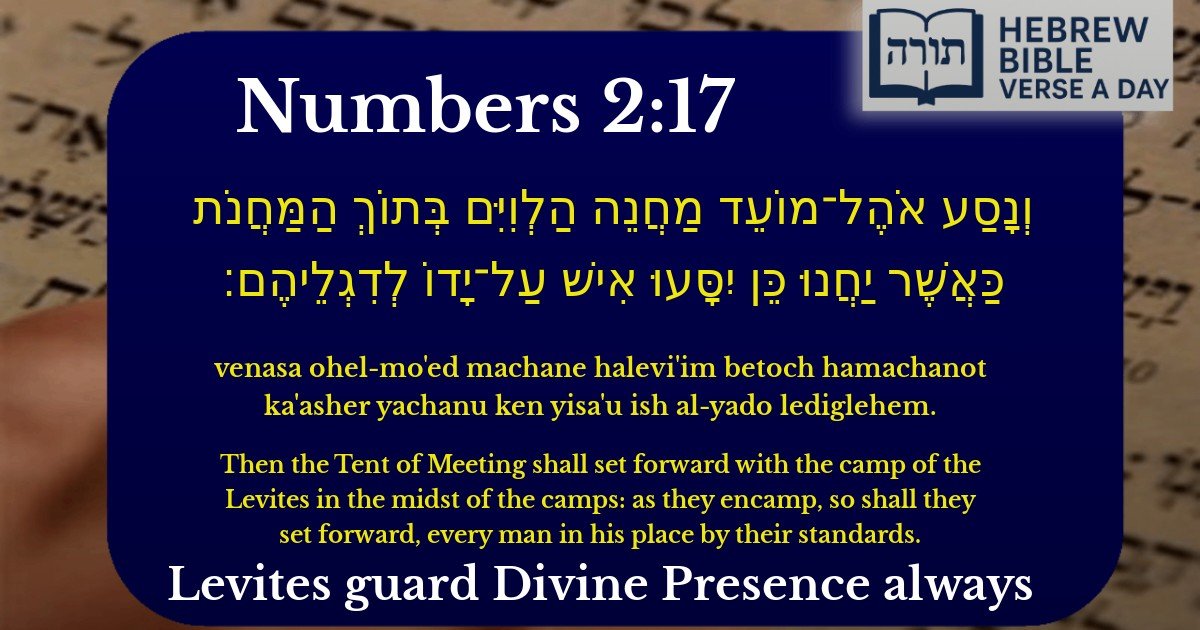
וְנָסַע אֹהֶל־מוֹעֵד מַחֲנֵה הַלְוִיִּם בְּתוֹךְ הַמַּחֲנֹת כַּאֲשֶׁר יַחֲנוּ כֵּן יִסָּעוּ אִישׁ עַל־יָדוֹ לְדִגְלֵיהֶם׃
English Translation
Then the Tent of Meeting shall set forward with the camp of the Levites in the midst of the camps: as they encamp, so shall they set forward, every man in his place by their standards.
Transliteration
Venasa ohel-mo'ed machane halevi'im betoch hamachanot ka'asher yachanu ken yisa'u ish al-yado lediglehem.
Hebrew Leining Text
וְנָסַ֧ע אֹֽהֶל־מוֹעֵ֛ד מַחֲנֵ֥ה הַלְוִיִּ֖ם בְּת֣וֹךְ הַֽמַּחֲנֹ֑ת כַּאֲשֶׁ֤ר יַחֲנוּ֙ כֵּ֣ן יִסָּ֔עוּ אִ֥ישׁ עַל־יָד֖וֹ לְדִגְלֵיהֶֽם׃ {ס}
🎵 Listen to leining
Parasha Commentary
📚 Talmud Citations
This verse is not quoted in the Talmud.
Positioning of the Mishkan in the Camp
The verse (Bamidbar 2:17) describes the central positioning of the Ohel Moed (Tent of Meeting) within the Israelite camp during their travels in the wilderness. Rashi explains that the Levites formed an inner protective ring around the Mishkan, while the other tribes camped in their designated positions around them. This arrangement symbolizes the spiritual centrality of the Mishkan as the dwelling place of the Divine Presence (Shechinah) among Bnei Yisrael.
Order and Structure in Travel
The phrase "ka'asher yachanu ken yisa'u" ("as they encamp, so shall they set forward") teaches that the same orderly formation used during encampment was maintained during travel. Ramban emphasizes that this demonstrates the importance of maintaining structure and holiness even in transition, reflecting the principle that kedushah (holiness) requires consistency in all circumstances.
The Role of the Levites
The Midrash Tanchuma (Bamidbar 12) notes that the Levites' central position around the Mishkan afforded them the privilege of being closest to holiness, but also carried great responsibility. Their role as protectors and transporters of the sacred vessels required constant vigilance and care.
Symbolism of the Tribal Standards
The concluding phrase "ish al-yado l'diglehem" ("every man in his place by their standards") refers to the unique flags (degalim) of each tribe. The Midrash (Bamidbar Rabbah 2:7) teaches that these flags corresponded to the banners of the heavenly hosts, reflecting that each tribe had its distinct spiritual role while united in serving Hashem. The orderly arrangement around the Mishkan demonstrated both unity and diversity within Klal Yisrael.
Practical Halachic Implications
Rambam (Hilchot Beit HaBechirah 7:11) derives from this verse principles about maintaining proper reverence when approaching holy spaces. Just as the Israelites maintained careful order around the Mishkan, so too must we conduct ourselves with proper decorum in places of worship and Torah study.