

Join Our Newsletter To Be Informed When New Videos Are Posted
Hebrew Text
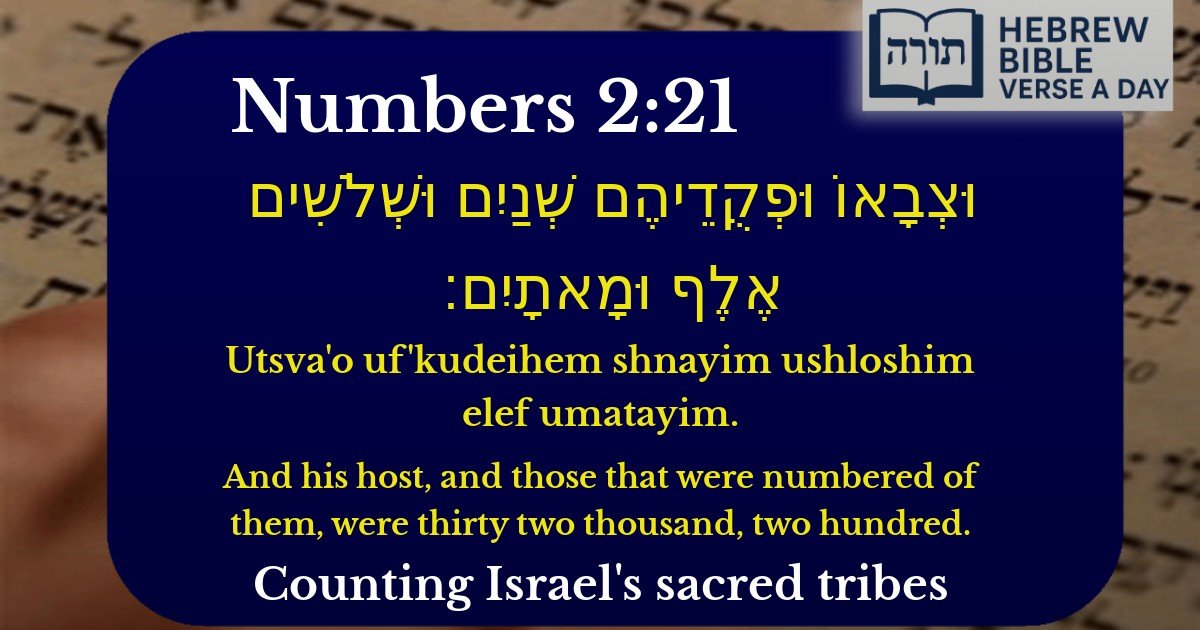
וּצְבָאוֹ וּפְקֻדֵיהֶם שְׁנַיִם וּשְׁלֹשִׁים אֶלֶף וּמָאתָיִם׃
English Translation
And his host, and those that were numbered of them, were thirty two thousand, two hundred.
Transliteration
Utsva'o uf'kudeihem shnayim ushloshim elef umatayim.
Hebrew Leining Text
וּצְבָא֖וֹ וּפְקֻדֵיהֶ֑ם שְׁנַ֧יִם וּשְׁלֹשִׁ֛ים אֶ֖לֶף וּמָאתָֽיִם׃
🎵 Listen to leining
Parasha Commentary
📚 Talmud Citations
This verse is not quoted in the Talmud.
Context in the Torah
This verse appears in Bamidbar (Numbers) 1:29, as part of the census of the tribes of Israel in the wilderness. Specifically, it records the count of the tribe of Yissachar—32,200 men of military age (20 years and older). The census was commanded by Hashem to Moshe and Elazar the Kohen after the Exodus from Egypt.
Rashi's Explanation
Rashi (Bamidbar 1:29) notes that the phrase "וּצְבָאוֹ וּפְקֻדֵיהֶם" ("his host, and those that were numbered of them") emphasizes that the count was conducted meticulously under Moshe and Elazar's leadership. The term "צְבָאוֹ" ("his host") refers to the military organization of the tribe, while "פְקֻדֵיהֶם" ("those that were numbered") highlights the individual accountability of each member.
Symbolism of the Number
The number 32,200 is significant in Jewish thought:
Military vs. Spiritual Strength
The Ramban (Nachmanides, Bamidbar 1:45) explains that while the count was for military purposes, the true strength of Israel lies in their spiritual devotion. Yissachar, though counted among the warriors, was primarily known for Torah scholarship, showing that Israel's protection comes from merit in Torah and mitzvos.
Comparison with Other Tribes
The Sforno (Bamidbar 1:29) points out that Yissachar's numbers were neither the largest (like Yehuda) nor the smallest (like Menashe), reflecting their balanced role—supporting both Torah study and national responsibilities.