

Join Our Newsletter To Be Informed When New Videos Are Posted
Hebrew Text
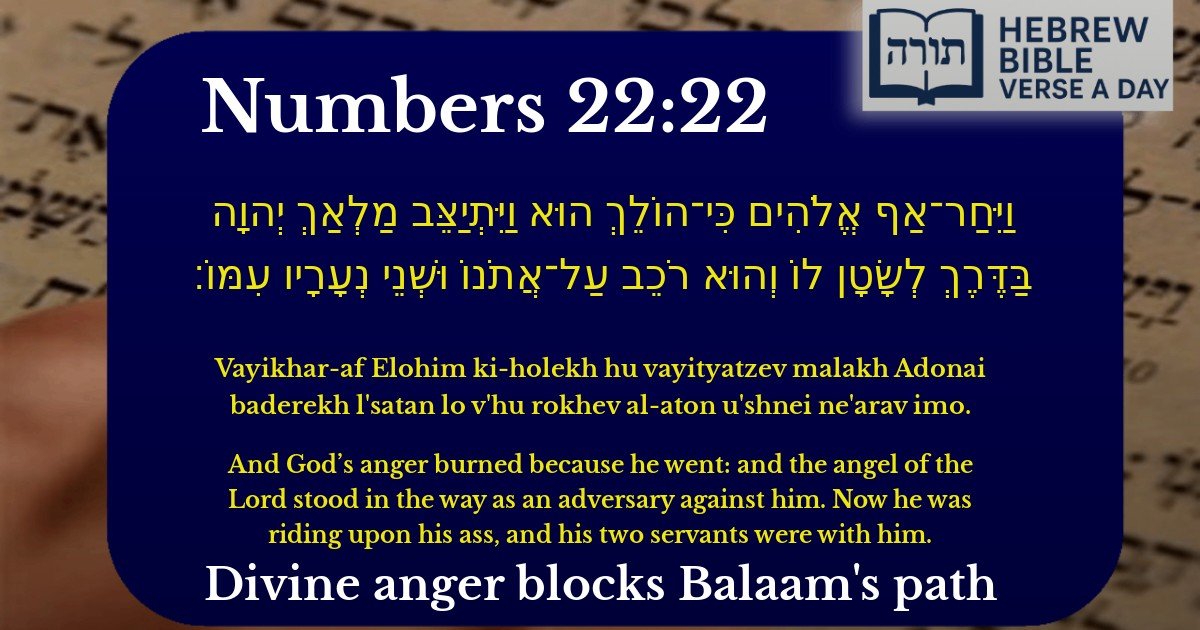
וַיִּחַר־אַף אֱלֹהִים כִּי־הוֹלֵךְ הוּא וַיִּתְיַצֵּב מַלְאַךְ יְהוָה בַּדֶּרֶךְ לְשָׂטָן לוֹ וְהוּא רֹכֵב עַל־אֲתֹנוֹ וּשְׁנֵי נְעָרָיו עִמּוֹ׃
English Translation
And God’s anger burned because he went: and the angel of the Lord stood in the way as an adversary against him. Now he was riding upon his ass, and his two servants were with him.
Transliteration
Vayikhar-af Elohim ki-holekh hu vayityatzev malakh Adonai baderekh l'satan lo v'hu rokhev al-aton u'shnei ne'arav imo.
Hebrew Leining Text
וַיִּֽחַר־אַ֣ף אֱלֹהִים֮ כִּֽי־הוֹלֵ֣ךְ הוּא֒ וַיִּתְיַצֵּ֞ב מַלְאַ֧ךְ יְהֹוָ֛ה בַּדֶּ֖רֶךְ לְשָׂטָ֣ן ל֑וֹ וְהוּא֙ רֹכֵ֣ב עַל־אֲתֹנ֔וֹ וּשְׁנֵ֥י נְעָרָ֖יו עִמּֽוֹ׃
🎵 Listen to leining
Parasha Commentary
📚 Talmud Citations
This verse is quoted in the Talmud.
📖 Sanhedrin 105b
The verse is referenced in the context of discussing Balaam's journey and the divine intervention by the angel of the Lord.
📖 Avodah Zarah 4b
The verse is mentioned in a discussion about the nature of divine anger and the role of the angel as an adversary.
Context of the Verse
This verse (Numbers 22:22) appears in the narrative of Balaam (Bilam), the non-Jewish prophet hired by Balak, king of Moab, to curse the Israelites. Despite Hashem initially permitting Balaam to go with Balak's messengers, His anger is kindled when Balaam demonstrates eagerness to fulfill Balak's request, revealing his sinful intentions (Rashi, Bamidbar 22:22).
Why Did Hashem’s Anger Burn?
Rashi explains that Balaam's enthusiasm to curse Israel—despite Hashem's initial conditional permission—showed his wicked intent. The phrase "כי הולך הוא" ("because he went") implies he went with malicious joy, akin to the wicked who hasten to sin (Rashi, citing Sanhedrin 105a). Ramban (Nachmanides) adds that Balaam sought to manipulate Hashem’s will, believing he could later persuade Him to allow the curse.
The Role of the Angel
The malach Hashem (angel of the Lord) acts as a "satan" (adversary), not as an evil force but as an agent of divine justice to obstruct Balaam’s path. The Talmud (Avodah Zarah 4b) teaches that Hashem often places obstacles before those pursuing sin to give them an opportunity to repent. The angel’s visible confrontation later in the story (with Balaam’s donkey) underscores this idea (Rashi).
Symbolism of the Donkey and Servants
Divine Justice and Free Will
This episode illustrates Hashem’s precision in judgment. Though Balaam was granted free will, Hashem intervened to protect Israel while still allowing Balaam to exercise his choice (Rambam, Hilchot Teshuvah 5:4). The angel’s obstruction serves as a warning, reinforcing that no curse can prevail against Hashem’s chosen people (Bamidbar 23:8).