

Join Our Newsletter To Be Informed When New Videos Are Posted
Hebrew Text
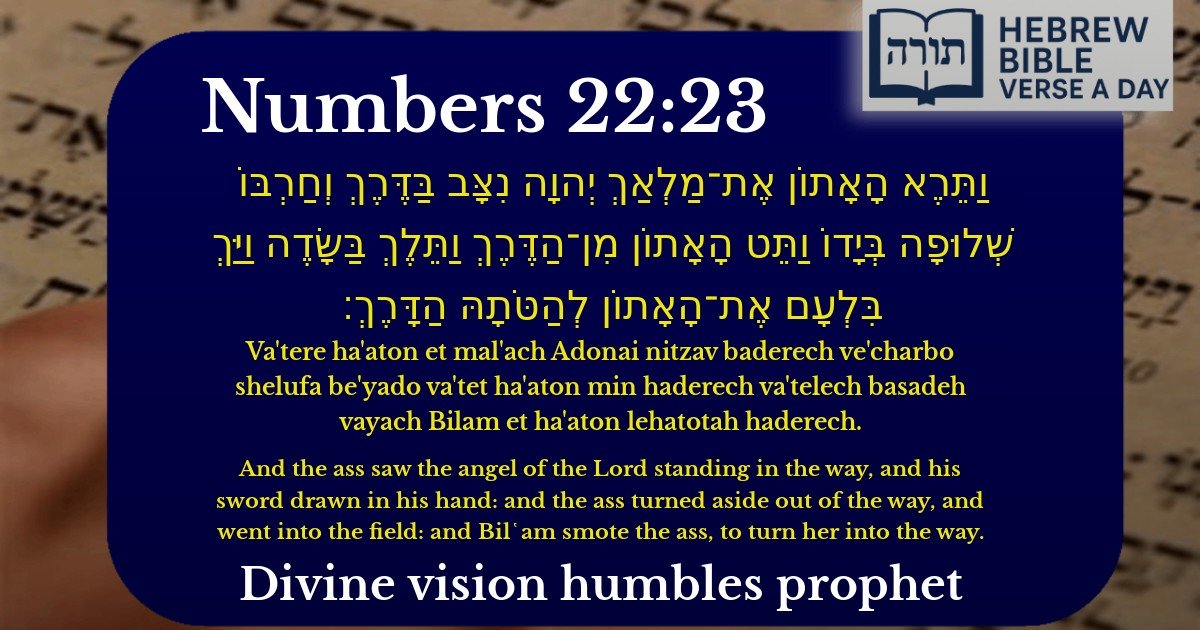
וַתֵּרֶא הָאָתוֹן אֶת־מַלְאַךְ יְהוָה נִצָּב בַּדֶּרֶךְ וְחַרְבּוֹ שְׁלוּפָה בְּיָדוֹ וַתֵּט הָאָתוֹן מִן־הַדֶּרֶךְ וַתֵּלֶךְ בַּשָּׂדֶה וַיַּךְ בִּלְעָם אֶת־הָאָתוֹן לְהַטֹּתָהּ הַדָּרֶךְ׃
English Translation
And the ass saw the angel of the Lord standing in the way, and his sword drawn in his hand: and the ass turned aside out of the way, and went into the field: and Bil῾am smote the ass, to turn her into the way.
Transliteration
Va'tere ha'aton et mal'ach Adonai nitzav baderech ve'charbo shelufa be'yado va'tet ha'aton min haderech va'telech basadeh vayach Bilam et ha'aton lehatotah haderech.
Hebrew Leining Text
וַתֵּ֣רֶא הָאָתוֹן֩ אֶת־מַלְאַ֨ךְ יְהֹוָ֜ה נִצָּ֣ב בַּדֶּ֗רֶךְ וְחַרְבּ֤וֹ שְׁלוּפָה֙ בְּיָד֔וֹ וַתֵּ֤ט הָֽאָתוֹן֙ מִן־הַדֶּ֔רֶךְ וַתֵּ֖לֶךְ בַּשָּׂדֶ֑ה וַיַּ֤ךְ בִּלְעָם֙ אֶת־הָ֣אָת֔וֹן לְהַטֹּתָ֖הּ הַדָּֽרֶךְ׃
🎵 Listen to leining
Parasha Commentary
📚 Talmud Citations
This verse is quoted in the Talmud.
📖 Avodah Zarah 4b
The verse is referenced in a discussion about the nature of Balaam's donkey and its ability to see the angel, contrasting human and animal perception.
📖 Sanhedrin 105b
The verse is cited in a broader discussion about Balaam's character and his interactions with his donkey, illustrating his moral failings.
Understanding the Donkey's Vision
Rashi (Bamidbar 22:23) explains that the donkey saw the angel of Hashem, which Bil'am did not see, because Hashem temporarily opened the donkey's eyes to perceive the spiritual realm. This demonstrates that even animals can receive divine revelation when it serves Hashem's purpose. The Midrash Tanchuma (Balak 6) further elaborates that the donkey was granted this vision to humble Bil'am and show that his prophetic abilities were not unique—even a beast could see what he could not.
The Significance of the Sword
The angel holding a drawn sword (חרבו שלופה) symbolizes judgment, as noted by Ramban (Bamidbar 22:23). The sword represents the imminent danger Bil'am was in due to his sinful intentions to curse the Jewish people. The Malbim adds that the sword was unsheathed to signify that the angel was ready to execute judgment if Bil'am persisted in his wrongful path.
The Donkey's Deviation and Bil'am's Response
The donkey turned aside into the field to avoid the angel, acting with more wisdom than Bil'am, who struck it in frustration. The Talmud (Avodah Zarah 4b) comments that this incident was meant to teach Bil'am that his path was against Hashem's will. The donkey's actions were divinely guided to rebuke Bil'am, as the Midrash (Bamidbar Rabbah 20:12) states: "The mouth of the donkey was created at twilight of the sixth day of Creation" (Pirkei Avot 5:6)—meaning its ability to speak was preordained for this moment of divine reproof.
Lessons from the Incident