

Join Our Newsletter To Be Informed When New Videos Are Posted
Hebrew Text
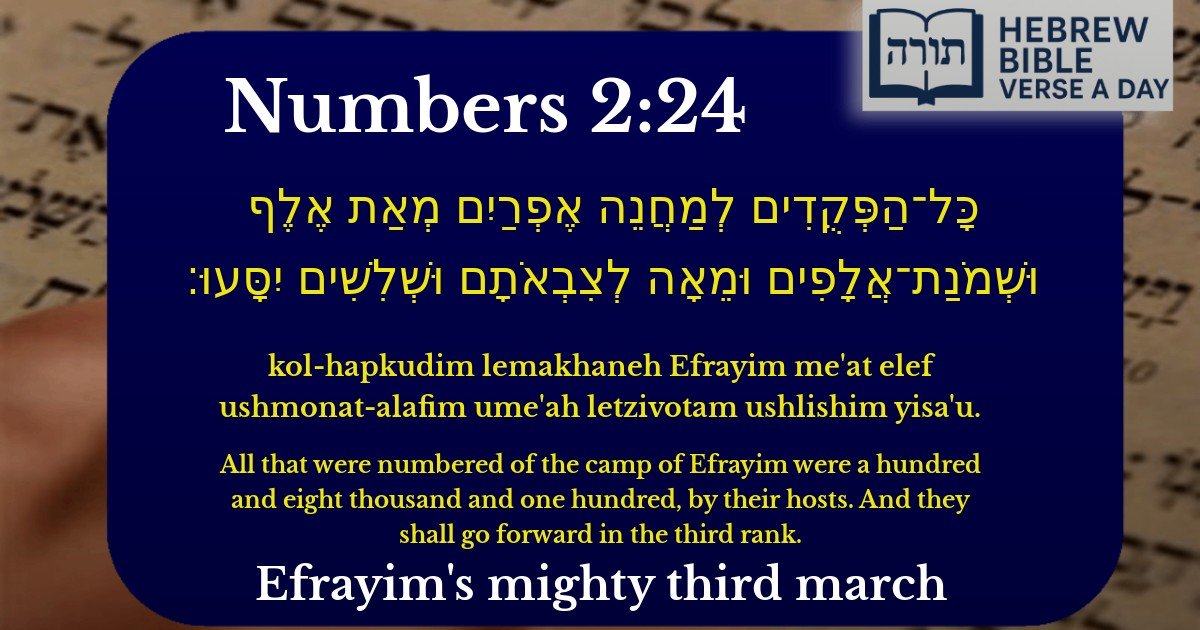
כָּל־הַפְּקֻדִים לְמַחֲנֵה אֶפְרַיִם מְאַת אֶלֶף וּשְׁמֹנַת־אֲלָפִים וּמֵאָה לְצִבְאֹתָם וּשְׁלִשִׁים יִסָּעוּ׃
English Translation
All that were numbered of the camp of Efrayim were a hundred and eight thousand and one hundred, by their hosts. And they shall go forward in the third rank.
Transliteration
Kol-hapkudim lemakhaneh Efrayim me'at elef ushmonat-alafim ume'ah letzivotam ushlishim yisa'u.
Hebrew Leining Text
כׇּֽל־הַפְּקֻדִ֞ים לְמַחֲנֵ֣ה אֶפְרַ֗יִם מְאַ֥ת אֶ֛לֶף וּשְׁמֹֽנַת־אֲלָפִ֥ים וּמֵאָ֖ה לְצִבְאֹתָ֑ם וּשְׁלִשִׁ֖ים יִסָּֽעוּ׃ {ס}
🎵 Listen to leining
Parasha Commentary
📚 Talmud Citations
This verse is not quoted in the Talmud.
Context in the Wilderness Encampment
The verse (Bamidbar 2:24) describes the census of the tribe of Efrayim as part of the arrangement of the Israelite encampment in the wilderness. Efrayim, along with Menashe and Binyamin, formed the camp of Rachel (referred to as "Machaneh Efrayim"), positioned to the west of the Mishkan. Rashi notes that Efrayim's leadership in this camp—despite being younger than Menashe—fulfilled Yaakov Avinu's blessing (Bereishit 48:19-20) that Efrayim would be greater.
Significance of the Number 108,100
The precise count of 108,100 men of military age reflects the divine precision in Israel's formation. The Baal HaTurim highlights that the numerical value (gematria) of Efrayim's name (אֶפְרַיִם) is 331, which, when multiplied by the 331 years from Yosef's birth until the Exodus (as per Seder Olam), yields 108,100—matching the census figure. This demonstrates hashgacha pratit (divine providence) in the tribe's growth.
The Third Rank in Travel Order
Efrayim's position as the "third rank" (שְׁלִשִׁים) during journeys reflects their subordinate role to Yehuda (east) and Reuven (south). The Midrash Tanchuma (Bamidbar 12) explains this as a lesson in humility: though Efrayim carried Yaakov's blessing of prominence, they accepted their traveling order without dispute, modeling derech eretz (proper conduct) for future generations.
Military and Spiritual Roles