

Join Our Newsletter To Be Informed When New Videos Are Posted
Hebrew Text
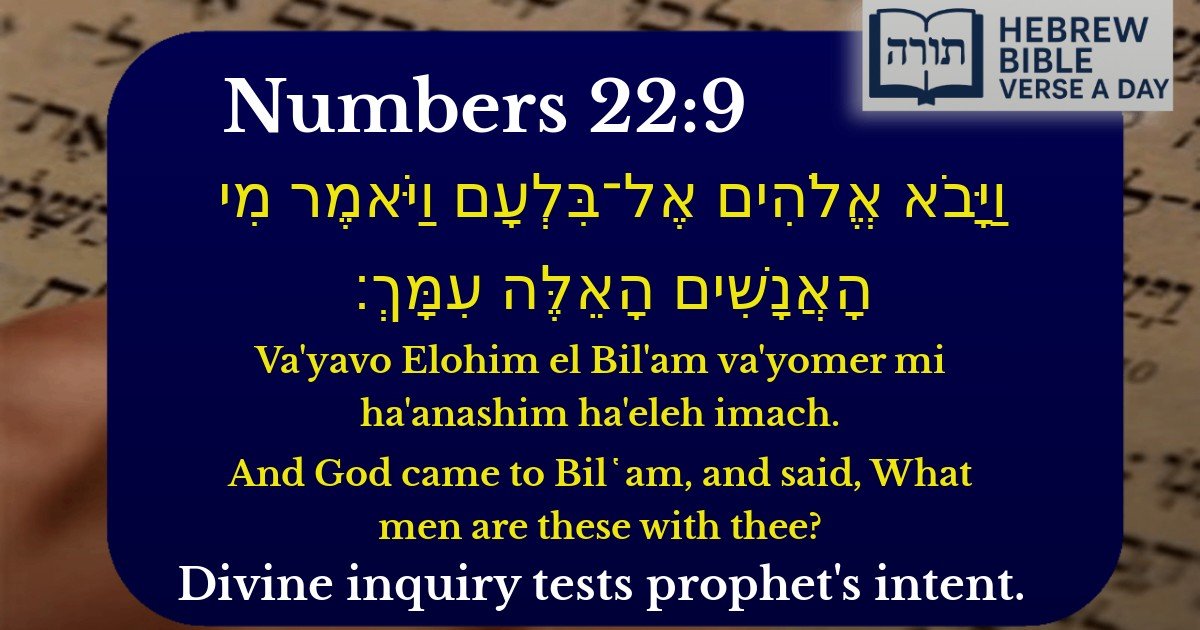
וַיָּבֹא אֱלֹהִים אֶל־בִּלְעָם וַיֹּאמֶר מִי הָאֲנָשִׁים הָאֵלֶּה עִמָּךְ׃
English Translation
And God came to Bil῾am, and said, What men are these with thee?
Transliteration
Va'yavo Elohim el Bil'am va'yomer mi ha'anashim ha'eleh imach.
Hebrew Leining Text
וַיָּבֹ֥א אֱלֹהִ֖ים אֶל־בִּלְעָ֑ם וַיֹּ֕אמֶר מִ֛י הָאֲנָשִׁ֥ים הָאֵ֖לֶּה עִמָּֽךְ׃
🎵 Listen to leining
Parasha Commentary
📚 Talmud Citations
This verse is not quoted in the Talmud.
Context of the Verse
The verse (Bamidbar 22:9) describes an encounter between Bil῾am (Balaam) and Hashem after Balak, king of Moab, sends messengers to hire Bil῾am to curse the Jewish people. This event occurs during the Israelites' journey in the wilderness, as they approach the land of Canaan.
Rashi's Explanation
Rashi (Rabbi Shlomo Yitzchaki) comments that Hashem's question, "What men are these with thee?" is rhetorical. Hashem already knew who the men were, but He asked Bil῾am to engage him in conversation and allow him to reflect on his intentions. This mirrors the way Hashem questioned Adam after the sin in Gan Eden (Bereishit 3:9), not because He lacked knowledge, but to give the individual an opportunity to repent or reconsider.
Ibn Ezra's Insight
Ibn Ezra suggests that Hashem's question was meant to test Bil῾am's honesty. Bil῾am, though a prophet for the nations, was known for his greed and moral ambiguity. By asking this question, Hashem gave Bil῾am a chance to admit the true nature of the men's mission—to curse the Jewish people—rather than conceal it.
Midrashic Interpretation
The Midrash (Bamidbar Rabbah 20:7) elaborates that Hashem's question was a rebuke to Bil῾am, implying: "Do you think you can outwit Me? I know their intentions, and I know yours." The Midrash compares Bil῾am to a donkey—stubborn and foolish—who thinks he can deceive his Creator.
Rambam's Perspective
Rambam (Maimonides) in Moreh Nevuchim (Guide for the Perplexed 2:45) discusses the nature of prophecy and explains that Hashem's communication with Bil῾am was unique. Unlike the prophets of Israel, Bil῾am received prophecy in a manner that resembled a dialogue, highlighting the difference between true divine inspiration and Bil῾am's flawed character.
Key Lessons